
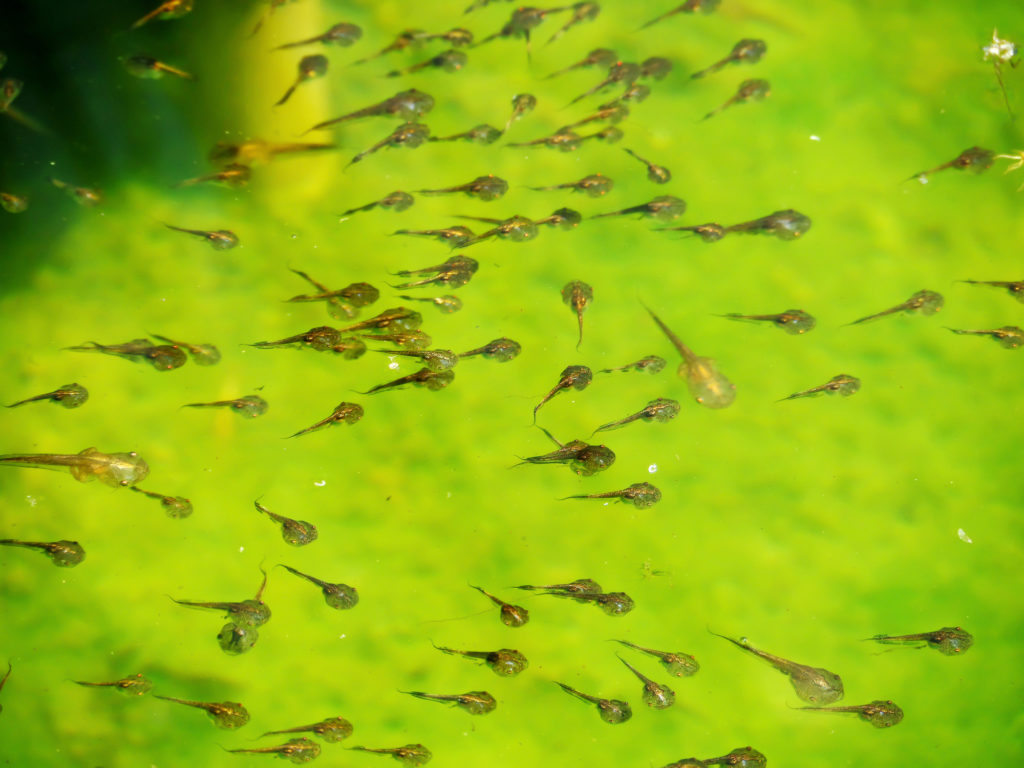
You scooped some tadpoles from a pond or brought them home from the pet store — now what? Unlike most aquarium fish that eat the same food their whole lives, tadpoles undergo a complete dietary transformation as they grow into frogs. Feed them wrong, and they’ll struggle to develop. Feed them right, and you’ll watch one of nature’s most fascinating metamorphoses happen in your own home.
Quick Answer
Young tadpoles eat algae, blanched vegetables (lettuce, spinach, zucchini), and plant matter. As they grow legs and become froglets, gradually transition to live insects like small crickets and fruit flies. Mature frogs are almost entirely carnivorous.
Understanding the Frog Life Cycle
Frogs are amphibians that undergo four distinct life stages, and their diet changes dramatically at each one. Knowing where your tadpole is in this cycle tells you exactly what to feed.
| Life Stage | Duration | Diet Type | Primary Foods |
|---|---|---|---|
| Egg | 1-3 weeks | None (yolk) | Internal yolk sac |
| Early Tadpole | 2-4 weeks | Herbivore | Algae, plant matter |
| Late Tadpole | 4-8 weeks | Omnivore | Vegetables, some protein |
| Froglet | 2-4 weeks | Transitioning | Insects + some vegetables |
| Adult Frog | Ongoing | Carnivore | Insects, worms |
[FACT] Temperature directly affects how fast tadpoles develop. At 75°F (24°C), metamorphosis takes about 12 weeks. In cooler water around 60°F (15°C), the same process can take 6 months or longer.
Egg Stage
During spawning, adult frogs pair up through loud vocalizations. The female lays eggs in dense vegetation — some species guard them, others leave immediately. Some frogs have unusual reproductive methods, like the Suriname toad whose eggs emerge from the female’s back. Eggs typically hatch within 1-3 weeks.
Tadpole Stage
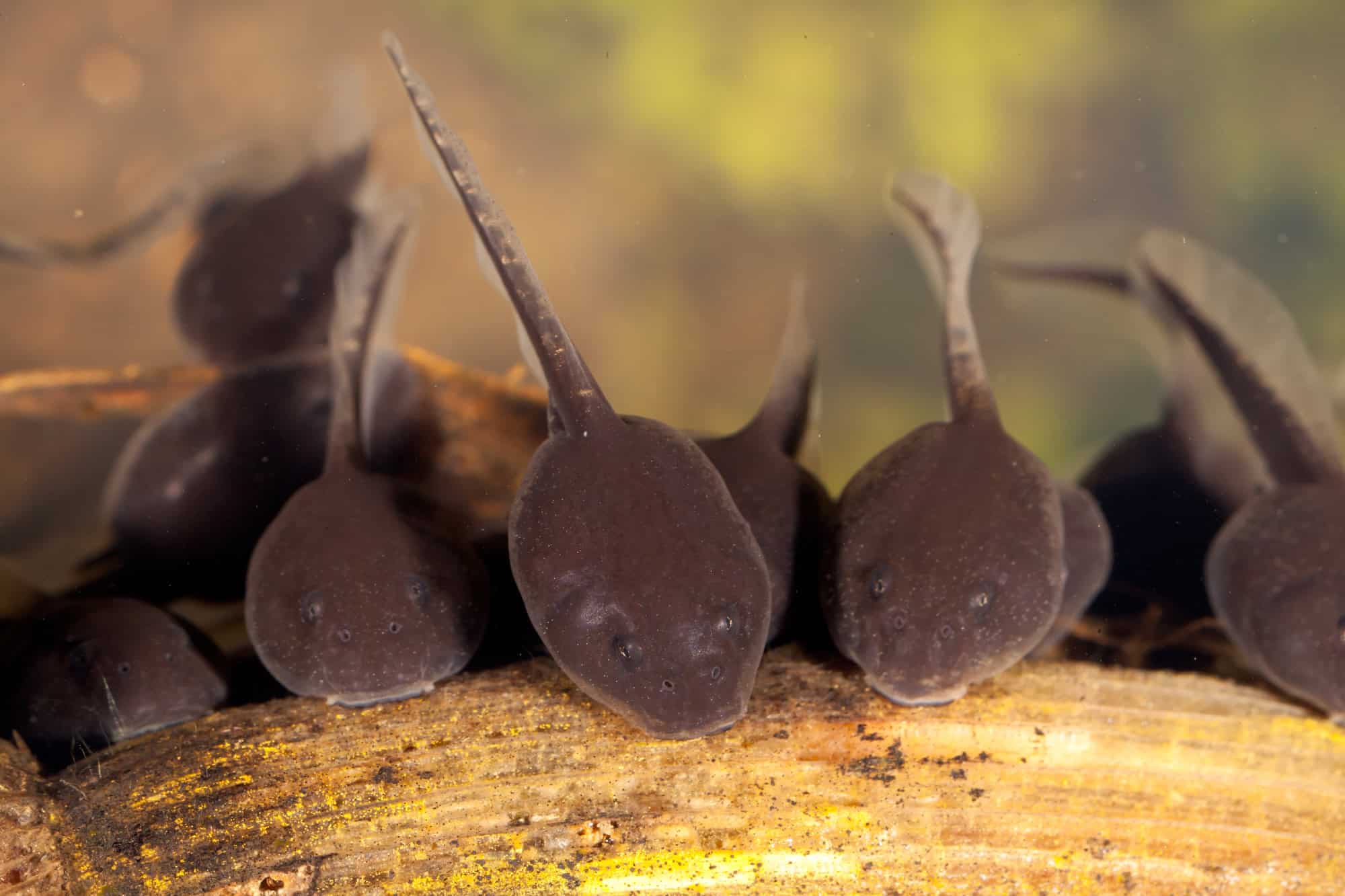
Newly hatched tadpoles have large heads with mouths, rudimentary gills, and long tails. For the first two weeks, they’re relatively inactive, feeding on remaining yolk. Once that’s depleted, they become active foragers, eating algae and plant matter while slowly developing hind legs. Lungs begin replacing gills as they prepare for life on land. This stage typically lasts about two months, though some species take much longer.
Froglet Stage
At this point, tadpoles resemble small frogs with all four legs and functioning lungs, but they still have a tail remnant. Around 12 weeks after hatching, they gain full access to terrestrial life. Their diet shifts primarily to insects, though they’ll still accept some plant matter.
Mature Frog
Once the tail is completely absorbed (typically 12-16 weeks total development), the frog has fully matured. Adults live freely between land and water, surviving mainly on insects and worms. When breeding season arrives, they’re ready to start the cycle again.
Setting Up a Tadpole Tank
Most pet stores sell tadpoles that have already hatched, and finding them in outdoor ponds is easier than finding eggs. Raising them successfully requires just a few basics.
What You’ll Need
- 5-10 gallon (19-38 L) aquarium or plastic container
- Water dechlorinator/conditioner
- Air pump or gentle filtration
- Aquarium heater (adjustable)
- Live or artificial plants
- Rocks or gravel for emergence areas (optional)
Keep water relatively shallow, clear, and well-filtered. Collected pond or rainwater works well. If using tap water, treat it with dechlorinator — chlorine is highly toxic to tadpoles. Alternatively, let tap water sit in direct sunlight for at least 3 days before using.
[WARNING] Important
Tadpoles are weak swimmers. If using filtration, ensure the current is very gentle. Strong flow can exhaust and kill them.
A gravel substrate lets you build a gradient so tadpoles can climb out as they develop legs, but bare-bottom tanks are easier to clean. Either way, you’ll need rocks or decorations for emergence once legs appear. Live plants provide food, shelter, and oxygen through photosynthesis.
While tadpoles tolerate temperatures from 40°F to 90°F (4-32°C), maintaining around 75°F (24°C) with an aquarium heater promotes steady, healthy growth.
What Do Tadpoles Eat? Feeding by Life Stage
As tadpoles transform into frogs, their diet shifts from omnivore to carnivore. Getting this transition right is key to raising healthy frogs.
Feeding Young Tadpoles (Weeks 1-4)
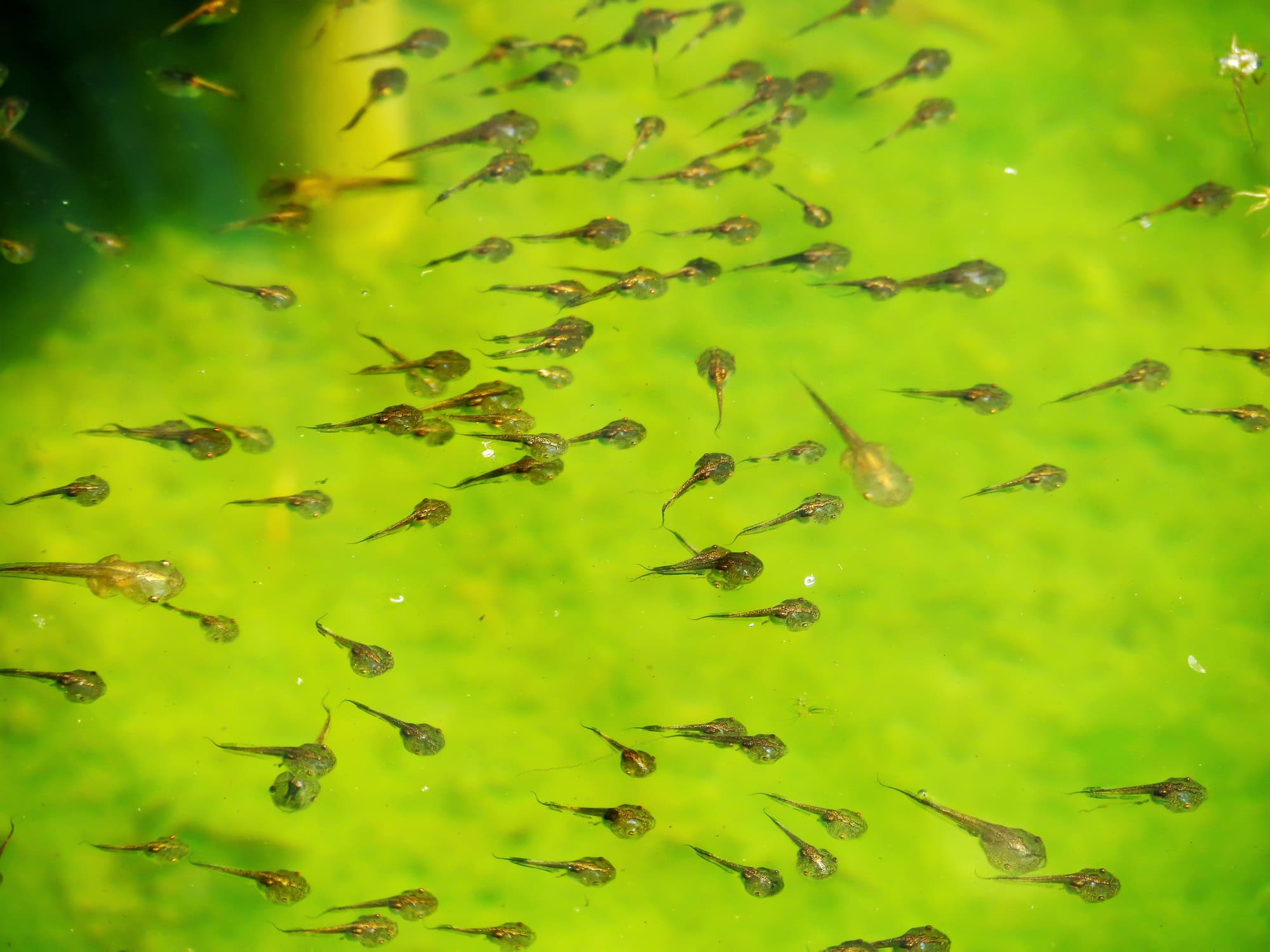
Newly hatched tadpoles survive on their remaining yolk for about two weeks. Once free-swimming, they’ll graze on algae and organic particles in the tank — no supplemental feeding needed yet.
When hind legs begin appearing and bodies elongate, start offering blanched vegetables:
- Best choices: Romaine lettuce, spinach, zucchini, kale
- Preparation: Boil for 10-15 minutes, chop into tiny pieces, freeze portions for later
- Feeding schedule: Once or twice daily in small amounts
[TIP] Pro Tip
If you collected tadpoles from a local waterway, gather some leaves from that same area. They’ll contain familiar microorganisms your tadpoles are adapted to eat. Just make sure the water source is pollutant-free and collection is legal in your area.
Remove uneaten food promptly to prevent water contamination. Fish flakes, pellets, or algae wafers work as emergency food, but natural options better prepare tadpoles for pond life or release.
Feeding Froglets (Weeks 8-12)
As front legs appear and the tail begins shrinking, gradually introduce live insects:
- Good starter insects: Pinhead crickets, fruit flies, small waxworms
- Transition approach: Start with insects 2-3 times per week while still offering vegetables
- Note: Froglets respond better to live, moving prey. Dead insects may be ignored.
Pet stores sell packaged live insects, or you can collect them from pesticide-free areas around your home.
Feeding Mature Frogs
Once the tail is fully absorbed, your frog is an adult carnivore. Feed primarily insects — crickets, mealworms, earthworms, and flies — with occasional vegetable matter. Variety prevents nutritional deficiencies.
Foods to Avoid
Not everything tadpoles can eat is good for them:
- Bread and crackers: No nutritional value, not compatible with their digestive system
- Processed human foods: Salt, preservatives, and additives are harmful
- Wild-caught insects from treated areas: Pesticides are lethal to amphibians
- Large food pieces: Can cause choking; always chop finely
Frequently Asked Questions
Can tadpoles eat bread crumbs?
Tadpoles will eat bread crumbs, but you shouldn’t feed them. Bread has almost no nutritional value, isn’t found in their natural diet, and can cause digestive issues. This applies to many aquatic animals — skip the bread at the pond.
Do tadpoles eat boiled eggs?
Yes, hard-boiled egg yolk is actually a decent protein source for developing tadpoles. Offer very small crumbled pieces occasionally — it’s messy and fouls water quickly, so use sparingly.
Can tadpoles eat cucumber?
Yes, cucumber works well. Blanch it first to soften, remove the seeds (they’re too large), and chop into tiny pieces. Zucchini is similar and often easier for tadpoles to consume.
How often should I feed tadpoles?
Once or twice daily in small portions. They should finish most food within a few hours. Overfeeding pollutes the water and can be fatal — underfeeding slightly is safer than overfeeding.
Why won’t my froglet eat?
Froglets often refuse dead or frozen insects because they’re triggered by movement. Try live prey like fruit flies or pinhead crickets. Also ensure temperatures are warm enough — cold froglets have slow metabolisms and reduced appetites.
Conclusion
What tadpoles eat depends entirely on their life stage. Young tadpoles thrive on algae and blanched vegetables. As they develop legs and transition to froglets, gradually introduce live insects. By adulthood, they’re full carnivores eating crickets, worms, and flies. Match the food to the stage, keep portions small, and remove uneaten food promptly — that’s the formula for raising healthy frogs from tadpoles.
If you have questions about tadpole feeding or want to share your experience raising frogs, leave a comment below!
[INTERNAL LINK: “setting up a paludarium” -> paludarium setup guide]
[INTERNAL LINK: “pond ecosystem” -> pond keeping guides]


