If you’re thinking about setting up a 5-gallon (18.9 L) aquarium, it’s easy to get confused by the conflicting information spread around the internet and by aquarium stores. So, you’re not working with a lot of space, but you still have many options to choose from, believe it or not!
What are the best fish and invertebrates for a 5-gallon fish tank? How many fish can you keep? And can you have some plants, too?
Keep reading to find out everything you need to know about the best ways to stock a 5-gallon fish tank!
Key Takeaways
- A 5-gallon tank is suitable for various fish and invertebrates but requires careful stocking to ensure a healthy environment due to size limitations.
- Certain popular fish species like goldfish, tetras, and corydoras are not recommended for 5-gallon tanks as they need more space or are sensitive to water quality fluctuations.
- Ideal inhabitants for a 5-gallon aquarium include betta fish, least killifish, cherry shrimp, dwarf crayfish, and small snails, alongside a selection of live plants that can create a thriving ecosystem.
Summary Table
| Suitable Fish for a 5-Gallon Tank | Details |
|---|---|
| Betta Fish (Betta splendens) | A single betta fish is ideal for a 5-gallon tank due to their relatively lower activity levels and size. They thrive in planted tanks with hiding spaces but are solitary and can be aggressive, so they should not be housed with other bettas. |
| Least Killifish (Heterandria formosa) | These small fish can be kept in a pair, but care should be taken as they may breed. They enjoy densely planted tanks and can live peacefully in small groups. |
| Cherry Shrimp (Neocaridina davidi) | These colorful invertebrates are a great option for those not interested in fish. They are easy to care for and can reproduce in the tank, adding to the population naturally. |
| Dwarf Crayfish (Various Cambarellus spp.) | Dwarf crayfish add personality to a tank and can be kept in a 5-gallon setup with adequate hiding spots. It's important to pick smaller species and limit the number to prevent overcrowding. |
| Thai Micro Crab (Limnopilos naiyanetr) | Extremely small and less common than other species, these crabs do well in peaceful communities with plenty of hiding places and are suitable for experienced keepers. |
Is 5 Gallons a Good Aquarium Size?
5-gallon aquariums are among the most popular tank sizes. This isn’t too surprising as they are small and can easily fit into pretty much any limited space.
A 5-gallon tank is the minimum tank size that can comfortably hold fish; some hobbyists have had success with 2.5-gallon (9.5 L) setups. However, that should only be attempted by experienced fishkeepers or used to keep shrimp or snails, which produce a lower bioload than fish. Any smaller than five gallons of water, you’ll encounter difficulties keeping a stable nitrogen cycle and providing your stock with enough room to swim. Even the smallest fish need space to move and explore!
Even though these tanks are small, they can still hold a lot of life. However, picking the perfect, healthy ecosystem choice for your 5-gallon aquarium can be challenging.
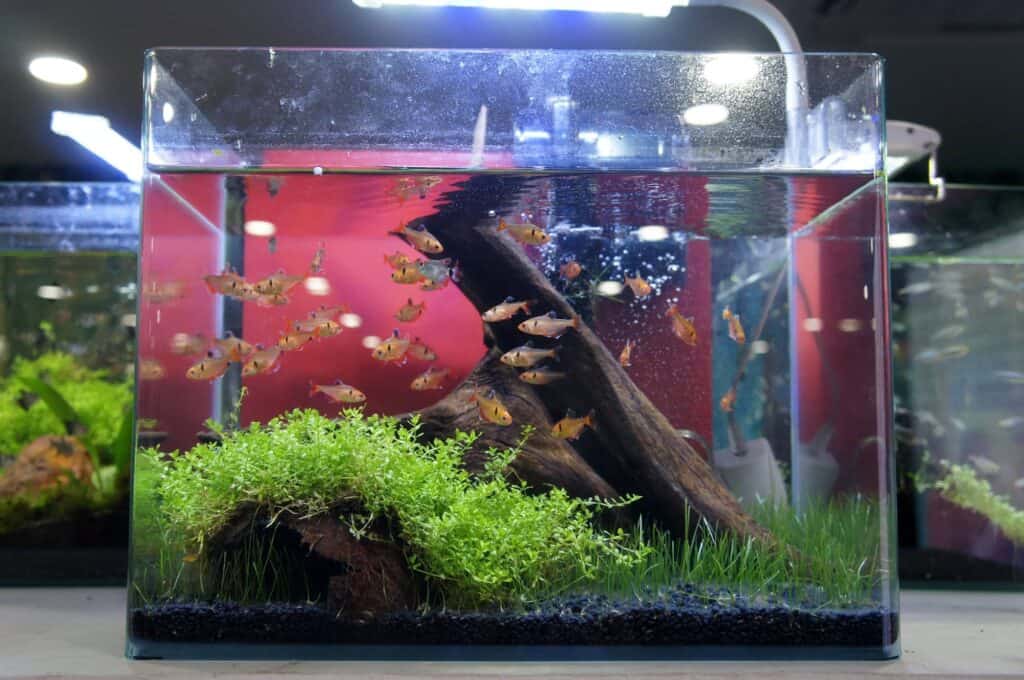
There aren’t many tropical fish species that will thrive in a 5-gallon aquarium, but you can still set up a lively and entertaining tank.
Here are the dos and don’ts of stocking a 5-gallon freshwater aquarium!
Fish Not Suitable for a 5-Gallon Tank
To prevent confusion, I’ve listed below some fish species that are often recommended as being suitable for 5-gallon setups but that actually need a much larger tank.
These species are either too active, grow too large, or cannot handle the unstable water quality that comes with a smaller volume of water.
Goldfish (Carassius auratus)

Fancy goldfish need 20 gallons (75.7 L) of water per fish for the smaller varieties, with larger fish needing even more space.
Additionally, since goldfish are highly social fish, keeping only one per tank is not right. Most goldfish keepers recommend an additional 10 gallons (37.9 L) for every additional fish added.
However, given their heavy bioload, it’s a much better idea to aim for 20 gallons minimum per fish instead. So, goldfish of any variety are a definite no-no for a 5-gallon tank.
Slim-bodied goldfish grow far too large for a fish tank, especially a 5-gallon one. Since these fish can grow to over two feet long, they do best when kept in ponds or extremely large aquarium systems with other goldfish.
Danios and Minnows
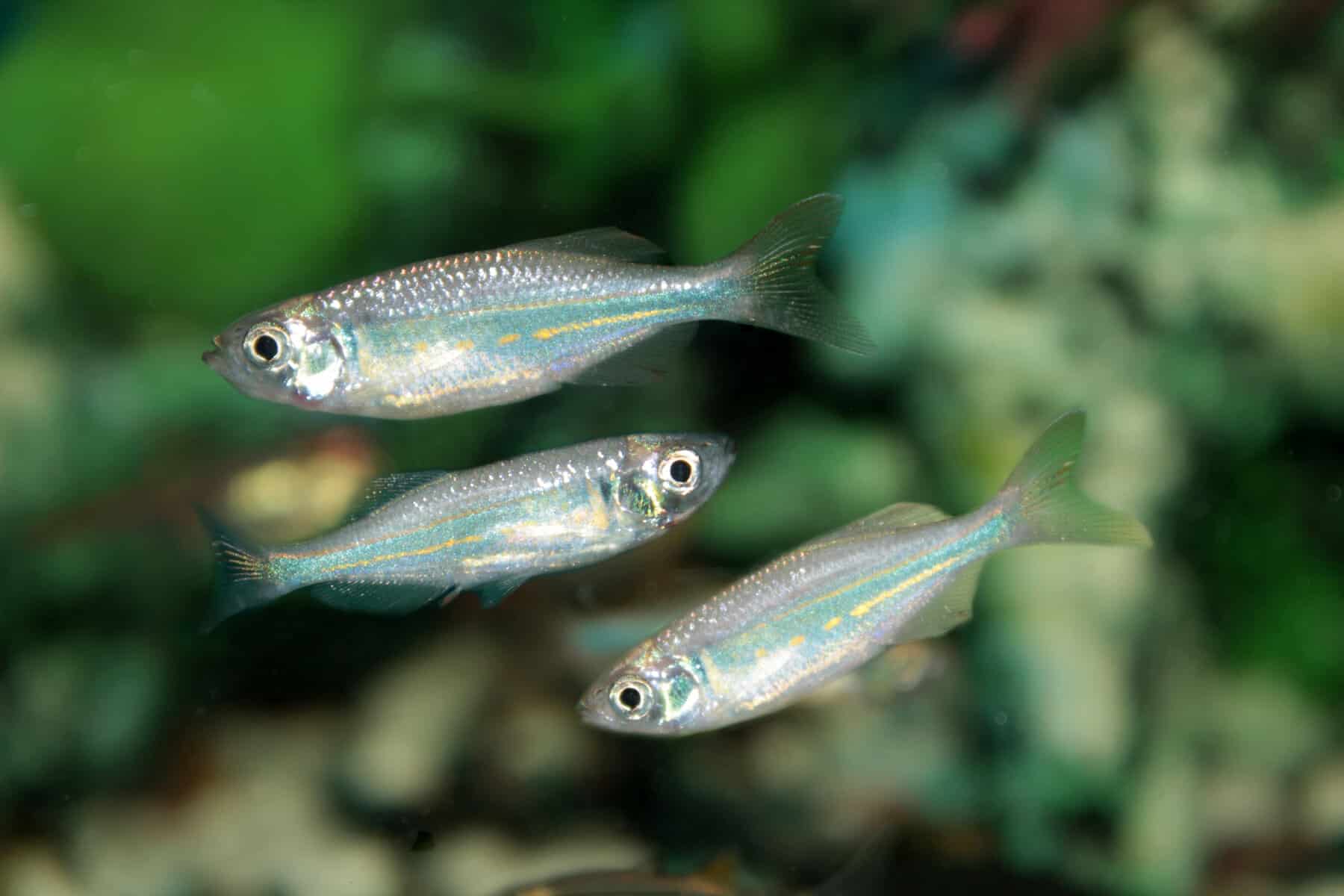
Danios and minnows will mainly stay towards the top of the tank, but they still need plenty of swimming and shoaling space. These hardy fish are some of the most active in the fishkeeping hobby and will quickly stress out in smaller tanks.
These species should never be kept in anything less than a 20-gallon (75.7 L) long tank where horizontal aquarium floor space is greater than vertical.
Dwarf Pufferfish (Carinotetraodon travancoricus)
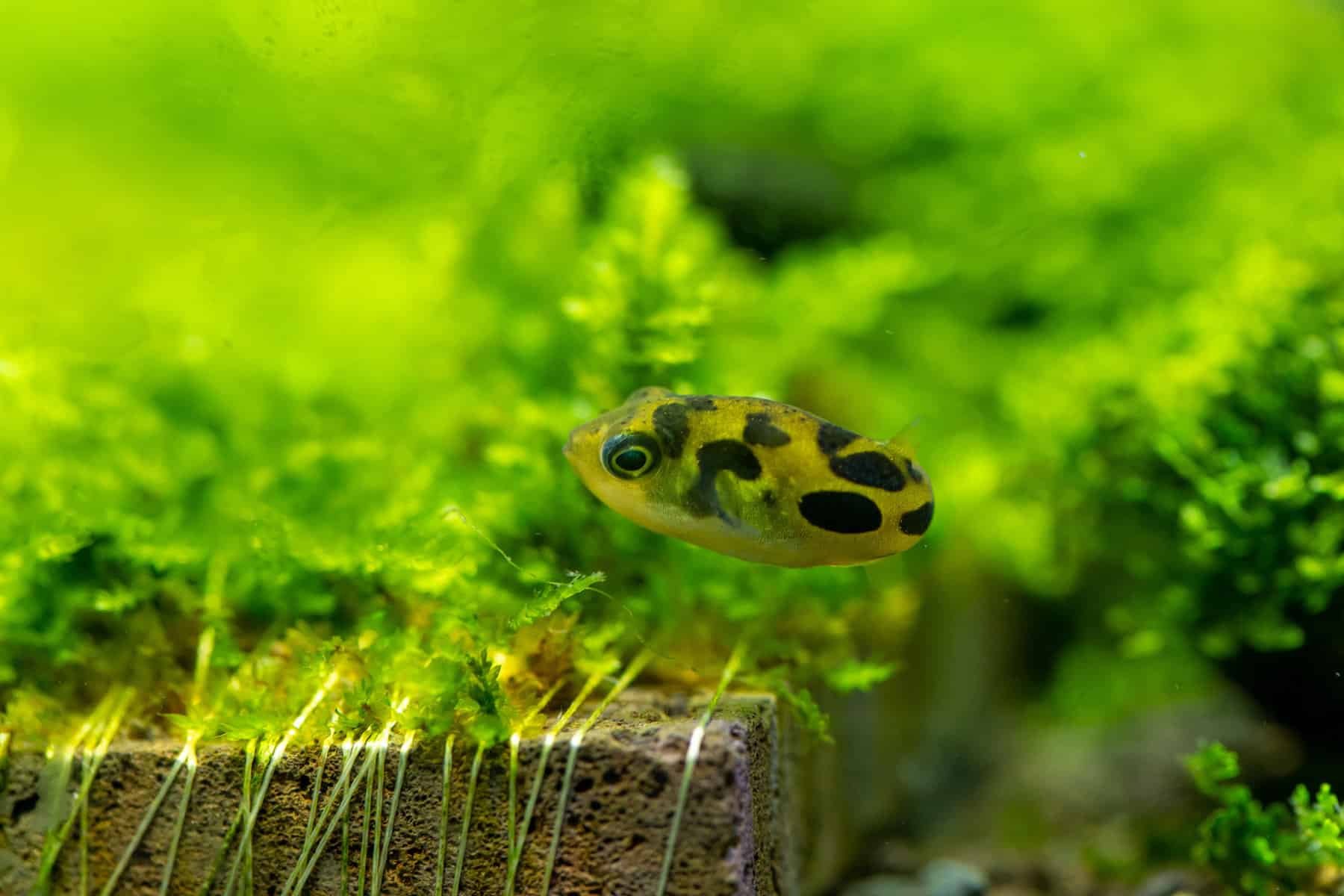
Dwarf puffers are size-appropriate for a 5-gallon tank, but unfortunately, hobbyists can’t meet their need for good water quality and enhancement in such a small tank.
Smaller tanks can easily cause water parameters to fluctuate, given how little water there is. Advanced hobbyists may achieve better water stability, but dwarf puffers will also need an engaging ecosystem with decorations to keep them from getting bored.
For one dwarf pufferfish, a 10-gallon tank (37.9 L) is recommended. If you want to have more than one puffer, at least 20 gallons (75.7 L) is needed.
Tetras
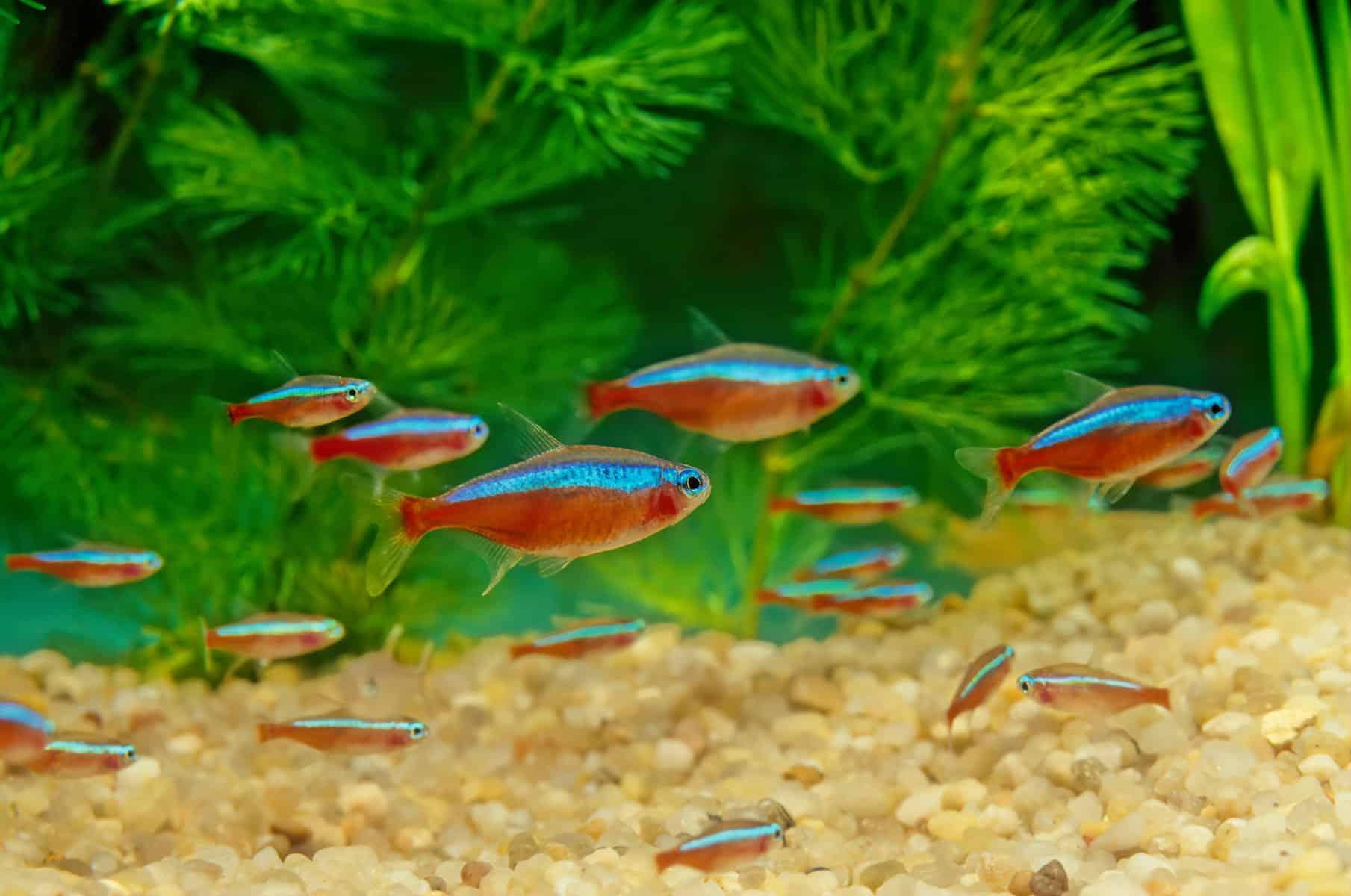
All tetras, including neon tetras (Paracheirodon innesi), cardinal tetras (Paracheirodon axelrodi), and black neon tetras ( Hyphessobrycon herbertaxelrodi), cannot be kept in a small tank. Even though these fish are some of the smallest available, they are still active schooling fish that need room to swim.
Like the white cloud mountain minnow, tetras become stressed when kept in groups of less than eight individuals. If you want to see these fish at their best, set them up in a larger, more extended tank with plenty of companions.
Guppies
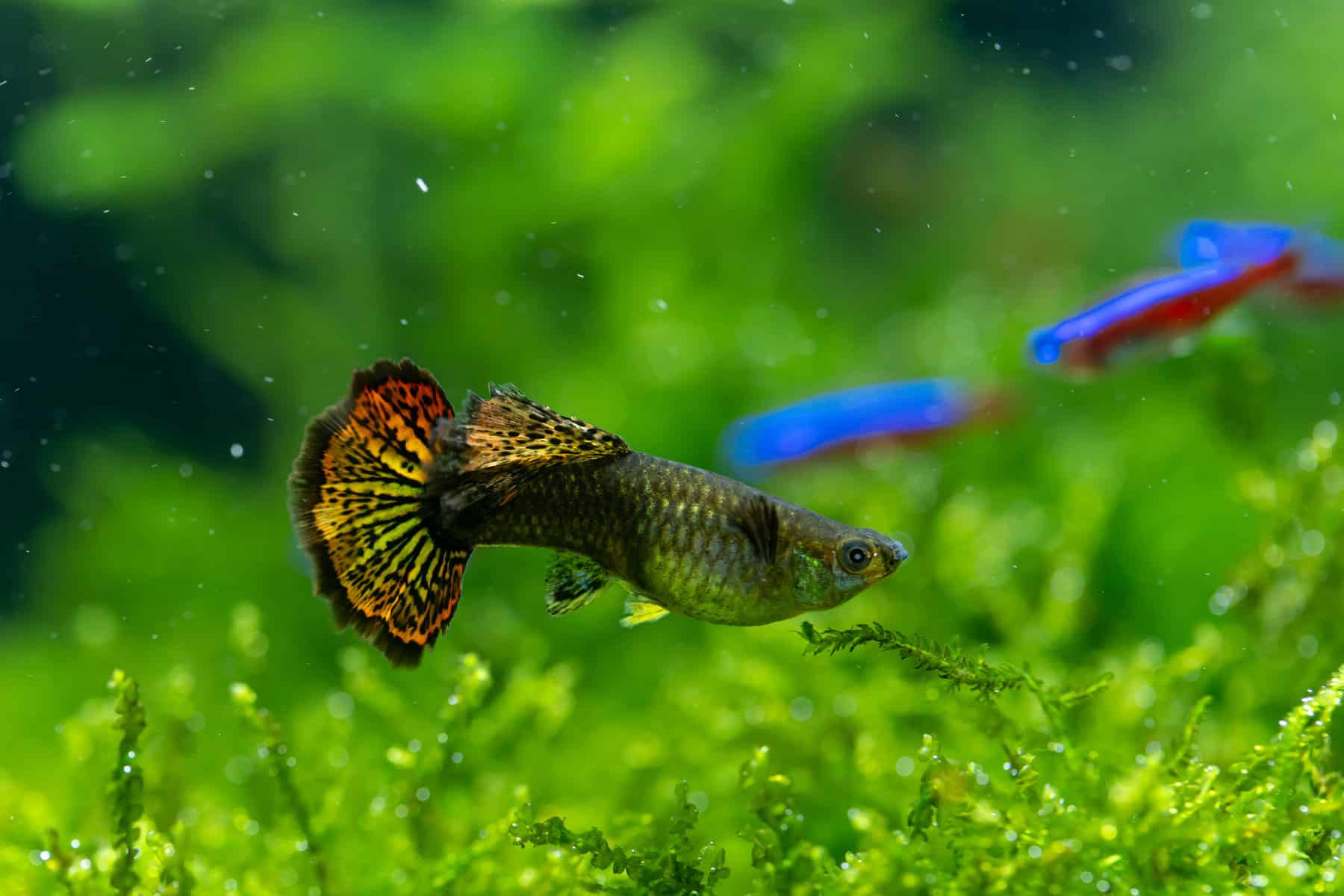
Guppies, including Endlers guppies (Poecilia wingei), are usually kept in awful conditions in pet stores. That does not mean they can be shoved into a tiny nano tank!
These fish grow quite large. Not only do they get bigger than you think they will, but they’re prolific breeders. It doesn’t help that even if you buy all females, they might be pregnant right from the fish store or breeder and spawn in your aquarium.
The small space and limited scope for decoration of a 5-gallon tank also don’t allow the females to escape males constantly harassing them to breed.
Rasboras
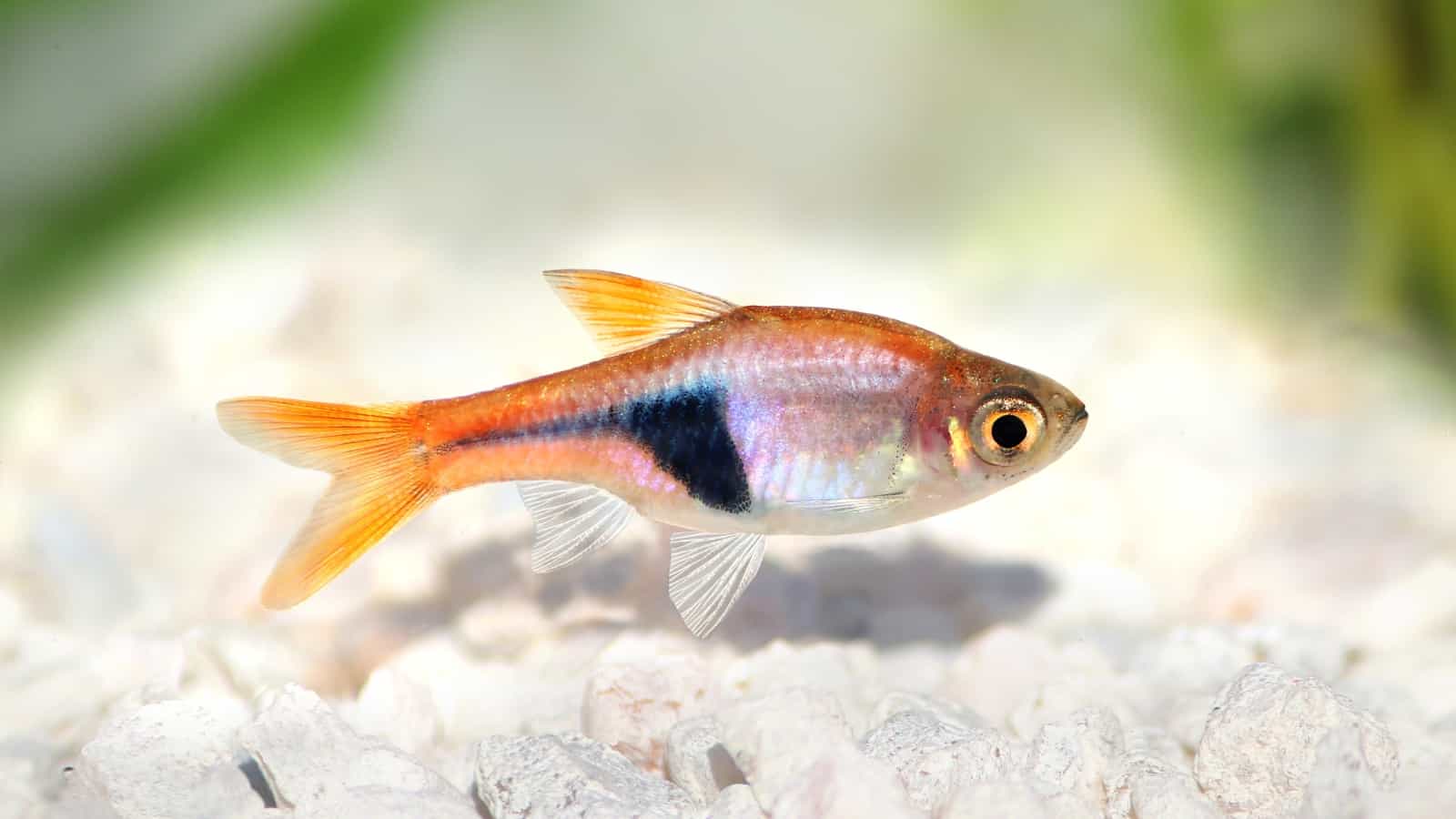
Rasboras also need larger tanks and greater numbers to thrive.
Again, it should come as no surprise that even the tiniest of rasboras, such as chili rasboras ( Boraras brigittae), still do best in large groups and spaces; the ideal tank size for a school of six chili rasboras is at least 10 gallons (37.9 L).
Larger species, like harlequin rasboras (Rasbora heteromorpha), need at least 20 gallons (75.7 L) to feel at home.
Corydoras spp.
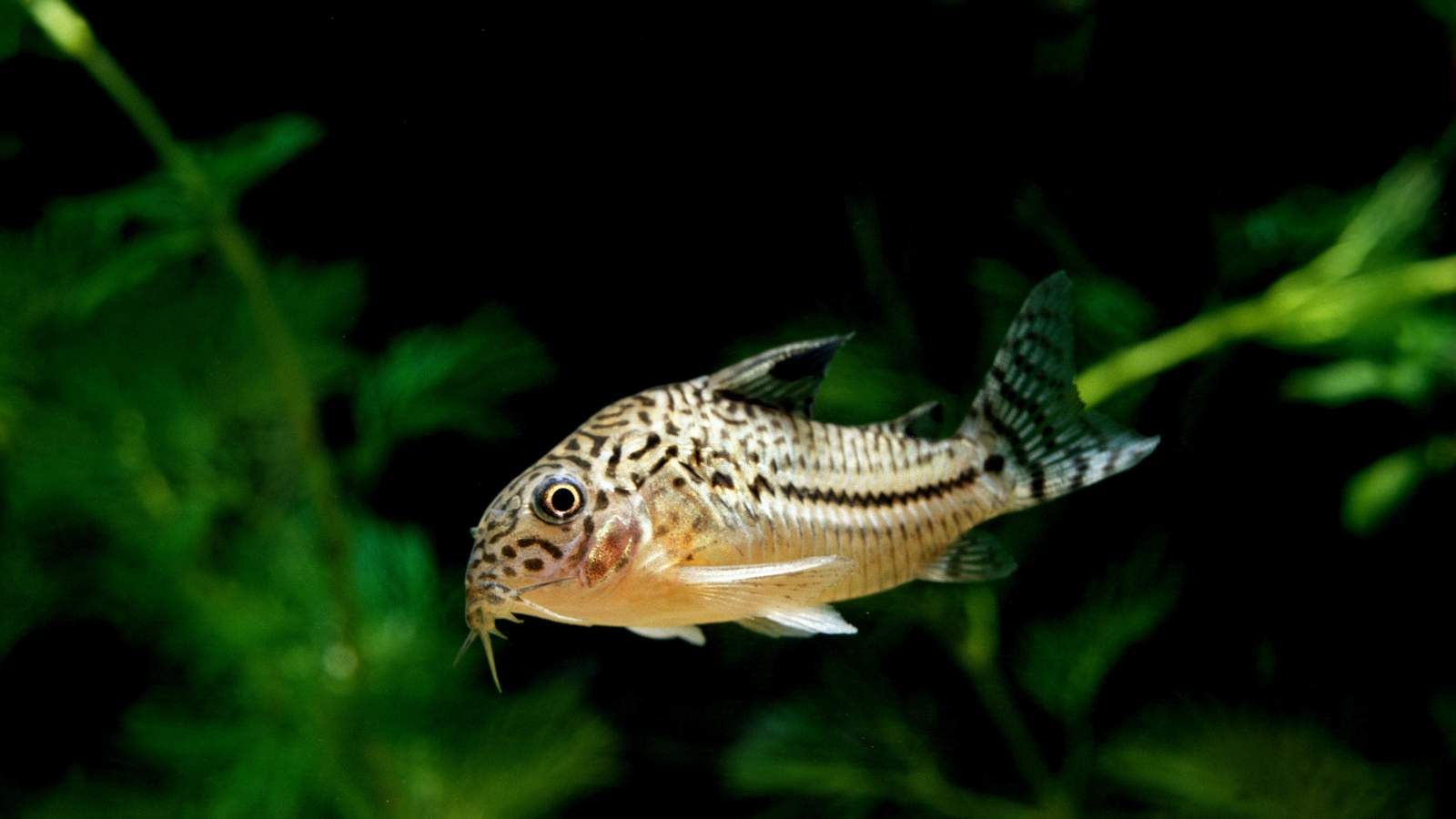
Everyone wants to have corydoras in their aquariums! These small, active fish bring life and excitement to the bottom of the tank in a way that other species can’t.
However, all corydoras catfish species, including one of the smallest species, pygmy corydoras (Corydoras pygmaeus), are too active and/or too large for a 5-gallon aquarium.
Pygmy corydoras are also sensitive to poor water quality, which can be challenging to control in smaller setups. Since 5-gallon aquariums tend to have less water chemistry stability, any slight change can spell disaster for the pygmies.
Although many people recommend getting just one corydora as a “cleaner” fish for smaller tanks, don’t be fooled! Corydoras are schooling fish and need the company of at least four or five others of their species.
Some beginners to the hobby mistakenly believe that corydoras catfish are algae eaters that make a good cleaning crew for a tank. However, I’ve had many corys over the years, and I can confirm that they are not! You need to feed them a basic diet of tropical fish flakes and frozen meaty foods to supplement the nutrition they can take from plant matter and algae growing in the tank.
Corys are also surprisingly active for bottom-dwellers, spending much of their time foraging among plant bases and darting up to the surface periodically to snatch a gulp of air. So, the best-shaped tank for these cute little fish is a long, shallow one, and a 5-gallon aquarium is simply too small.
Large Snails
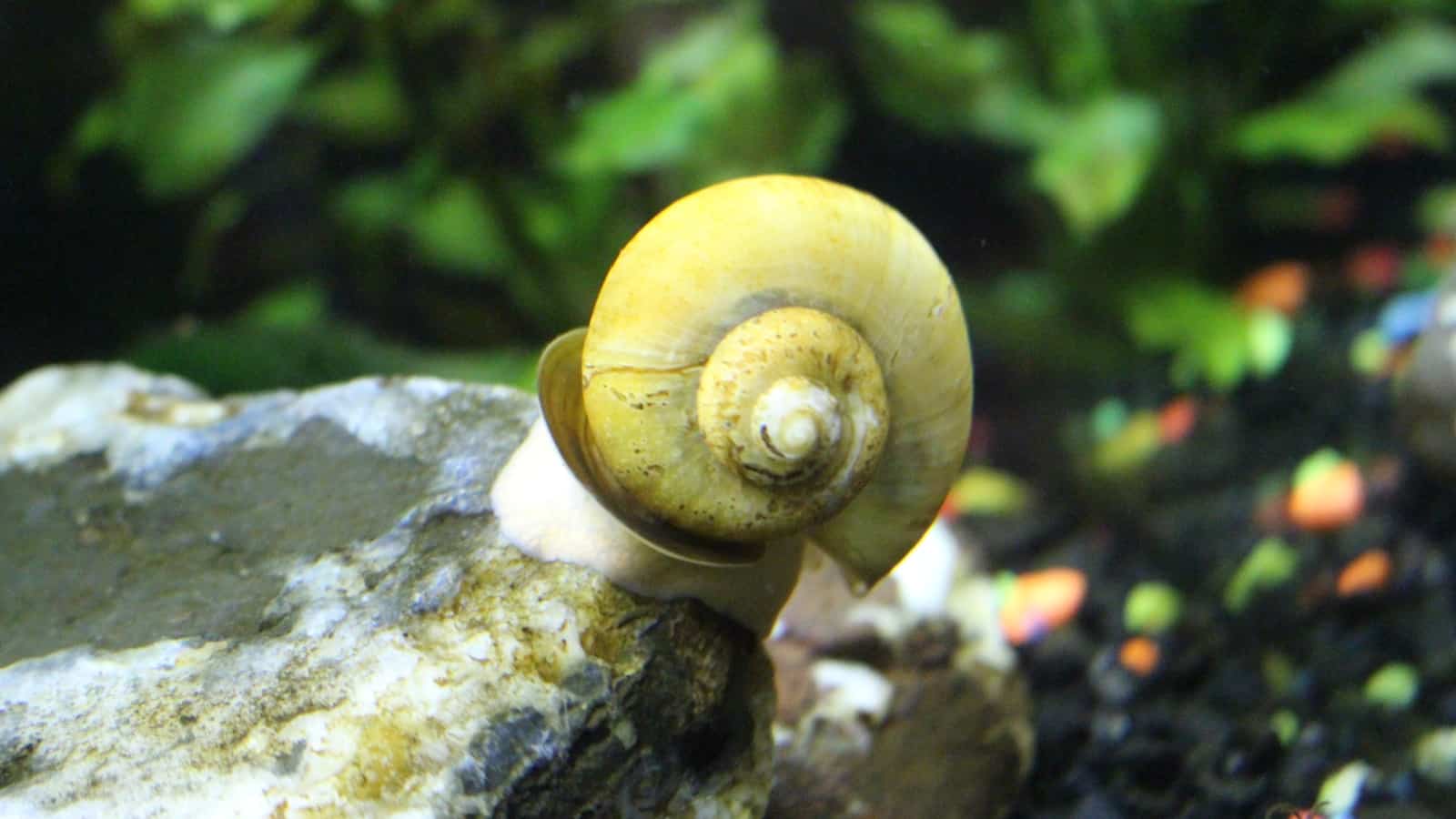
People always underestimate how much waste snails produce. In particular, the apple snail (Ampullariidae family) and mystery snail (Pomacea bridgesii) grow too large and produce a lot of waste. However, if the tank is adequately filtered with live plants and no fish, large snail nano tank setups can be successful.
To make life a bit easier on yourself overall, aim for bigger setups for larger snails. In a small tank, stick to nerite snails that can’t breed in freshwater.
The Best Ways to Stock a 5-Gallon Aquarium
A few fun nanofish and invertebrates will do wonderfully in a tank of this size.
However, remember that you must always cycle your tank before adding fish! In a 5-gallon aquarium, it’s easy to lose control of the water chemistry, which can prove fatal to the inhabitants before you even know there’s anything wrong.
Many of the species listed below can be combined as their bioload is relatively minimal as long as they are compatible. You can easily add a few shrimp or snails to pretty much any setup, though this might be different when fish are involved.
Here are some of the best fish and invertebrates for stocking 5-gallon tanks.
Betta Fish (Betta splendens)
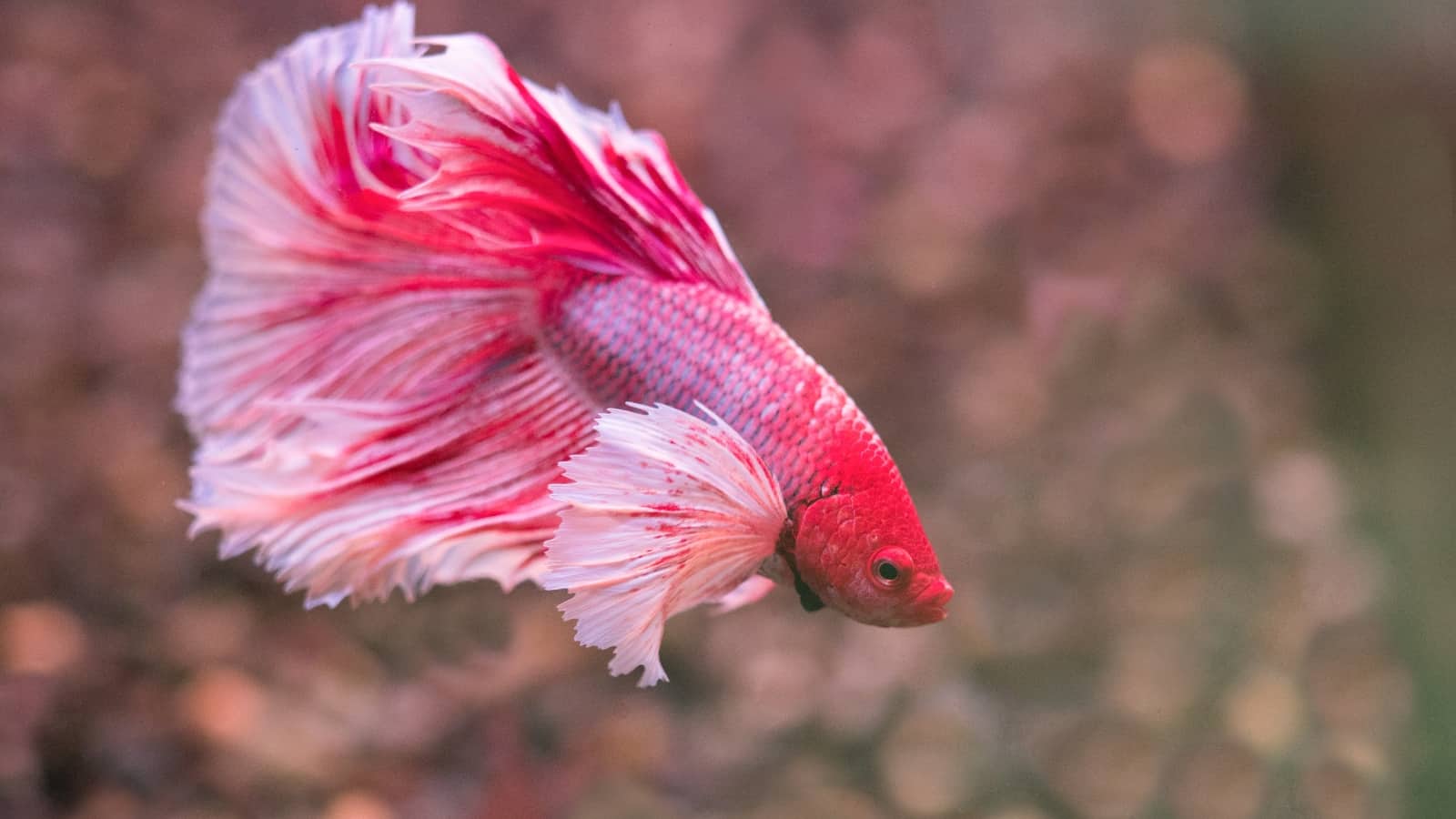
Betta fish are excellent fish for stocking a 5-gallon aquarium: they’re beautiful to look at, don’t require much extra maintenance, and fit perfectly in a standard 5-gallon setup.
These beautiful fish do especially well in planted betta tanks stained with plant tannins and filled with natural hiding places. Of course, keep in mind that they are aggressive fish, and you cannot keep two males together in the same tank.
If you want to branch out and try something different, you can also try other wild species of betta, such as Betta smaragdina, Betta mahachaiensis, Betta imbellis, or Betta siamorientalis.
Least Killifish (Heterandria formosa)
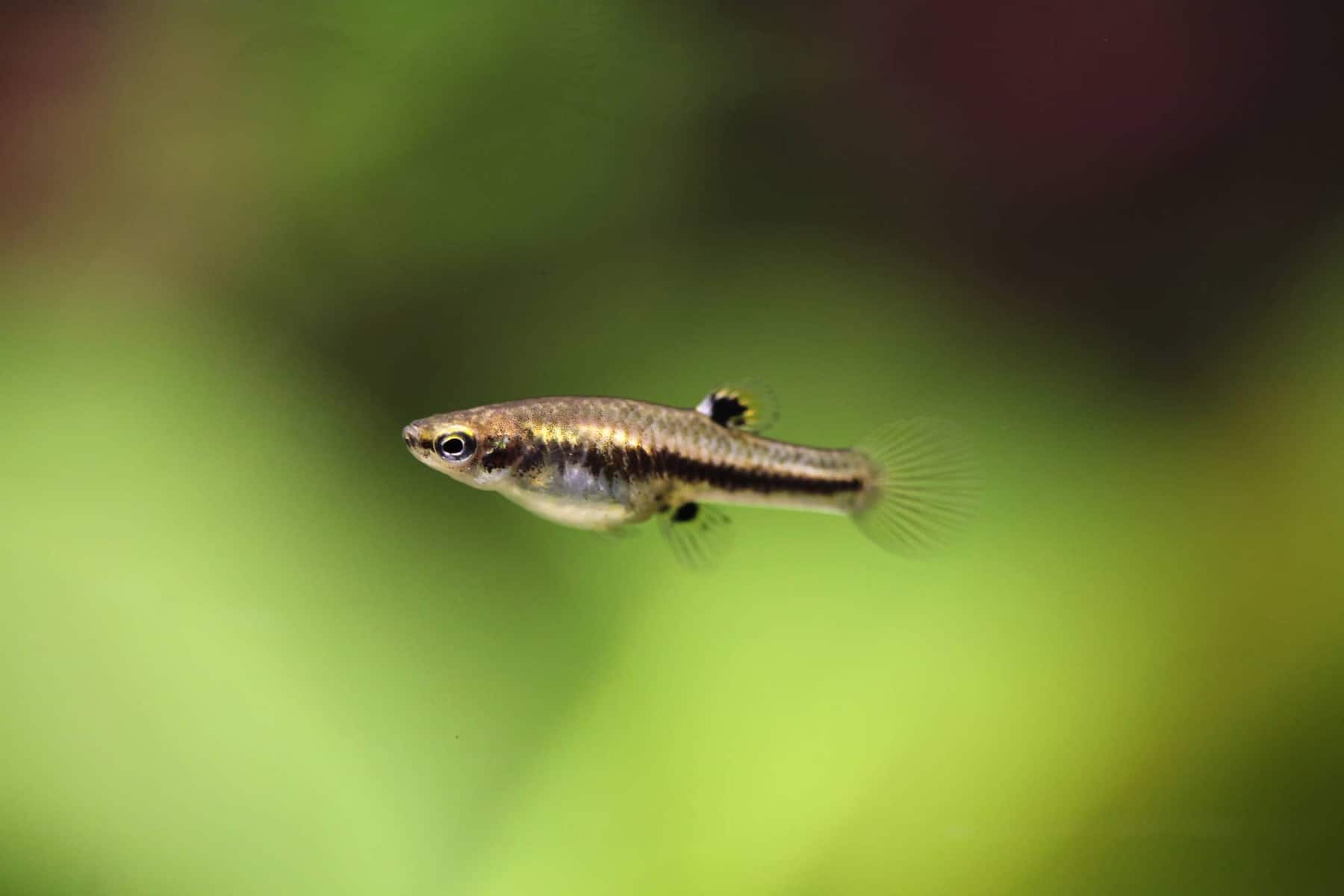
While you can keep a pair of least killifish in a 5-gallon nano tank, keep in mind that they might breed if conditions are suitable, leading to overstocking. In that case, you’ll need to have larger spaces available for growing out the fry and eventually rehoming them.
Otherwise, least killifish will also appreciate a densely planted 5-gallon aquarium.
Cherry Shrimp (Neocaridina davidi)

If you don’t want to have fish in your aquarium, then a shrimp tank is the next best thing. Cherry shrimp are relatively easy to maintain as long as water parameters are kept in check. They bring incredible pops of bright color against a green backdrop!
If you’re lucky, the adult shrimp will start to reproduce and quickly fill the tank on their own, which is good as they can be quite expensive. You may add 3-5 individuals to start.
In addition to cherry shrimp, you may also add orange sakura, yellow shrimp, blue fairy shrimp, and other variations. See this thread for more freshwater shrimp options.
Once added to the tank, ensure that your shrimp are protected from being sucked up by any filters or wavemakers.
If you’ve never kept shrimp before, check out this Reddit thread! Contributor, chaotemagick has created a fabulous infographic explaining how to get started keeping cherry shrimp in your 5-gallon tank. This thread is packed with useful information that you’re bound to find helpful, so do give it a look.
Dwarf Crayfish (Cambarellus spp.)

Dwarf crayfish are favorites for stocking nano setups because they are small but pack plenty of personality!
Crayfish can comfortably be kept in a 5-gallon aquarium as long as they are given plenty of hiding places.
When picking a dwarf crayfish species, be sure to choose one of the smaller ones, such as the least dwarf crayfish (Cambarellus diminutus), and not the larger Mexican dwarf crayfish (Cambarellus patzcuarensis) that needs more space.
At most, only two dwarf crayfish should be kept per 5-gallon aquarium. You will also want to check compatibility with fish species if you plan on transferring them to a larger aquarium eventually.
Thai Micro Crab (Limnopilos naiyanetr)
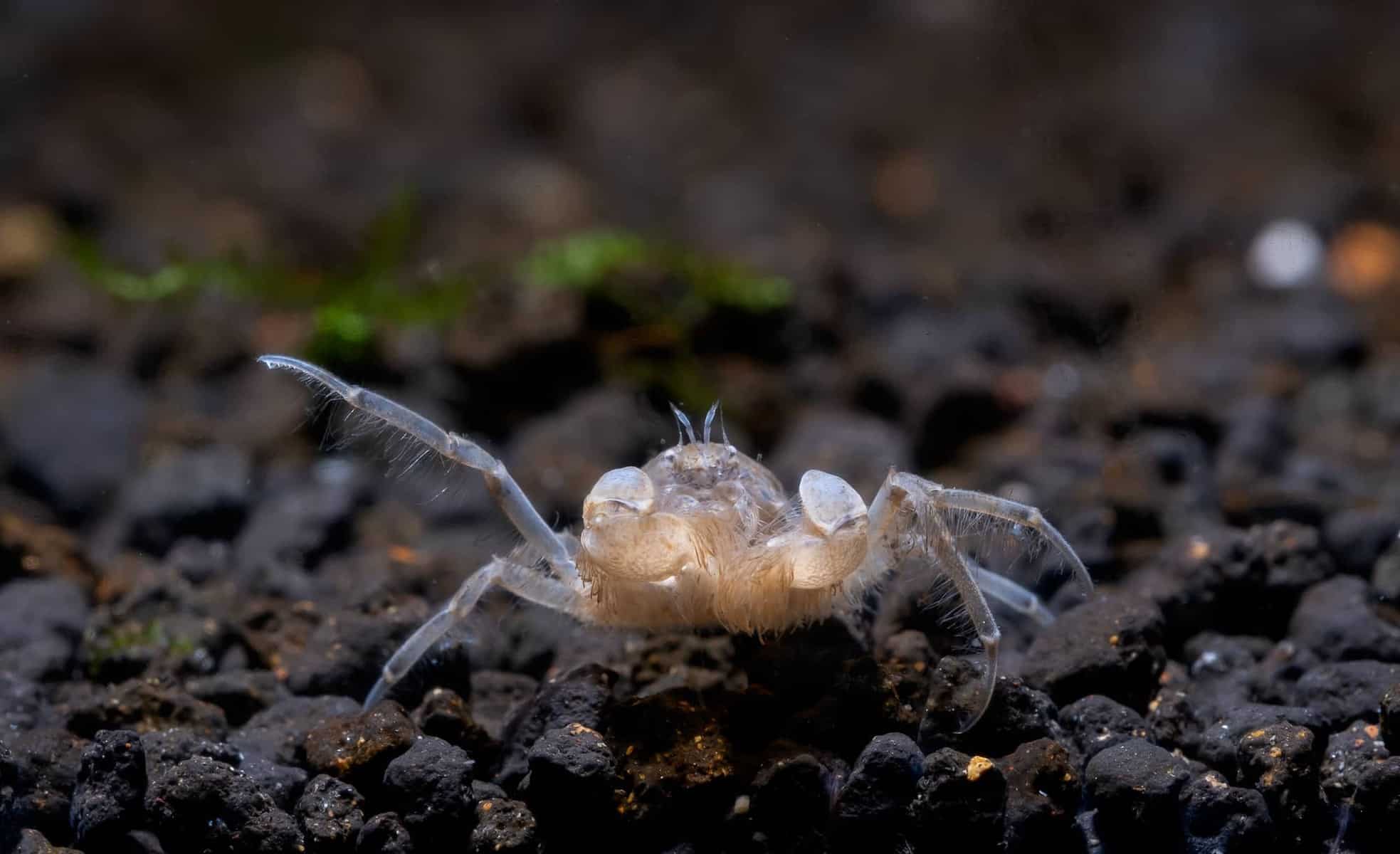
Thai micro crabs are so small you might not even see them! These crabs aren’t the most obvious choice for a 5-gallon aquarium, but they can bring some life to a small ecosystem.
Thai micro crabs are perfect for nano setups that have lots of hiding places and peaceful fish; this crab species can be quite difficult to find and is often recommended only for experienced nano tank keepers.
Otherwise, they are primarily scavengers and filter feeders that help remove algae and other microorganisms. They easily get along with shrimp and snails but might be eaten by more aggressive, predatory fish.
Smaller Snails
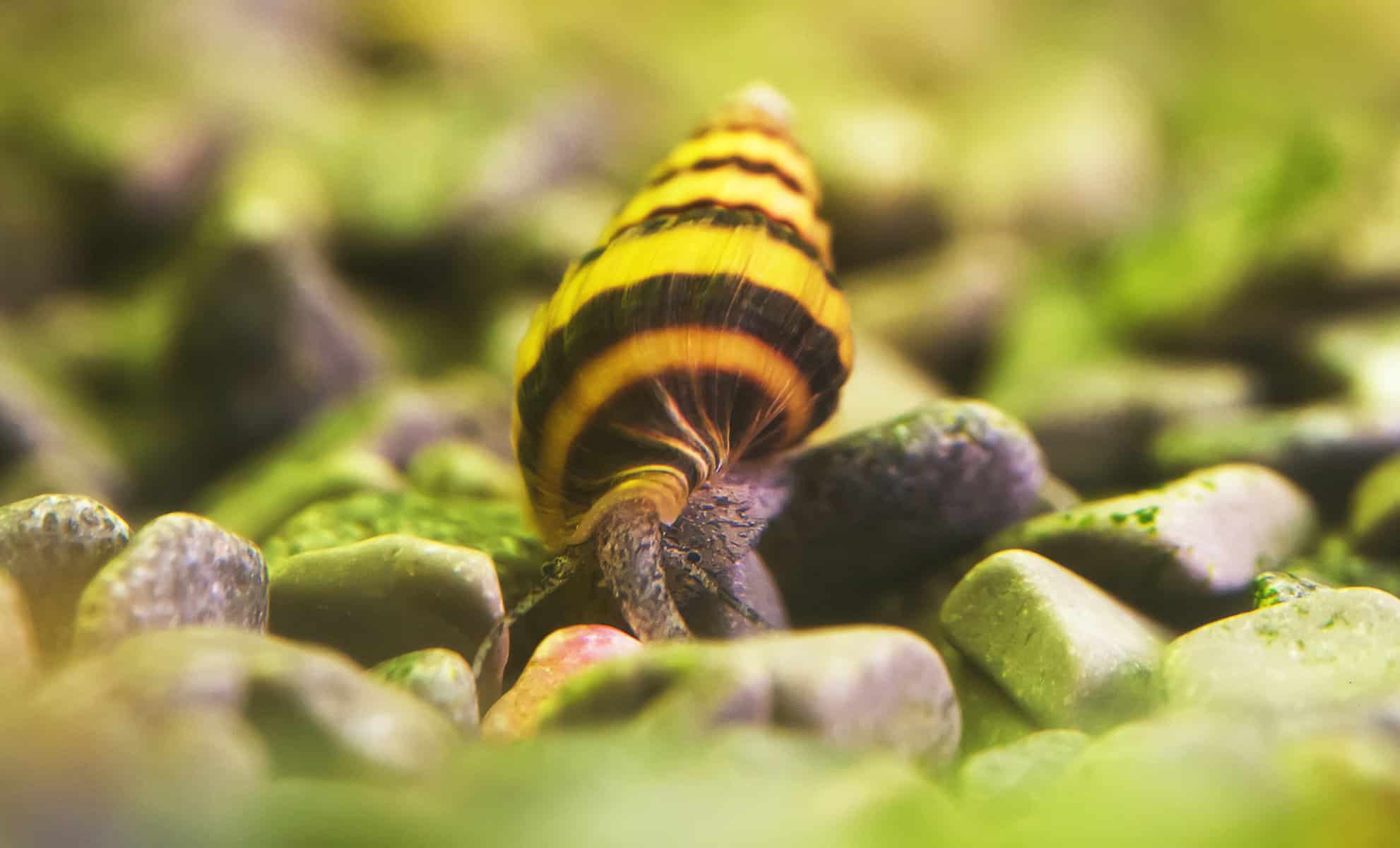
Aquariums don’t need to be complicated to be beautiful! A simple planted setup with a couple of freshwater snails might be perfect for your home.
Nerite (Nerita spp.) and assassin snails ( Clea helena) are some of the smallest, most manageable snail species available. Nerite snails need brackish conditions to reproduce, which makes population control very easy; assassin snails lay one egg at a time and will go after each other if there is no easier prey available.
Because they’re carnivorous, assassin snails should never be kept with other snail species.
Planting
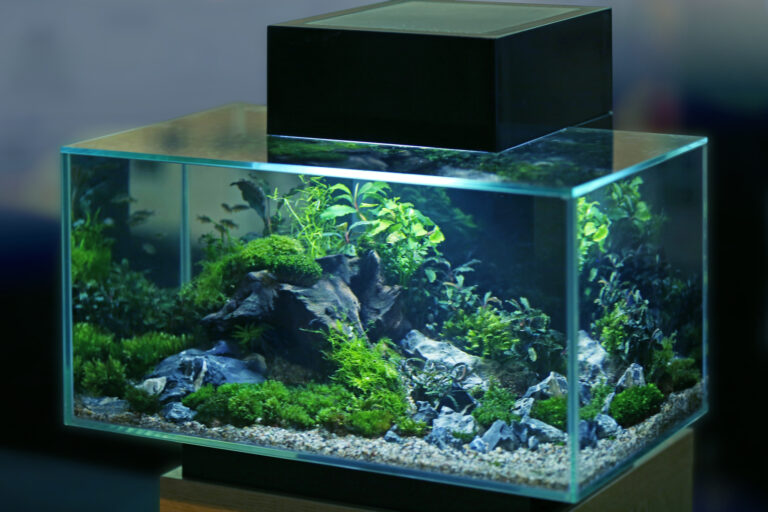
Although your options for fish are limited, 5-gallon aquariums are perfect as planted tanks. There are plenty of plant species that stay relatively small and don’t require much maintenance.
Click here to see some of the best beginner plants for a nano aquarium!
Setting up and maintaining a lovely green aquascape is not as difficult as many aquarists think, and nothing will make your stock happier than a natural environment with plenty of hiding places.
A well-maintained planted tank will brighten up any room and bring a tiny piece of nature into your home. Even in such a limited amount of water, you can set up your own little ecosystem.
One popular method for keeping a small planted tank is the Walstad Method. These systems are self-sustaining, with an abundance of aquatic plants that receive nutrients from snails, shrimp, or fish.
Theoretically, these tanks do not need any maintenance when set up correctly, though some preparation and research will be required beforehand.
Final Thoughts
The best way to stock nano tanks is still the subject of heated debate on many aquarium forums and websites. When picking stock yourself, keep in mind that just because a fish is living doesn’t mean that the fish is thriving.
Be honest with yourself about what’s best for your fish, and remember that understocking is always better than overstocking. Responsibly choosing fish can save you a lot of heartache, trouble, and expense in later stages.
If you still have questions about stocking your 5-gallon aquarium or if you want to share your own experiences with a nano tank setup, be sure to leave a comment below.