
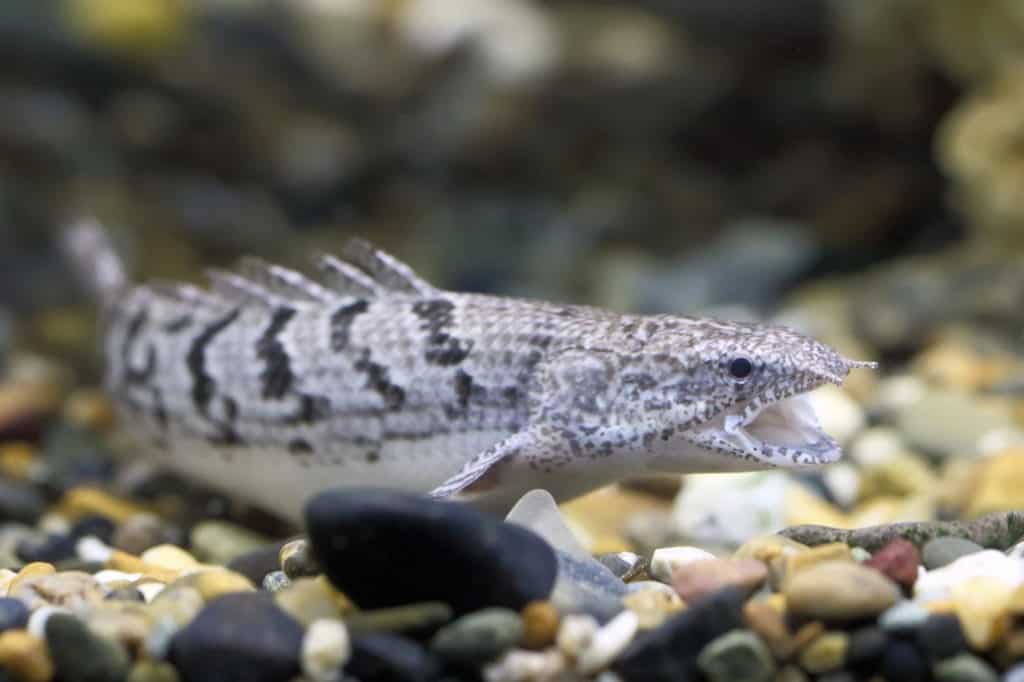
Quick Answer
Senegal bichirs (Polypterus senegalus) need a minimum 90-gallon tank with a secure lid, soft sand substrate, and a carnivorous diet of frozen or live foods. They’re hardy fish that tolerate a wide pH range (6.0-8.0) but require an air gap above the water surface to breathe.
You’ve probably seen a Senegal bichir labeled as a “dinosaur eel” at your local fish store and wondered if that prehistoric-looking creature could actually work in a home aquarium. Good news: it can. Bad news: most care guides dramatically understate the tank size you’ll need.
The Senegal bichir isn’t difficult to keep — it’s one of the hardiest fish in the hobby. But the 50-gallon minimum you’ll see repeated everywhere is barely adequate for a juvenile and will leave an adult cramped and stressed. If you’re going to commit to a fish that can live 15+ years, start with the right setup.
Senegal Bichir Care Overview
What Makes Bichirs Different From Other Fish
Polypterus senegalus belongs to an ancient lineage that’s been around since the Mesozoic era — roughly 60 million years. That’s not just a fun fact. It explains almost everything unusual about keeping them.
Bichirs have a modified swim bladder that functions as a primitive lung. They must surface to breathe air. This isn’t optional behavior — deny them access to the surface, and they’ll drown. Yes, a fish can drown. This is the most common way new bichir keepers accidentally kill their fish.
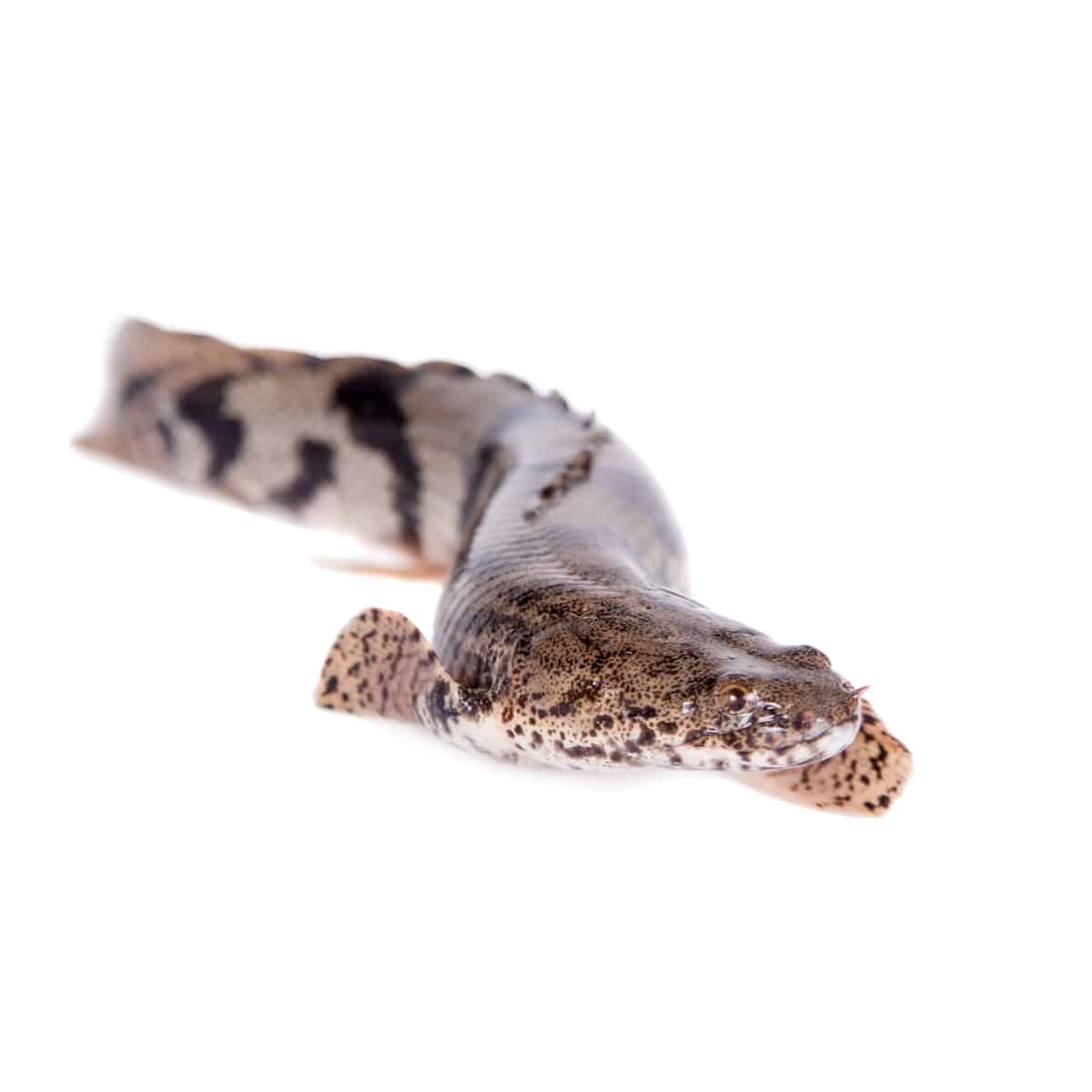
Their pectoral fins work more like legs than typical fish fins. Bichirs can and will crawl out of your tank if given the opportunity. They’re surprisingly good at it. I’ve heard from keepers who found their bichir on the floor across the room from the tank.
[WARNING] Escape Risk
A tight-fitting lid is non-negotiable. Plug every gap with filter foam or mesh — bichirs will find openings you didn’t know existed. But leave a 2-inch air gap between the water surface and lid. Sealing them in completely is just as deadly as letting them escape.
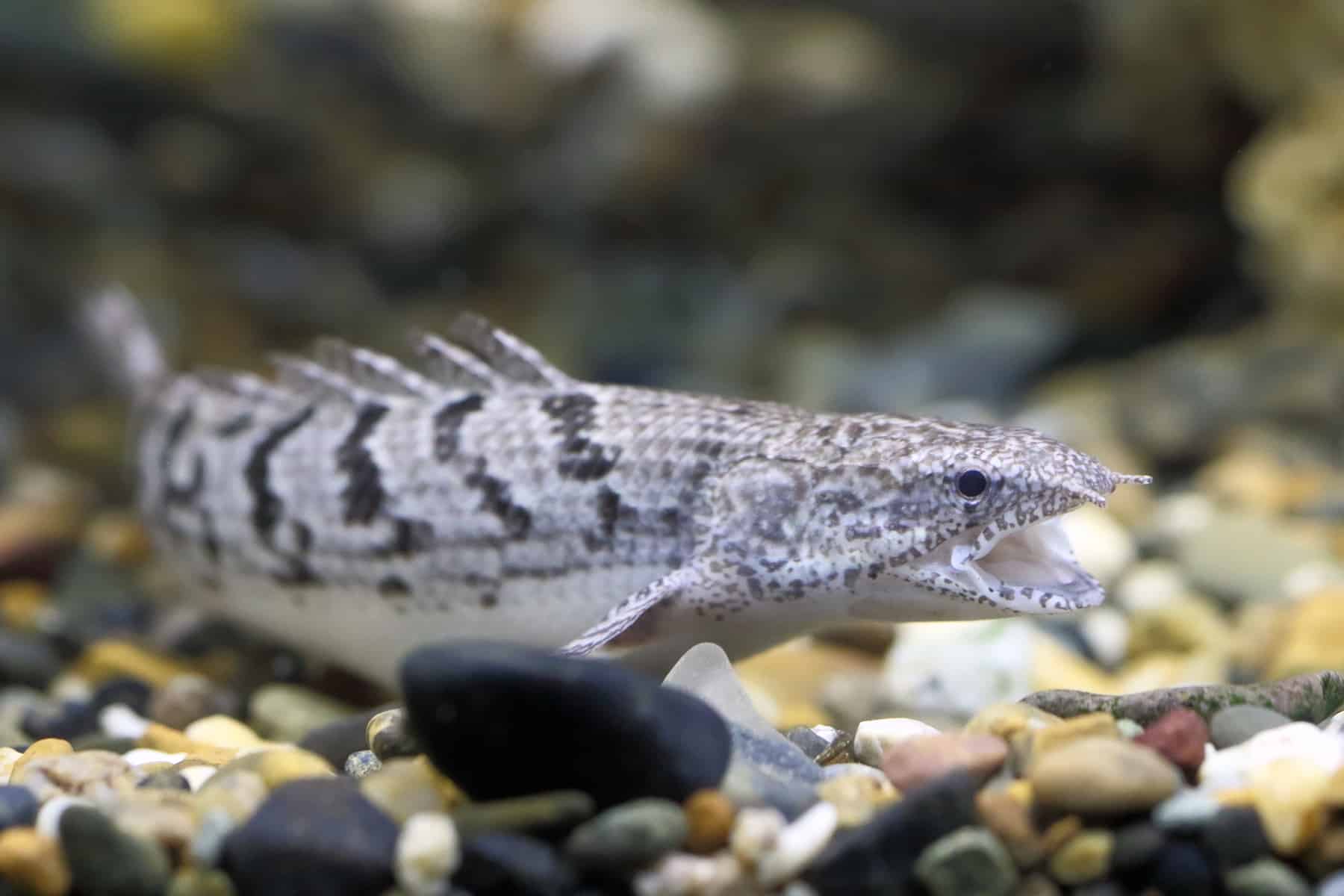
The Senegal bichir’s body is covered in ganoid scales — thick, bony plates that feel almost like armor. Combined with their poor eyesight and keen sense of smell, they’re built for low-visibility hunting in murky water. In your tank, they’ll rely heavily on scent to locate food.
Tank Size: Why 50 Gallons Isn’t Enough
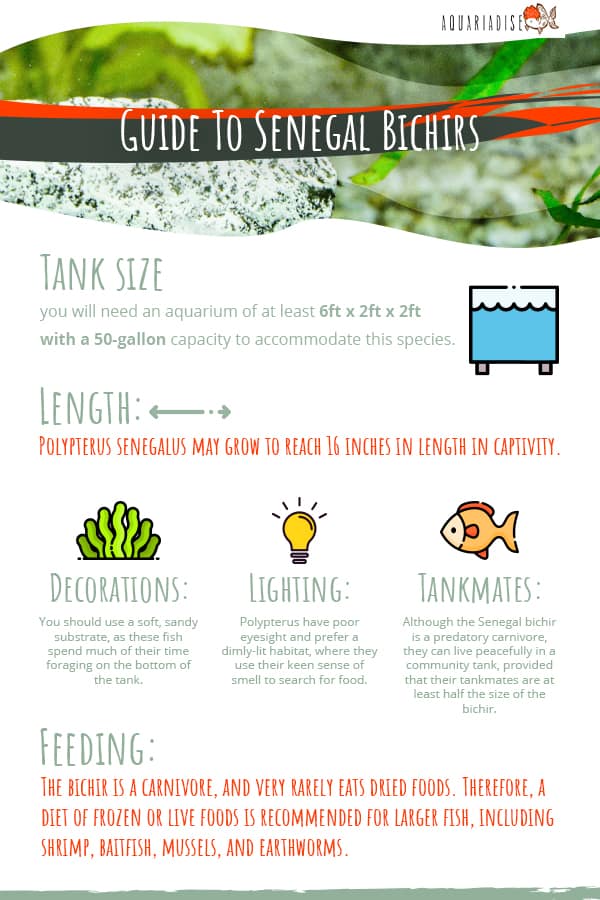
Here’s where most guides get it wrong. You’ll see “50 gallons minimum” repeated constantly, and it’s technically survivable — but it sets up both you and your bichir for problems.
Captive Senegal bichirs typically reach 12-16 inches. That’s a foot-long fish in a tank that might only be 4 feet long. They’re not active swimmers, but they do need room to turn around comfortably and establish territory.
[FACT] A 90-gallon tank (typically 6 feet long) is the realistic minimum for adult Senegal bichirs. The tank’s footprint matters more than total volume — length and width trump height for bottom-dwelling fish.
If you’re keeping multiple bichirs (and they can be kept in groups), add another 20-30 gallons per additional fish. They’re not aggressive toward each other, but they won’t willingly share hiding spots.
Substrate and Hardscape
Sand is the clear choice. Bichirs spend most of their time on the bottom, often partially buried, and will dig through the substrate searching for food. Gravel can trap uneaten food in the gaps and makes foraging more difficult.
Provide multiple hiding spots using driftwood, rock caves, and PVC pipes. Bichirs are nocturnal and need places to retreat during the day. Without adequate cover, they’ll be stressed and may refuse to eat.
Lighting
Dim lighting works best. Bichirs have poor eyesight and are most active in low-light conditions. Heavy planting or floating plants can diffuse overhead lighting effectively.
A blue moonlight on a timer — coming on when the main lights switch off — lets you actually watch your bichir. Otherwise, you’ll own a fish you rarely see.
Water Parameters and Filtration
Senegal bichirs are remarkably tolerant of varying water conditions — it’s one of their best traits. They’ll accept pH anywhere from 6.0 to 8.0, and most tap water works fine after dechlorination.
Temperature should stay between 77-84°F. They’re tropical fish despite looking like something from a cold prehistoric swamp.
Filtration needs to be adequate for the bioload but shouldn’t create strong current. In the wild, bichirs inhabit slow-moving or stagnant water — marshes, swamps, and sheltered lagoons. A canister filter with a spray bar dispersing the output works well. Weekly water changes of 25-30% keep nitrates manageable.
Diet: Live and Frozen Foods Are Essential
This is where keeping a bichir gets more demanding than most community fish. Senegal bichirs are obligate carnivores and rarely accept dry foods. Expecting them to eat pellets is setting yourself up for a starving fish.
[TIP] Pro Tip
Bichirs hunt by smell, not sight. Drop food directly in front of them or use feeding tongs. In a community tank, faster fish will outcompete them for anything that sinks slowly. Target feeding after lights-out often works better.
Appropriate foods include:
- Earthworms (a favorite — cut into pieces for smaller specimens)
- Frozen shrimp and silversides
- Live or frozen bloodworms
- Mussels
- Feeder fish (use sparingly and only from disease-free sources)
- Vitamin-enriched brine shrimp (for juveniles)
Feed every 2-3 days for adults. Bichirs are slow feeders with slow metabolisms — overfeeding leads to water quality issues faster than with most fish.
Tankmates: Size Matters More Than Temperament
Senegal bichirs are peaceful — until something fits in their mouth. They’re not aggressive, but they are opportunistic predators. The rule is simple: any fish smaller than half the bichir’s length is potential food.
Compatible tankmates:
- Large plecos (common pleco, sailfin pleco)
- Silver dollars
- Oscars
- Large peaceful cichlids (severums, chocolate cichlids)
- Large synodontis catfish
- Other bichir species of similar size
Avoid:
- Any fish under 4 inches
- Shrimp and snails (expensive bichir snacks)
- Highly aggressive cichlids that might damage the bichir’s finnage
- Fast, competitive feeders unless you target-feed the bichir
Multiple Senegal bichirs can coexist, but each needs its own hiding spot. They’re not social — they tolerate each other more than they enjoy company.
Breeding Senegal Bichirs
Breeding bichirs in home aquariums is rare and difficult. It happens occasionally, usually by accident rather than intention.
In the wild, spawning is triggered by the rainy season. Replicating this requires large water changes with slightly cooler water and may need a seasonal temperature drop followed by gradual warming.
During courtship, the pair swims parallel through vegetation. The male wraps his anal fin around the female to form a cup, catches the eggs as she releases them, fertilizes them, and disperses them into plants with powerful tail movements.
Eggs hatch in 3-4 days. The fry remain attached to vegetation until they absorb their yolk sacs, then become free-swimming. Neither parent provides any care — the fry are on their own. Newly hatched brine shrimp is the standard first food.
If spawning does occur, remove the fry to a separate grow-out tank. Adult bichirs, including the parents, will eat them without hesitation.
Did You Know?
Juvenile bichirs have external gills that look like feathery growths behind their heads — similar to axolotls. These usually disappear as the fish matures, but some adults retain small remnants.
Common Problems and What They Actually Mean
Bichir found on the floor: Your lid has a gap. Even a 1-inch opening is enough. Check around filter intakes, airline tubing, and heater cords.
Gasping at the surface constantly: Normal bichir behavior is occasional surface breathing — every few minutes. Constant gasping suggests poor water quality or inadequate oxygen in the water. Check your parameters.
Refusing all food: New bichirs often won’t eat for the first week or two. If an established bichir stops eating, check water quality first. Try offering live earthworms — they’re rarely refused.
White fuzzy patches: Likely fungal infection, often secondary to an injury. Bichirs are prone to scraping themselves on rough decor. Treatment with aquarium salt and clean water usually resolves minor cases.
Frequently Asked Questions
How big do Senegal bichirs get in captivity?
Captive Senegal bichirs typically reach 12-16 inches, with most settling around 14 inches. Wild specimens can exceed 20 inches, but aquarium-raised fish rarely reach that size. Growth rate slows significantly after the first two years.
Can Senegal bichirs live with African cichlids?
Large, peaceful African cichlids can work, but avoid aggressive mbuna or highly territorial species. The bigger concern is water parameters — many African cichlids prefer harder, more alkaline water than bichirs thrive in. Peaceful haps and larger peacock cichlids are safer choices than mbuna.
Do Senegal bichirs need air access to survive?
Yes — this is critical. Bichirs have a modified swim bladder that functions as a lung, and they must surface to breathe air. A sealed tank with no air gap above the water will eventually kill them. Maintain at least 2 inches of space between the water surface and tank lid.
Will Senegal bichirs eat pellets or flakes?
Rarely. Some keepers report success training bichirs onto sinking carnivore pellets, but most individuals refuse dry foods entirely. Plan on providing frozen or live foods as their staple diet — earthworms, shrimp, silversides, and bloodworms are reliable options.
How long do Senegal bichirs live?
With proper care, 15-20 years is typical. Some specimens have reportedly lived over 30 years. This is a long-term commitment — if you’re not prepared to maintain a large tank for potentially two decades, consider whether a bichir is the right choice.
Is a Senegal Bichir Right for You?
The Senegal bichir is hardy, prehistoric-looking, and genuinely interesting to observe. But it’s not a beginner fish despite what some sources claim.
You need space for a 90+ gallon tank. You need to commit to frozen and live foods — not just as an occasional treat, but as the primary diet. You need to accept that this is a nocturnal fish you may rarely see during the day. And you need to be ready for a 15-20 year commitment.
If all of that sounds fine, a Senegal bichir makes a rewarding oddball addition to a large community tank. They’re not flashy, but watching a 60-million-year-old design crawl across your tank floor never gets old.
[INTERNAL LINK: “other bichir species” -> Ornate Bichir care guide]
[INTERNAL LINK: “large plecos” -> Common Pleco care guide]
[INTERNAL LINK: “Silver dollars” -> Silver Dollar Fish care guide]


