
Your fish can’t tell you when something’s wrong with their water — but a sudden death or mysterious illness certainly will. The difference between a thriving aquarium and a frustrating cycle of sick fish often comes down to one thing: knowing your water parameters before problems become emergencies.
Quick Verdict
The Sera Aqua-Test Box is a high-quality, comprehensive test kit that includes 9 essential water tests in one package. It’s more accurate and durable than budget alternatives, making it excellent value for serious hobbyists who want reliable results.
I bought the Sera Aqua-Test Box to replace my old test set, which had dried out and was giving inconsistent readings. After several months of regular use, I’m confident this kit delivers on its promise of German engineering quality. Here’s my complete breakdown of what you get, how it performs, and whether it’s the right choice for your aquarium.
What’s Included in the Sera Aqua-Test Box?
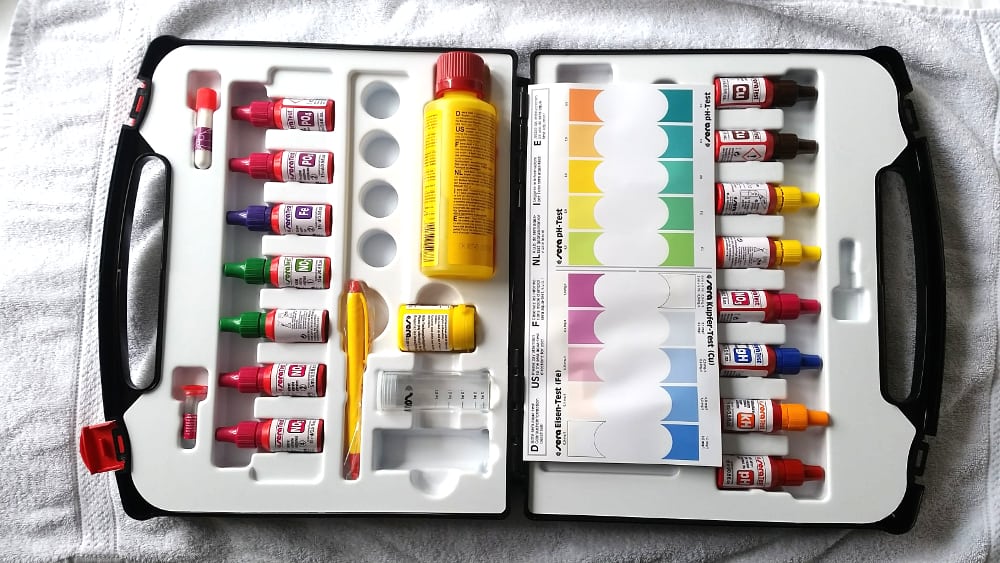
This is a comprehensive freshwater aquarium test kit designed to give you a complete picture of your water chemistry. Unlike basic kits that only cover the nitrogen cycle, the Sera box goes further with tests that matter for planted tanks, sensitive fish species, and troubleshooting stubborn algae problems.
? What’s in the Box
- NH4/NH3 Test — Ammonia/ammonium (critical for cycling)
- NO2 Test — Nitrite (toxic at any detectable level)
- NO3 Test — Nitrate (important for water change scheduling)
- pH Test — Acidity level
- GH Test — General hardness
- KH Test — Carbonate hardness (pH stability)
- PO4 Test — Phosphate (algae troubleshooting)
- Fe Test — Iron (planted tank essential)
- Cl Test — Chlorine (tap water safety)
The kit comes in a sturdy plastic case with a hinged lid that keeps everything organized — a small detail that matters when you’re reaching for it weekly. You also get glass testing vials, a laminated color chart, an instruction booklet in multiple languages, and even a pen for recording results. That pen might seem like a throwaway addition, but keeping a water parameter log is genuinely useful for spotting trends before they become problems.
? Note: A copper (Cu) test is not included. If you’re treating fish with copper-based medications or have concerns about copper pipes, you’ll need to purchase that test separately.
Build Quality and First Impressions
Opening the Sera Aqua-Test Box for the first time, the quality difference compared to budget test kits is immediately obvious. The case feels substantial — it’s not going to crack if you drop it on tile. The glass vials are a significant upgrade from the flimsy plastic tubes you get with cheaper brands, and they make reading colors against the chart noticeably easier.
The color chart itself is printed on thick, laminated card stock. This matters more than you’d think — after a few months of getting splashed with aquarium water, paper charts become faded and unreliable. The Sera chart still looks fresh after extended use.
Each reagent bottle is clearly labeled with color-coded caps that match the test type. The bottles seal properly and the droppers deliver consistent drop sizes, which is essential for accurate results. These details might seem minor, but inconsistent reagent delivery is one of the main reasons cheaper test kits give unreliable readings.
How the Tests Perform
I ran through every test in the kit using the included instruction booklet, deliberately following the steps as if I’d never tested aquarium water before. The instructions are concise but clear, with helpful diagrams showing exactly how to hold the vials and read the results.
? Pro Tip
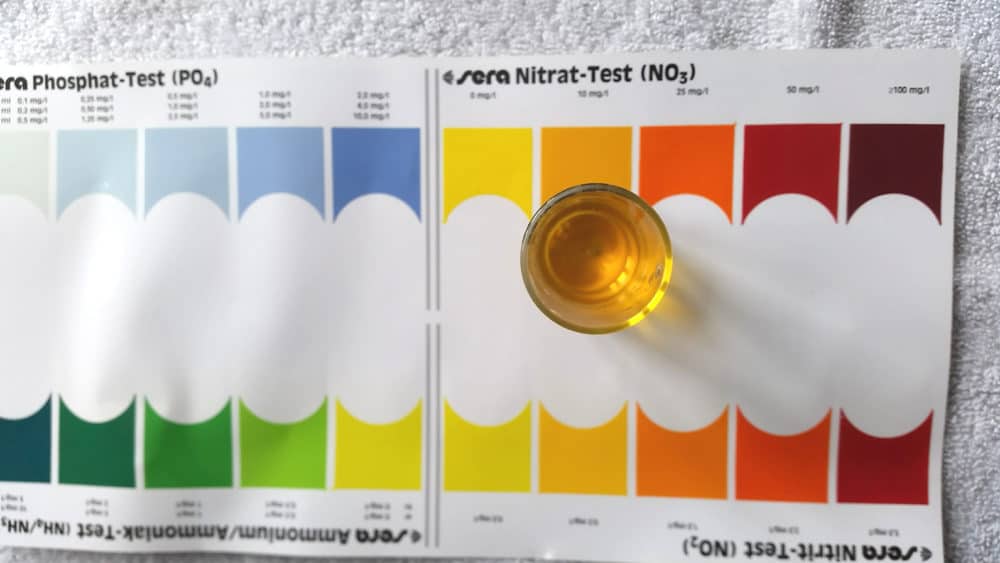
Always test your water in natural daylight or under a daylight-balanced bulb. Warm indoor lighting can shift how colors appear and lead to misreading your results — especially for the nitrate and pH tests where color differences are subtle.
The ammonia, nitrite, and nitrate tests — the three parameters most critical for fish health — all performed exactly as expected. My established tank showed 0 ammonia, 0 nitrite, and moderate nitrate, confirming the nitrogen cycle was functioning properly. The color gradations are distinct enough that you won’t struggle to tell the difference between safe and dangerous levels.
The GH and KH tests use a titration method (counting drops until the color changes) rather than color matching. Some people find this more complicated, but it’s actually more precise than trying to match a color to a chart. My tap water came in at 8 dGH and 6 dKH — useful baseline numbers for choosing compatible fish species.
The phosphate and iron tests are where this kit really shines compared to basic options. If you’re running a planted tank, knowing your iron levels helps you dial in fertilizer dosing. If you’re battling algae, tracking phosphate can reveal whether excess nutrients are fueling the problem. These aren’t tests every hobbyist needs weekly, but having them available means you can troubleshoot issues without buying additional kits.

What’s Missing?
No test kit covers everything, and the Sera Aqua-Test Box is no exception. The most notable omission is a CO2 test. For planted tank enthusiasts injecting CO2, monitoring levels is important to avoid harming fish while maximizing plant growth. Sera sells a separate long-term CO2 indicator that works well alongside this kit.
The copper test absence is understandable since most hobbyists rarely need it, but it’s worth noting if you use copper-based treatments or have older plumbing.
?? Important
Liquid test reagents have a shelf life. Check expiration dates when you receive your kit, and replace reagents that have expired — old reagents give inaccurate readings that could lead you to make harmful decisions for your fish.
How Does It Compare to Other Test Kits?
The main competitor in this category is the API Freshwater Master Test Kit, which is more widely available and costs less. Here’s how they stack up:
| Feature | Sera Aqua-Test Box | API Master Kit |
|---|---|---|
| Number of Tests | 9 parameters | 4 parameters |
| Includes GH/KH | ? Yes | ? No (separate kit) |
| Includes Phosphate | ? Yes | ? No (separate kit) |
| Includes Iron | ? Yes | ? No (separate kit) |
| Vial Material | Glass | Plastic |
| Best For | Planted tanks, comprehensive monitoring | Basic cycling & fish-only tanks |
For fish-only setups where you just need to monitor the nitrogen cycle, the API kit is a solid budget choice. But if you’re running a planted tank, keeping sensitive species, or want to troubleshoot water quality issues without buying multiple separate kits, the Sera box offers better overall value.
Final Verdict
The Sera Aqua-Test Box delivers exactly what it promises: German engineering quality in a comprehensive package. The build quality is noticeably better than budget alternatives, the tests are accurate and easy to use, and having 9 parameters in one kit means you’re prepared for almost any situation.
Is it overkill for a basic community tank? Possibly. But for planted tank enthusiasts, breeders, or anyone who’s tired of guessing why their fish keep getting sick, it’s a worthwhile investment. I’d buy it again without hesitation.
? Did You Know?
Sera has been manufacturing aquarium products in Germany since 1970. Their testing reagents are manufactured to pharmaceutical standards, which is part of why they command a premium over mass-market brands.
Where to Buy
The Sera Aqua-Test Box can be tricky to find in local pet stores outside of Europe, but it’s readily available online. You can order it from Amazon here.
Before purchasing any test kit, check that reagents haven’t been sitting in a warehouse for years — reputable sellers with high turnover are your best bet for fresh supplies.
[INTERNAL LINK: “nitrogen cycle guide” -> aquarium cycling] [INTERNAL LINK: “planted tank fertilizers” -> plant fertilization]
Frequently Asked Questions
How often should I test my aquarium water?
During cycling, test daily or every other day. For established tanks, weekly testing is ideal for catching problems early. Always test after adding new fish, after medication treatments, or if fish show signs of stress.
How long do the reagents in the Sera Aqua-Test Box last?
Unopened reagents typically last 3-4 years from manufacture. Once opened, they’re generally good for 1-2 years if stored properly — keep them away from direct sunlight and extreme temperatures. Check the expiration dates printed on each bottle.
Is the Sera Aqua-Test Box accurate compared to API test kits?
Both brands produce reliable results when used correctly. The Sera kit uses glass vials and distinct color gradations that many hobbyists find easier to read accurately. For most home aquarium purposes, both are sufficiently precise.
Can I use this test kit for saltwater aquariums?
The Sera Aqua-Test Box is designed for freshwater aquariums. While some tests (like pH and nitrate) will work in saltwater, marine tanks have additional requirements — you’d need separate tests for calcium, alkalinity, and magnesium that aren’t included here.
Do I need all 9 tests or can I just use the basic ones?
For basic fish-only tanks, the ammonia, nitrite, nitrate, and pH tests are the essentials. The additional tests (GH, KH, phosphate, iron, chlorine) become valuable for planted tanks, breeding projects, or troubleshooting persistent problems. Having them available means you’re prepared when you need them.
Have questions about the Sera Aqua-Test Box or want to share your own experience with this kit? Drop a comment below — I’m always interested to hear how other hobbyists approach water testing.


