

With dozens of shrimp foods flooding the market, choosing the right one can feel overwhelming. You want something your shrimp will actually eat, made with quality ingredients, that won’t foul your water. So does GlasGarten Shrimp Dinner deliver?
Quick Answer
GlasGarten Shrimp Dinner is a high-quality, algae-based shrimp food with transparent ingredients and no fillers. It’s particularly popular with dwarf crayfish and holds together well in the tank. The pads work best for larger colonies; smaller setups should opt for the granules.
After the previous review of Ebita Breed’s Jo Hinomaru Bento shrimp food, it’s now time to take a close look at Shrimp Dinner by GlasGarten — a German brand that’s earned a solid reputation among serious shrimp keepers worldwide.
Product Overview
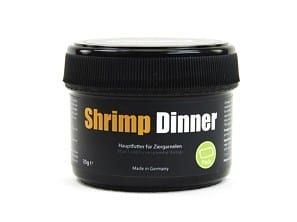
GlasGarten has been a respected name in the shrimp hobby for years, particularly in Europe where the company originated. Their Shrimp Dinner comes in a compact, round container with a twist-off lid and an additional inner cap designed to keep moisture out and maintain freshness. This double-seal design is a small detail, but it shows attention to quality — shrimp food that absorbs moisture becomes crumbly and loses nutritional value faster.
| Specification | Details |
|---|---|
| Brand | GlasGarten (Germany) |
| Available Sizes | 35g (~$20) or 70g |
| Pellet Types | Pads, Granules, Soft Pearls |
| Primary Ingredient | Chlorella algae |
| Crude Protein | 33.1% |
The 35-gram container should last the average shrimp keeper several months, since you’ll only be feeding small amounts a few times per week. If you’re running a breeding operation or keeping a large colony, the 70g option offers better value per gram.
Ingredient Breakdown
I always appreciate when manufacturers provide clear, detailed information about what’s actually in their products. GlasGarten does this well — no vague terms like “fish meal” or “vegetable matter” here. The primary ingredient is Chlorella algae, and importantly, there are no cheap fillers bulking out the formula.
? Full Ingredient List
Chlorella algae, protein extracts of vegetable origin, squid, fennel, yeast extract, Asian cabbage, amino acids, algae extracts, lecithin, mustard seed
Analytical Constituents: 33.1% crude protein, 2.3% crude fat, 8.3% raw fibre, 8.9% crude ash, 6.9% moisture
? Did You Know?
Chlorella algae is one of the most nutrient-dense foods you can offer shrimp. It’s packed with chlorophyll, beta-carotene, and essential amino acids that support molting, coloration, and overall health. Many breeders consider it a “superfood” for invertebrates.
The inclusion of squid provides animal protein that shrimp need for healthy molting, while fennel and Asian cabbage offer plant-based fiber. Yeast extract is a natural source of B vitamins that support immune function. If you’re curious about the specific benefits of each ingredient, GlasGarten provides extensive explanations on their official website.
Pellet Types: Which Should You Choose?
GlasGarten offers Shrimp Dinner in three pellet formats, and choosing the right one actually matters more than you might think:
| Pellet Type | Best For | Notes |
|---|---|---|
| Pads | Large colonies (50+ shrimp) | Hard consistency, lasts 1-2 days |
| Granules | Small to medium colonies | Easier portion control |
| Soft Pearls | Baby shrimp, picky eaters | Slightly different formula, softer texture |
I tested the pads for this review. What impressed me most was their durability — they don’t crumble or fall apart when they hit the water. Both my shrimp and crayfish returned to the same pad repeatedly over 1-2 days, grazing whenever they felt like it. This “buffet style” feeding works well because it mimics how shrimp naturally forage in the wild.
? Pro Tip
For lightly stocked tanks with plenty of natural biofilm and algae, the large pads can be overkill. If you find yourself removing uneaten food after a day or two, switch to the granules for easier portion control. Overfeeding is one of the most common causes of water quality problems in shrimp tanks.
The hard consistency of the pads is both a strength and a minor inconvenience — they’re difficult to break apart if you want to feed a smaller portion. For my next purchase, I’ll probably go with granules since my tank is lightly stocked and the shrimp have plenty of biofilm to graze on between feedings.
Real-World Testing Results
No review is complete without actual testing, so I’ve been using GlasGarten Shrimp Dinner in my mixed invertebrate tank for several weeks. The tank houses both orange dwarf crayfish (Cambarellus patzcuarensis) and low-grade cherry shrimp (Neocaridina davidi).
The shrimp definitely appreciated the addition to their mostly biofilm-based diet. They’d investigate the pellets, graze for a while, wander off, then return later. Pretty typical shrimp behavior.
? The dwarf crayfish were the real fans. They flocked to the pellets the moment they hit the substrate and were more than prepared to fight each other over them. If you keep CPOs or other dwarf crayfish species, this food is worth trying.
Water quality remained stable throughout testing. The pellets didn’t cloud the water or break down into fine particles that could clog filters. Even after sitting in the tank for a day, the pads held their shape well — you could still see the original pellet structure rather than a mushy mess.
Pros and Cons
? What We Liked
- Transparent, quality ingredients
- No fillers or cheap additives
- Pellets hold together well
- Multiple pellet sizes available
- Crayfish absolutely love it
- Doesn’t cloud water
? What Could Be Better
- Pads too large for small colonies
- Hard to break pads into portions
- Premium price point (~$20/35g)
Final Verdict
Would I buy GlasGarten Shrimp Dinner again? Absolutely — especially for my crayfish, who go crazy for this stuff. The quality is evident from the ingredient list and the way the pellets perform in the tank. I appreciate that GlasGarten provides detailed information about what goes into their food and why.
The price is on the higher end compared to budget shrimp foods, but you’re paying for quality ingredients without fillers. A 35g container lasts a long time with proper feeding amounts, so the cost per feeding is actually quite reasonable.
My recommendation: If you keep dwarf crayfish, this is a must-try. For shrimp-only tanks, it’s a solid choice — just make sure to get the granules if you have a smaller colony. [INTERNAL LINK: “best shrimp foods” -> shrimp food comparison guide]
Ready to try it? You can buy GlasGarten Shrimp Dinner online at The Shrimp Farm here.
Frequently Asked Questions
How often should I feed GlasGarten Shrimp Dinner?
For most shrimp tanks, 2-3 times per week is plenty. Shrimp get most of their nutrition from biofilm and algae in a well-established tank. Supplemental feeding should complement this natural food source, not replace it. Remove any uneaten food after 24 hours to prevent water quality issues.
Is GlasGarten Shrimp Dinner safe for baby shrimp?
Yes, all pellet types are safe for shrimplets. However, the Soft Pearls formula is specifically designed for smaller shrimp and may be easier for babies to eat. The granules also work well since baby shrimp can graze on small particles that break off.
Can I feed this to other invertebrates besides shrimp?
Absolutely. Dwarf crayfish love this food (as shown in my testing), and it’s also suitable for snails like nerites, mystery snails, and rabbit snails. The algae-based formula works well for any herbivorous or omnivorous invertebrate.
What’s the difference between pads, granules, and pearls?
Pads are large, hard pellets best for big colonies. Granules are smaller pieces ideal for medium tanks or easier portion control. Soft Pearls have a slightly different formula with a softer texture, designed for picky eaters or younger shrimp. All three share the same quality ingredients.
How long does an opened container stay fresh?
With the double-seal lid design, an opened container should stay fresh for 6-12 months if stored in a cool, dry place away from direct sunlight. Avoid storing near your tank where humidity is higher. If the pellets become soft or develop an off smell, it’s time to replace them.


