
Finding the right shrimp food can feel overwhelming — there are dozens of options, each promising healthier molts, better coloration, and higher breeding success. But how do you know which ones actually deliver?
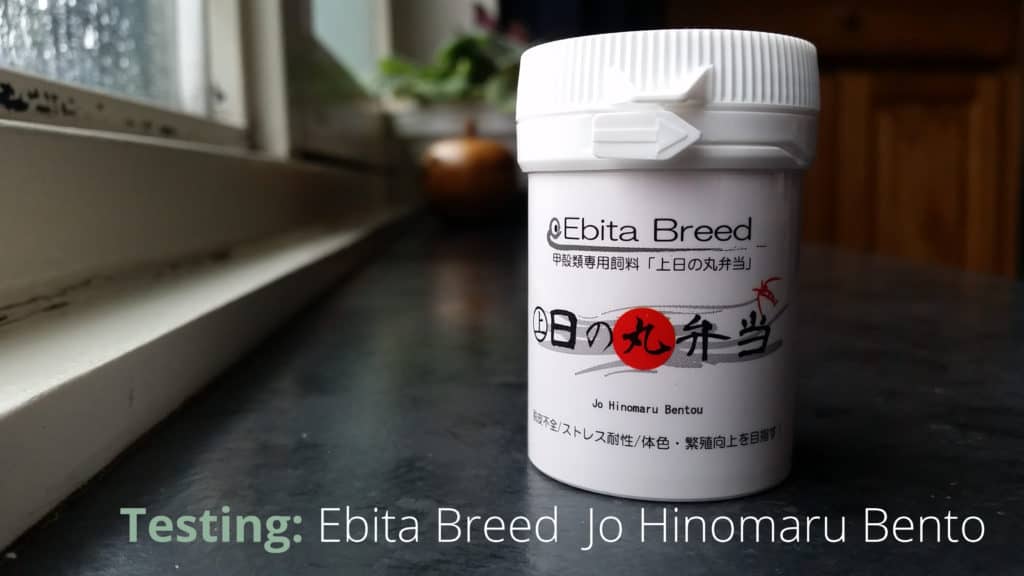
We put Ebita Breed Jo Hinomaru Bento through real-world testing in our shrimp colony to give you an honest assessment. Here’s what we found after weeks of feeding this Japanese-made specialty food to our red cherry shrimp and Amano shrimp.
Quick Verdict
Ebita Breed Jo Hinomaru Bento is a high-quality shrimp food with excellent pellet consistency and strong appeal to shrimp. At $10 for 20g, it’s pricey but delivers premium results. Best for hobbyists who prioritize quality over cost.
Product Overview
Ebita Breed Jo Hinomaru Bento comes in a compact, round container containing 20 grams of food, priced around $10. For perspective, that’s roughly $0.50 per gram — placing it firmly in the premium shrimp food category alongside brands like Shrimp King and Glasgarten.
? Product Specs at a Glance
The first thing you’ll notice is that all labeling is in Japanese. If you’re someone who needs to know exactly what’s in your shrimp food (common among serious breeders working with expensive Caridina species), this can be frustrating. You’ll need to rely on third-party translations and retailer descriptions.
Ingredients Analysis
While exact ingredient percentages aren’t available on the Japanese packaging, retailers list the following key components:
- Phospholipids — Essential fatty acids that support cellular health and molting success
- Animal cholesterol — Important for crustacean hormone production and shell development
- Vitamin C & DHA — Antioxidants and omega-3s that promote immune function
- Freshwater chlorella — Nutrient-dense algae that mimics natural shrimp diet
- Shrimp Guard — Ebita Breed’s proprietary immune-supporting additive
? Shrimp require cholesterol for proper molting. Unlike mammals, crustaceans can’t synthesize their own cholesterol and must obtain it from food. This is why high-quality shrimp foods often include animal-derived ingredients.
The ingredient list is comprehensive and clearly formulated with shrimp biology in mind. However, I’ll be honest: whether this complex formulation performs noticeably better than simpler high-quality foods is debatable. In my experience, the difference between “good” and “premium” shrimp food is subtle unless you’re breeding exhibition-grade shrimp where every edge matters.
Pellet Quality Assessment
This is where Jo Hinomaru Bento really impressed me. The pellets are small squares — roughly 3-4mm — which is ideal for dwarf shrimp. Many foods come in larger pellets that you need to break apart, which creates debris and can cloud water. With these, you can drop them directly into the tank.
| Quality Factor | Jo Hinomaru Bento Performance |
|---|---|
| Pellet Size | Small squares — no breaking needed |
| Water Clouding | None — excellent binding |
| Dissolution Time | Holds shape for hours |
| Debris/Residue | Minimal — clean feeding |
Water quality is critical for shrimp — they’re far more sensitive to parameter swings than most fish. A food that falls apart and fouls the water can trigger stress, failed molts, or even deaths. Jo Hinomaru Bento maintained its consistency throughout feeding sessions with zero clouding, which is exactly what you want.
? Pro Tip
Even with high-quality foods like this one, remove any uneaten portions after 2-3 hours. Decomposing food releases ammonia, and shrimp are extremely sensitive to ammonia spikes — even small amounts can be lethal.
Real-World Testing Results
I tested Ebita Breed Jo Hinomaru Bento in our heavily planted tropical 30-gallon aquarium over several weeks. The tank houses a thriving colony of several hundred red cherry shrimp (Neocaridina davidi) plus four Amano shrimp (Caridina multidentata).
Shrimp response: Within minutes of dropping in pellets, shrimp began congregating. While shrimp will generally swarm most foods, the response to Jo Hinomaru Bento was noticeably enthusiastic. Four small pellets kept hundreds of shrimp occupied for hours — they picked at them continuously until nothing remained.
Feeding efficiency: The small pellet size means you can spread food around the tank, reducing competition and ensuring smaller or more timid shrimp get their share. This is particularly valuable in colonies with size variation or when keeping shrimp with other tank inhabitants.
Pros and Cons
After thorough testing, here’s my honest breakdown:
What I liked:
- Excellent pellet consistency — no crumbling or water clouding
- Perfect size for dwarf shrimp without breaking
- Shrimp showed strong feeding response
- High-quality, well-researched ingredient formulation
- Clean feeding with minimal residue
What could be better:
- Japanese-only labeling makes ingredient verification difficult
- Premium pricing ($10 for 20g) adds up with large colonies
- Small container size means frequent reordering for serious breeders
- Limited availability compared to mainstream brands
Who Should Buy This Food?
Jo Hinomaru Bento is best suited for hobbyists who:
- Keep smaller shrimp colonies (under 100 shrimp) where cost per feeding is reasonable
- Prioritize quality over price and want premium Japanese formulations
- Keep high-grade Caridina shrimp where nutrition impacts coloration and breeding
- Want a clean-feeding option that won’t affect water parameters
If you’re running large breeding operations or are on a tight budget, you might find better value in larger containers of comparable-quality foods. [INTERNAL LINK: “best shrimp foods” -> shrimp food comparison guide] has more budget-friendly options that still deliver excellent results.
Final Verdict
I would buy Ebita Breed Jo Hinomaru Bento again. The pellet quality is genuinely excellent — some of the best I’ve tested — and the shrimp clearly enjoyed it. The food is carefully formulated by people who understand crustacean nutrition, and it shows.
The main drawbacks are the premium price point and the difficulty in verifying exact ingredients without Japanese language skills. For most hobbyists keeping healthy colonies of Neocaridina or common Caridina species, you probably won’t see dramatically different results compared to other quality foods. But if you want a clean-feeding, well-formulated option and don’t mind paying extra, this is a solid choice.
You can purchase Ebita Breed Jo Hinomaru Bento shrimp food online at The Shrimp Farm.
Frequently Asked Questions
How often should I feed Ebita Breed Jo Hinomaru Bento to my shrimp?
Feed 2-3 times per week as a supplemental food. Shrimp also graze on biofilm and algae, so daily feeding isn’t necessary and can lead to overfeeding and water quality issues. Remove uneaten food after 2-3 hours.
Is this food suitable for Caridina shrimp like Crystal Red Shrimp?
Yes, Ebita Breed foods are popular among Caridina breeders in Japan. The high-quality ingredients and clean pellet formulation make it suitable for sensitive species that require stable water parameters.
How long does a 20g container last?
For a moderate colony of 50-100 shrimp fed 2-3 times weekly, a 20g container typically lasts 2-3 months. Larger colonies will go through it faster.
Does Jo Hinomaru Bento cloud the water?
No, the pellets hold together extremely well and don’t dissolve into the water column. This was one of the standout features in our testing.
Where can I buy authentic Ebita Breed products?
Reputable online retailers like The Shrimp Farm carry authentic Japanese Ebita Breed products. Be cautious of significantly discounted products from unknown sellers, as counterfeit shrimp foods exist in the market.
Have questions about Ebita Breed Jo Hinomaru Bento or want to share your experience with this shrimp food? Leave a comment below — I’d love to hear how it’s working in your tanks!
Disclosure: This product was provided for review. All opinions are my own based on actual testing. This article contains affiliate links, which help support Aquariadise at no extra cost to you.


