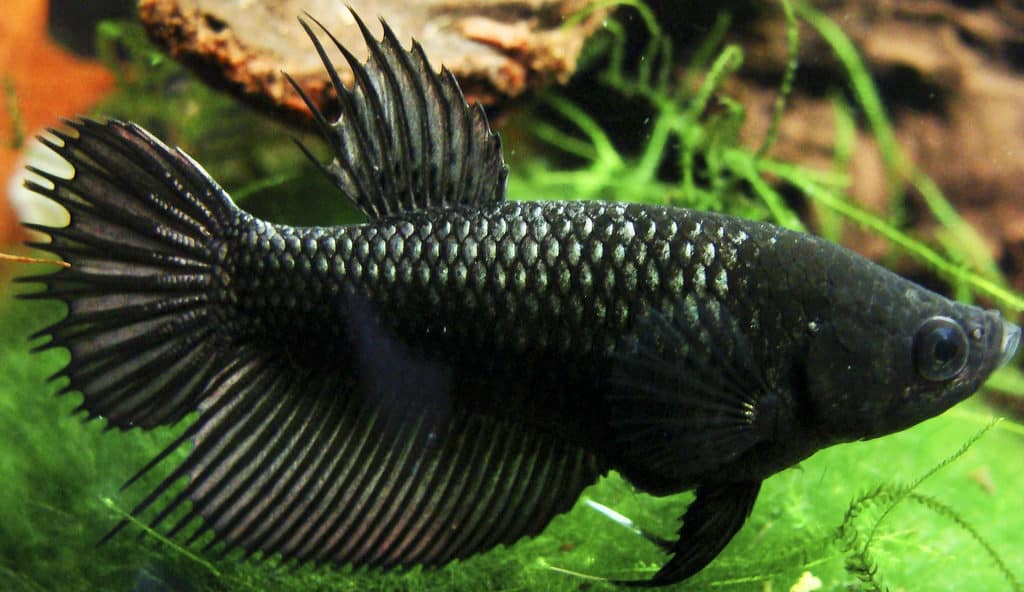
You’ve probably walked past the female Betta cups at your local fish store dozens of times without a second glance. Most aquarists do. But here’s what experienced Betta keepers know: female Bettas are healthier, easier to care for, and often just as stunning as their male counterparts — without the dramatic finnage problems that plague long-finned males.
Quick Answer
Female Bettas have shorter fins, rounder bodies, a visible egg spot (ovipositor), and smaller beards when flaring. They make excellent pets with fewer health issues than long-finned males, and can be just as colorful and personable.
?? Important
There’s a lot of outdated Betta care advice online. Bettas should always be kept in a heated, filtered aquarium of at least five gallons. Bowls, vases, and tiny “Betta tanks” are not appropriate housing. For complete care requirements, see the full Betta caresheet.

How to Sex a Betta Fish: Male vs Female Identification
Figuring out whether a Betta is male or female can be surprisingly tricky, especially since pet stores often mislabel them (or don’t label them at all). While long, flowing fins are a dead giveaway for males, what about short-finned plakat males that look remarkably similar to females? Here’s a comprehensive breakdown of the differences you should look for:
| Feature | Female Betta | Male Betta |
|---|---|---|
| Ventral Fins | Short, stubby | Long, flowing |
| Anal Fin Shape | Rounded edge | Pointed edge |
| Body Shape | Rounder, deeper belly | Longer, flatter profile |
| Ovipositor (Egg Spot) | Visible white speck behind ventrals | Absent (though vents can be misleading) |
| Beard Size | Small, barely visible when flaring | Large, prominent when flaring |
| Overall Size | Generally smaller (1.5-2 inches body) | Generally larger (2-2.5 inches body) |
Key Identification Features Explained
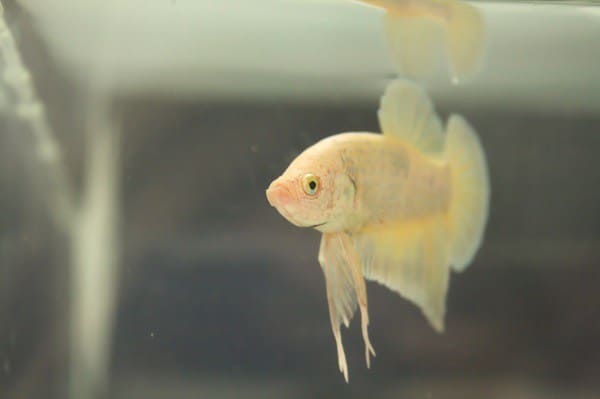
Ventral fins: The ventral fins are located on the underside of the fish, just below the head. This is often the most reliable sexing indicator for short-finned Bettas. Male Bettas sport long, elegant ventral fins that trail behind them as they swim. In females, the ventrals are noticeably shorter and stubbier — more functional than ornamental.
Anal fin: Look at the fin running along the bottom of the fish behind the belly. Female Bettas typically have a rounded anal fin that curves gently, while males have a more angular, pointed anal fin. This difference is subtle but consistent once you train your eye to spot it.
Body shape: A female carrying eggs is unmistakable — her belly will look visibly round and swollen, sometimes with a slightly gravelly texture visible through the skin. But even non-gravid females have a rounder, deeper body profile than males. Males tend to have longer, more streamlined bodies designed to show off their impressive finnage.
Ovipositor: Also called an “egg spot,” this is a small white speck located right behind the ventral fins where eggs are released during breeding. It’s often described as looking like a tiny grain of salt. However, be cautious — male Bettas can sometimes have a protruding vent that mimics an ovipositor. Always cross-reference with other features on this list rather than relying on the egg spot alone.
Beard: Both male and female Bettas have a membrane under their gill covers called a beard, which becomes visible when they flare. In males, this beard is dramatically large and often extends past the gill covers. In females, it’s much smaller and sometimes barely noticeable even during an aggressive display.
? Behavioral traits aren’t reliable for sexing: While most female Bettas don’t build bubble nests and tend to be less aggressive, exceptions exist. Some females are prolific nest builders, and some are just as feisty as any male. Similarly, coloration varies widely — many female Bettas display colors every bit as vibrant as males.
? Pro Tip
Sexing juvenile Bettas (under 3 months) is notoriously difficult. If you’re buying a young fish and gender matters to you, wait until the fish has matured or purchase from a breeder who can confirm sex. Pet store juveniles are frequently misidentified.


Why Keep Female Bettas? 5 Compelling Reasons
For most hobbyists, female Bettas aren’t even on the radar. The aquarium industry has trained us to associate Bettas with the spectacular flowing fins of males, treating females as somehow “less than.” But experienced Betta keepers often come to prefer females — and for good reason.
1. Fewer Health Problems from Finnage
This is the biggest practical advantage. Due to their shorter finnage, females don’t suffer from the health issues that plague long-finned males. Extreme fin types like rosetails, feathertails, and some halfmoons are prone to:
- Collapsed fin rays — The fins become too heavy for the fish to support properly
- Swimming difficulties — Heavy fins create drag, exhausting the fish
- Tail biting — Frustrated fish may attack their own fins
- Fin rot susceptibility — More surface area means more opportunity for bacterial infection
- Difficulty reaching the surface — Bettas are labyrinth fish that need to breathe air
Female Bettas, with their practical short fins, swim freely and rarely develop these issues. They’re simply healthier fish on average.
2. Just as Much Personality
Don’t let anyone tell you female Bettas are boring. They’re every bit as curious, interactive, and personable as males. Your female Betta will still:
- Learn to recognize you and swim to the front of the tank when you approach
- Flare at her reflection or tank decorations
- Explore every inch of her environment
- Develop feeding routines and preferences
- Display distinct individual temperaments
? Did You Know?
Wild Betta splendens look much more like our domestic females than males. The extravagant long fins we associate with Bettas are entirely the result of selective breeding — in nature, both sexes have short, practical finnage for navigating through dense vegetation.
3. Equally Stunning Colors
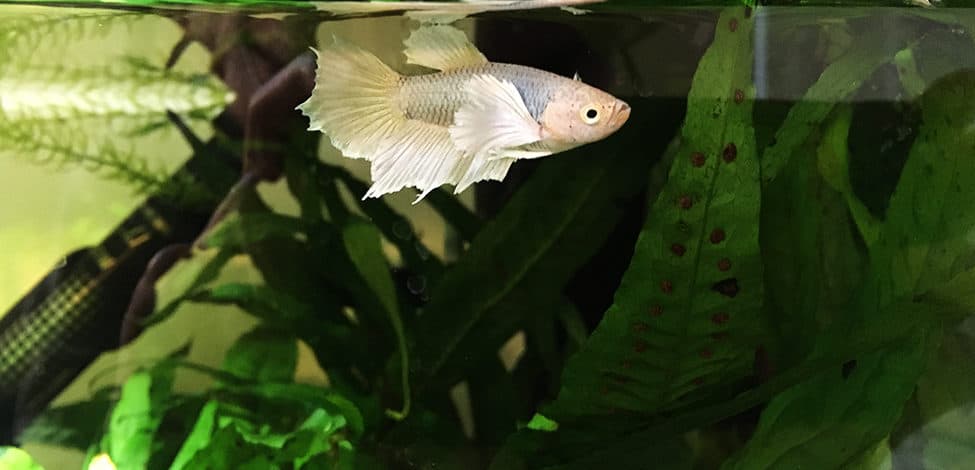
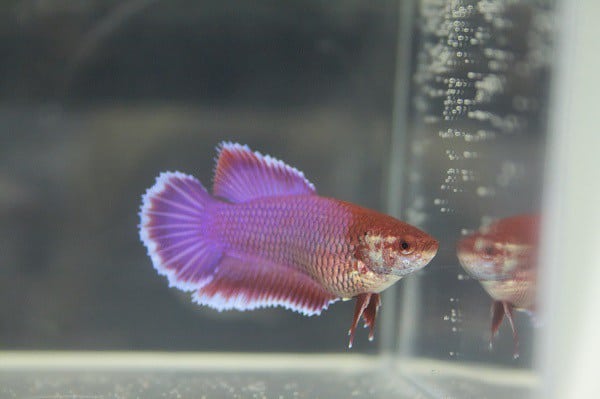
The idea that female Bettas are “dull” is outdated. Modern female Bettas come in every color and pattern available in males: galaxy koi, mustard gas, candy koi, copper, platinum, and dozens more. Breeders have worked hard to produce females with vibrant coloration that rivals any male. You may need to look beyond big-box pet stores to find them, but stunning female Bettas are absolutely available.
4. Sorority Potential (With Caution)
While male Bettas must always be kept alone, female Bettas can sometimes be kept together in groups called “sororities.” This allows you to enjoy multiple Bettas in a single tank — something impossible with males. However, sororities require careful planning:
- Minimum 20-gallon tank, heavily planted with lots of hiding spots
- Groups of 5+ females to distribute aggression
- Careful introduction and close monitoring for weeks
- A backup plan if aggression becomes unmanageable
Sororities aren’t for beginners and don’t always work, but they’re an option that doesn’t exist with males. [INTERNAL LINK: “Betta sorority guide” -> betta sorority setup]
5. Give an Overlooked Fish a Home
Female Bettas often sit in aquarium store cups far longer than males, simply because most shoppers walk past them. Choosing a female means giving a home to a fish that might otherwise wait weeks or months for adoption. There’s something satisfying about recognizing beauty that others overlook.

Female Betta Care Requirements
Female Bettas have the same basic care requirements as males. They’re tropical fish that need warm, clean water and appropriate housing.
? Quick Care Overview: Female Betta
Minimum Tank: 5 gallons
Temperature: 76-82°F (24-28°C)
pH Range: 6.5-7.5
Diet: Carnivore (high-protein pellets, frozen foods)
Difficulty: Beginner-friendly
Lifespan: 3-5 years with proper care
The key requirements include:
- Heater: Bettas are tropical fish and need consistent warmth. Room temperature is too cold and too variable.
- Filter: Gentle filtration keeps water clean without creating currents that stress short-finned fish (though females handle currents better than long-finned males).
- Lid: Bettas are jumpers. A secure lid is essential.
- Plants and hiding spots: Live or silk plants give your Betta places to rest and explore. [INTERNAL LINK: “best plants for Betta tanks” -> betta tank plants]
Where to Find Female Bettas
Big-box pet stores usually stock female Bettas, but the selection is often limited and the fish may not be in great condition. For better options, consider:
- Local fish stores (LFS): Often have healthier fish and more variety
- Online Betta breeders: The best selection of colors and patterns, with fish shipped directly to you
- Aquarium club auctions: Great for finding unusual varieties from local hobbyists
- Betta rescue groups: Adopt a fish in need of a good home
Frequently Asked Questions
Can female Bettas live together?
Yes, female Bettas can sometimes live together in groups called “sororities,” but this requires a large tank (20+ gallons), heavy planting, groups of 5 or more, and careful monitoring. Sororities don’t always work and aren’t recommended for beginners. Each female should have a backup housing option if aggression becomes problematic.
Are female Bettas less aggressive than males?
Generally yes, but individual temperament varies widely. Some female Bettas are quite aggressive and will attack tankmates or other females. Always have a backup plan when introducing any Betta to a community or sorority setting, regardless of sex.
Do female Bettas build bubble nests?
Some do! While bubble nest building is primarily a male behavior related to breeding, some female Bettas will build small nests. This isn’t a reliable indicator of sex and doesn’t mean anything is wrong with your fish.
How can I tell if my female Betta is carrying eggs?
A gravid (egg-carrying) female has a noticeably swollen, rounded belly. You may be able to see a slightly granular texture through her skin, and her ovipositor (egg spot) may appear more prominent. Females regularly produce eggs even without a male present — they’ll simply reabsorb them.
Are female Bettas as colorful as males?
Modern breeding has produced female Bettas in every color available in males. While big-box pet stores often stock plainer females, breeders and specialty stores offer females in stunning patterns like galaxy koi, copper, mustard gas, and more. The color difference is largely a selection bias in retail, not an inherent limitation.
If you have any more questions about keeping female Bettas or sexing Bettas, or if you just want to share your own experiences with female Bettas, don’t hesitate to leave a comment below. Happy fishkeeping!
Cover photo: Betta female 1 by bored-now