Quarantining fish before adding them to the main display aquarium or when they’re sick is a very important part of fishkeeping.
Even experienced aquarists often overlook this step because they think it isn’t needed and want their new fish in their tank as soon as possible!
First, we need to understand what a quarantine tank is and why they’re so important. Then, we can look at how to set one up on a budget.
Keep reading to learn everything you need to know about quarantine tanks and the cheapest and easiest ways to set one up!
What is a quarantine tank?
In short, a quarantine tank or hospital tank is an extra aquarium setup that can be used for housing new fish or treating sick ones.
These systems are fully cycled, heated, and filtered. They are a buffer between the fish store and your aquarium, allowing new livestock to acclimate and be at their strongest when added to the main display.
Why do you need a quarantine tank?
A quarantine tank setup prevents diseases and illnesses from spreading from the store to your entire tank. Keeping new sick fish in quarantine in a separate, barebones system allows for aggressive treatments that wouldn’t be safe in the main aquarium.
Even if the new fish doesn’t show signs of disease, many hobbyists who use quarantine tanks use a simple copper-based medicine anyway, even if symptoms haven’t appeared yet. Any other symptoms that pop up can then be treated accordingly.
How long should you quarantine new fish?
In general, new fish should be quarantined for 4-6 weeks. There isn’t necessarily an end to the quarantine period, though most common illnesses will show up during this time frame.
Likewise, quarantine tanks can also be used to treat already-established fish that might become ill or injured in the main aquarium. Quarantine tanks can even be used for spawning purposes, too!
How to set up a quarantine tank
Quarantine tanks do require extra space around the aquarium, which deters a lot of hobbyists from attempting them.
However, we’re here to tell you that you don’t always need to have your quarantine set up and ready to go at all times. In fact, they are very easy to assemble and disassemble at a moment’s notice.
Here’s how.
Cycling your quarantine tank
As with any aquarium, a complete nitrogen cycle needs to occur in your quarantine tank to make it safe for fish. But how can you quickly cycle an aquarium in the case of an emergency?
Most beneficial bacteria in the aquarium live inside the biological filter’s media, in filter floss and sponges. In theory, you can transfer some of this media to the biological filtration of another tank, and it will be considered cycled.
How can you make sure you always have extra media for your aquarium, though?
As we’ll discuss, you will need to clean and treat your quarantine tank between uses. This means that any media you use will be thrown out.
The easiest way to have quarantine media ready is to keep an extra piece in your filter. Once you use it, simply replace it for next time.
Another popular method is using an extra filter in the main aquarium that you can easily transfer. This brings in beneficial bacteria, and a sponge filter will also create surface agitation, leading to better aeration in the quarantine system.
Do not use the original piece of media, as this will have the best-established bacteria!
How to set up a quarantine system
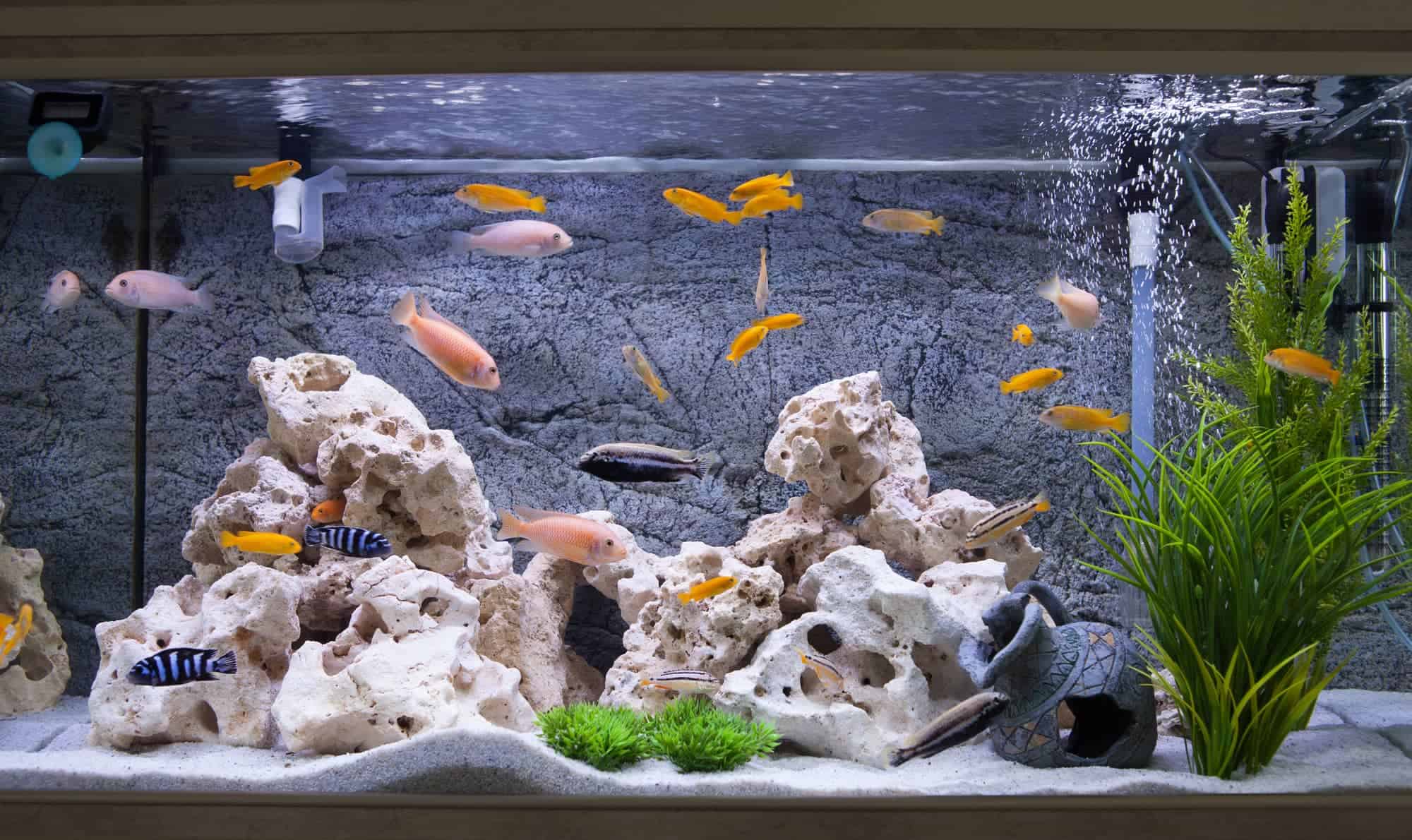
Setting up a quarantine system doesn’t need to be complicated or expensive. Many long-time fishkeepers usually have a spare tank lying around that can be used to quarantine fish.
If you don’t have an extra glass aquarium, a food-safe Sterilite tub works perfectly as an emergency quarantine tank and is much cheaper than an actual fish tank.
How big should a quarantine tank be?
The size of your quarantine tank depends on the fish that will be in it.
A 10-gallon tank (37.9 L) is fine for a betta or groups of small schooling fish.
For larger fish that produce a lot of waste, like goldfish or angelfish, go for a bigger tank size, like 20 (75.5 L) gallons. This way, you won’t have to conduct partial water changes every day!
Quarantine equipment
Here is a quick rundown of everything you need for a basic quarantine tank:
- Quarantine tank/tub. It doesn’t need to be anything fancy, but it should be watertight and safe to use for animals.
- Heater. You will want an adjustable heater that allows you to control the temperature. Many aquarium diseases require heat control, and a preset heater won’t let you do this.
- Filter. A filter will house the beneficial bacteria and keep the water aerated; use a sponge filter for best results. Water flow should be minimal but enough to allow for good gas exchange.
- PVC pipe. Fish will appreciate some hiding spots in the quarantine tank. A simple PVC pipe will allow for rest and can be easily cleaned afterward.
- Lighting. Additional lighting isn’t necessary if some natural sunlight is available. Good lighting can make signs of parasites or infection easier to see and keep your fish on a regular sleep-wake cycle.
- Aquarium siphon/vacuum. It is crucial to have a separate siphon/vacuum available exclusively for your quarantine tank to perform frequent water changes and clean the tank. You do not want to transfer possible pathogens to your entire display tank by using the same siphon/vacuum.
In addition to this list are any medications you might need. Most people in the aquarium hobby do an overall preemptive treatment for parasites and bacterial infections with medications like Paraguard and Metroplex/Kanaplex.
On the other hand, some hobbyists wait for symptoms to appear to start dosing. This is usually only recommended if you already have an assortment of medications available or can quickly get the ones you need in case of an emergency.
Setting up a quarantine tank
Setting up a quarantine tank is essentially like setting up any other aquarium. However, quarantine tanks are meant to be barebones to make them easy to clean and observe the fish.
As mentioned before, use a piece of filter media from a pre-existing tank to immediately cycle the tank; this can result in a mini-cycle, but it’s nothing that can’t be managed with a few water changes.
There are some exceptions to this, though. Many hobbyists successfully run uncycled quarantine tanks. This is easier to do if you have a larger tank and less fish.
The idea behind this is that any medications you plan to use will kill off many beneficial nitrifying bacteria, voiding the whole concept of a cycle. As long as you have filter media to spare, it’s definitely worth cycling your quarantine system.
With that, the steps to setting up a quarantine tank are:
- Fill the tank with water. Use about 50-75% fresh water and the rest from the main aquarium. This should help get parameters matched and lessen stress. Make sure to use a water conditioner.
- Install the aquarium equipment. Begin to run the filter and heater. You will want the water temperature to match the conditions already in the main tank.
- Add hiding spots. All a quarantine tank needs is a piece of PVC piping. This gives the fish protection and is very easy to clean. Some hobbyists like to add easy live aquarium plants for better aeration and hiding, though they will die with harsher medications.
Notice how this list does not include gravel or substrate. Not only does this help with cleaning the tank between uses, but substrates are essential for some parasitic life stages.
Having a substrate would allow for better production of parasites within the tank, which you’re trying to avoid.
Also, having a bare bottom helps with cleaning and keeps ammonia levels down.
If you do have a fish that needs sand, like most species of saltwater wrasse, then there are a couple of ways you can do this.
One, get some cheap sand for one-time use. The other method is to fill a small container with sand and place it in the quarantine aquarium. This helps avoid some of the mess while still giving your fish a place to hide and sleep.
Acclimation
Don’t forget to acclimate your fish! Any time you move fish from one tank to another, you need to give them time to adjust unless all parameters match exactly.
The best way to acclimate is through drip acclimation after temperature acclimation.
First, float the bag of fish in the aquarium with the lights out to prevent stress. Then slowly drop water from the aquarium into a container holding your fish for about an hour or two.
At this point, they should be ready to enter the quarantine system. Keep the lights out for a few more hours or until the next day for extra security.
When moving your fish from your quarantine system to your main display tank, you can usually use a net or other container to transfer the fish directly, as parameters should be almost identical.
Make sure that no aquarium water is moving in between the two systems!
Maintaining a quarantine tank
Once you have your fish in the quarantine aquarium, it’s time to wait.
As mentioned before, some hobbyists use this quarantine period to medicate for general parasites and fungal infections preemptively. But, you can also wait to see if your fish develops any symptoms.
If you have a sick fish coming from your display tank, you may start treatment immediately. Otherwise, good maintenance and observation will make for a strong fish.
Like any other aquarium, quarantine tanks need water changes to help remove wastes and increase gas exchange. For cycled tanks, water changes may be less frequent. For uncycled tanks, you will need to perform daily water changes.
If you’re treating external or internal parasites, like ich, you’ll also need to do daily water changes.
How many water changes you need to perform on your quarantine tank setup largely depends on how water parameters are changing throughout the system, how many fish you have, which diseases and illnesses you are treating, and how you’re treating them.
In general, you want to keep your quarantine tank water as pristine as possible. This usually adds up to about two water changes every week in a quarantine tank with no problems, though this is on the low side.
Watch water parameters, read medication instructions, and perform water changes as needed.
Sanitizing a quarantine tank
It is necessary to sanitize your quarantine tank after each use to ensure that all medications have been removed and no parasites or infections remain.
Don’t worry. This is easy to do. Never use harsh chemicals like Windex. All you need is some 2-5% bleach.
Simply wash all equipment with a mild bleach solution. Thoroughly rinse and dry off. Once filled again, use a water conditioner for extra safety.
Naturally drying the quarantine tank out can kill most pathogens, but it is best to use a solution to guarantee that none remain.
Conclusion
If you plan to introduce new fish to your aquarium or deal with a sick fish, you will want to have a hospital or quarantine tank ready at all times.
These systems don’t need to be elaborate or expensive, but they can help save hundreds of dollars in livestock, time, and frustration.
If you have any questions about quarantine tanks, how to tell if your fish needs to be quarantined, or have had experience with disease outbreaks in your tank, don’t hesitate to leave a comment below!