
Quick Answer
Clean filter media by squeezing it in a bucket of tank water – never tap water. Don’t replace cartridges unless they’re falling apart. Your filter’s job is housing bacteria, not looking pristine.
Your filter flow dropped to a trickle. Time to clean it, right? Here’s where most people make the mistake that crashes their tank: they rinse everything under the tap, maybe even replace the whole cartridge because the pet store said to buy new ones monthly.
Three days later, ammonia spikes. Fish start gasping. And the hobbyist blames the filter when they should blame the cleaning method.
The filter isn’t just mechanical debris removal – it’s the biological engine of your entire tank. Those sponges and ceramic rings are covered in the beneficial bacteria that process ammonia and nitrite. Treat them roughly and you’re essentially mini-cycling your tank all over again.
[WARNING] The Cartridge Replacement Scam
Filter manufacturers want you to buy replacement cartridges monthly. This is marketing, not fishkeeping advice. Replacing a cartridge throws away your entire bacterial colony. Only replace media when it’s literally disintegrating – and even then, only replace half at a time with two weeks between.
When Your Filter Actually Needs Cleaning
Forget arbitrary schedules. Watch your outflow. When it noticeably weakens, your mechanical media is clogged and it’s time. For most moderately stocked tanks, this happens every 2-4 weeks. Heavily stocked tanks or those with messy eaters (goldfish, plecos) need more frequent attention.
Here’s what most guides miss: a slightly dirty filter is a healthy filter. Those brown sponges aren’t failing – they’re thriving with bacteria. You’re not trying to make them look new. You’re just preventing flow restriction.
The Only Filter Cleaning Method That Won’t Crash Your Cycle
What You’ll Need
- A clean bucket (dedicated to aquarium use only – no soap residue)
- Tank water from your water change
- 10-15 minutes
The entire process uses tank water. Not tap water, not dechlorinated tap water, not “close enough” temperature tap water. Actual water from your aquarium. Chlorine and temperature shock both kill bacteria fast.
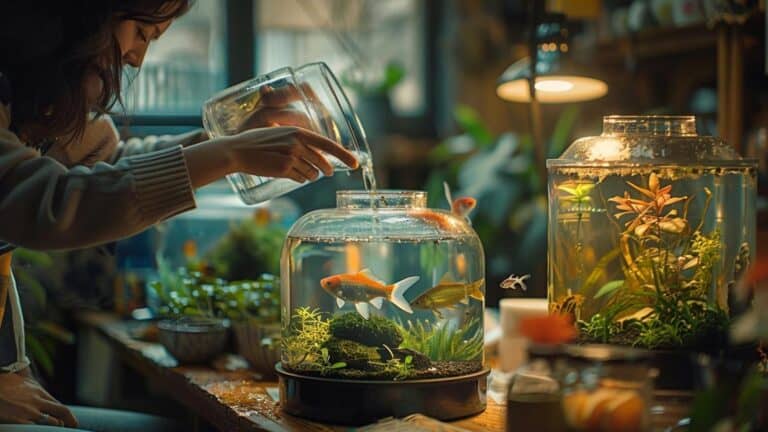
Siphon 2-3 gallons of tank water into your bucket during your regular water change. Don’t use fresh water for this.
Unplug the filter and remove media. Work quickly – bacteria start dying within 20-30 minutes of being out of oxygenated water.
Squeeze sponges in the tank water until the water runs mostly clear. Three to five good squeezes is usually enough. You’re not trying to make them look new.
Swish bio-media gently. Ceramic rings, bio-balls, or Biomax just need a gentle swish to dislodge surface debris. Never scrub them.
Reassemble and restart immediately. The faster your media gets back into oxygenated, flowing water, the better.
Cleaning Each Type of Filter Media
Not all media serves the same purpose, and that changes how you handle it.
Filter Floss / Poly Pads
This is purely mechanical – it traps fine particles before they clog your biological media. It’s the one media type you actually should replace regularly, because once it’s matted with debris, squeezing won’t restore flow. Most people replace floss every 1-2 cleanings. It’s cheap.
Filter Sponge
Sponge does double duty: mechanical and biological filtration. The pores harbor bacteria. Squeeze it firmly in tank water – you’ll be amazed how much brown gunk comes out – but stop when the water runs reasonably clear. A slightly brown sponge is a healthy sponge.
[TIP] Pro Tip
If your sponge is starting to lose its structure or tear when squeezed, replace half of it now and the other half in 3-4 weeks. This preserves your bacterial colony while swapping in fresh media.
Biological Media (Ceramic Rings, Bio-Balls, Lava Rock)
This media exists solely to house bacteria. It shouldn’t get very dirty if your mechanical filtration is doing its job upstream. If debris is reaching your bio-media, you need more mechanical filtration, not more aggressive cleaning.
Gently swish it in tank water. That’s it. Never scrub the surface. The whole point is the biofilm coating those porous surfaces.
What It Looks Like When You’ve Overdone It
Real talk: I’ve crashed a tank this way. Scrubbed everything spotless because the filter “looked gross.” Within 48 hours, ammonia hit 2 ppm and I lost three corydoras.
Signs you’ve damaged your bacterial colony:
- Ammonia or nitrite readings within 1-3 days of cleaning (test if you’re unsure)
- Cloudy water appearing 24-48 hours later (bacterial bloom as the colony tries to re-establish)
- Fish gasping at the surface or acting lethargic
If this happens, do daily 25% water changes, dose Prime to detoxify ammonia, and consider adding bottled bacteria like Seachem Stability or Tetra SafeStart to help the colony recover faster.
[FACT] Beneficial bacteria can survive being out of water for 20-30 minutes if kept moist, but they start dying rapidly after that. Always work quickly during filter maintenance.
The “Never Do This” List
- Never rinse media under tap water. Chlorine kills bacteria on contact. Even “just a quick rinse” causes significant die-off.
- Never replace all media at once. Even if it looks disgusting. Stagger replacements by at least two weeks.
- Never deep-clean bio-media. Scrubbing ceramic rings defeats their entire purpose.
- Never clean your filter and do a large water change on the same day. That’s two stressors at once. Spread them out.
- Never leave filter media sitting dry. Keep it submerged in tank water while you’re working.
Frequently Asked Questions
How often should I clean my aquarium filter?
Clean when you notice reduced outflow, typically every 2-4 weeks for most tanks. Heavily stocked tanks or those with messy fish like goldfish may need weekly attention. There’s no universal schedule – watch your flow rate.
Can I use tap water to clean my filter sponge?
No. Tap water contains chlorine or chloramine that kills beneficial bacteria on contact. Always use water taken directly from your aquarium. The brown color of tank water won’t hurt the cleaning process.
Should I replace my filter cartridge every month?
No – this is marketing advice, not fishkeeping advice. Cartridges contain your bacterial colony. Only replace when the media is physically falling apart, and even then, replace only half at a time with two weeks between.
My filter media is brown and gross – is that bad?
Brown media is healthy media. That discoloration is largely beneficial bacterial biofilm doing exactly what it should. You’re cleaning to restore flow, not to make things look new. A “pristine” filter is often a filter with a damaged bacterial colony.
Can I clean my filter and do a water change on the same day?
You can do a normal water change (25-30%) and filter cleaning together – in fact, using the siphoned tank water to clean your media is efficient. Just avoid combining filter cleaning with a large water change (50%+) as that stacks stressors on your system.
Filter maintenance isn’t complicated once you understand the goal: preserve bacteria, restore flow. Everything else is overthinking it. [INTERNAL LINK: “nitrogen cycle” -> aquarium cycling guide] [INTERNAL LINK: “filter media types” -> mechanical vs biological vs chemical filtration]