
Few aquarium plants inspire the kind of collector obsession that Bucephalandra does. With dozens of varieties featuring leaves that shimmer blue, green, red, and everything in between, it’s easy to understand why hobbyists pay premium prices for rare specimens. The good news? Despite its exotic appearance, Buce is surprisingly forgiving once you understand what it needs.
Quick Care Overview
What Is Bucephalandra?
Bucephalandra is a genus of rheophytic plants native to the tropical rainforests of Borneo. In the wild, they grow attached to rocks and driftwood in streams and rivers—similar to how Anubias grows. During dry season, they grow emersed above the waterline. When monsoons arrive and water levels rise, they continue growing submerged without missing a beat.
This adaptability is exactly why Buce works in both aquariums and terrariums. More than 30 species have been formally described since 1858, though you’ll find countless trade names and varieties in the hobby.
[FACT] Bucephalandra leaves often display iridescent coloration that shifts depending on viewing angle—a trait called structural color, caused by microscopic surface structures rather than pigments.
Identifying Bucephalandra
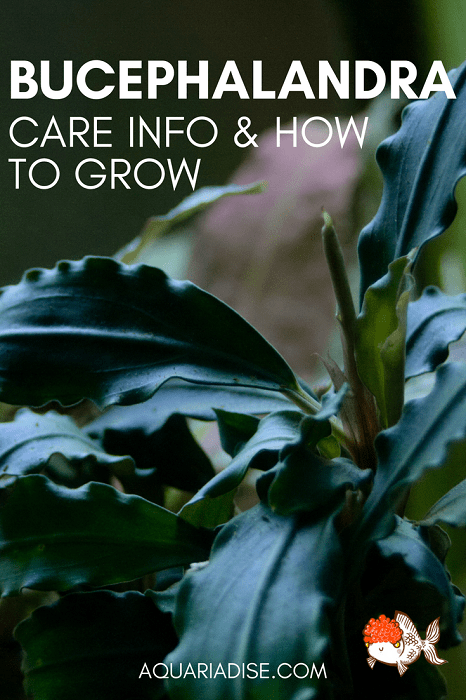
Buce leaves vary wildly between varieties—some are narrow and wavy, others broad and smooth. Colors range from deep blue-green to olive, bronze, and even red. A few identifying features are consistent:
- Glossy upper leaf surface, often with metallic sheen
- White, red, or yellow spots on leaf undersides
- Creeping rhizome with strong anchoring roots
- Occasional white or pink flowers (yes, they bloom underwater)
How to Plant Bucephalandra
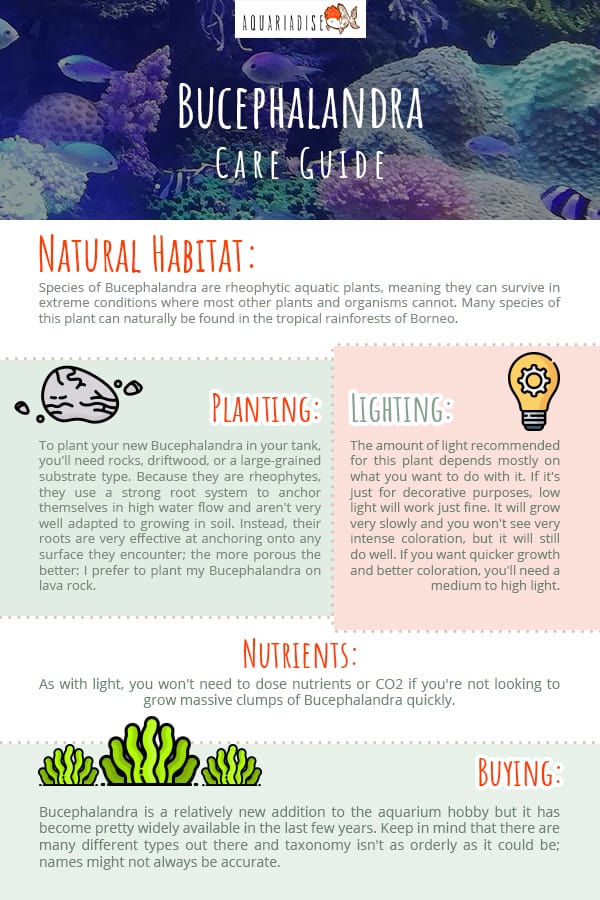
Like Anubias and Java Fern, Buce should never be buried in substrate. Its rhizome needs exposure to water flow, and burying it will cause rot. Instead, attach it to hardscape—rocks, driftwood, or any porous surface.
What You’ll Need
- Driftwood, lava rock, or dragon stone
- Cyanoacrylate super glue (gel formula) OR fishing line/rubber bands
- Scissors to trim dead roots if needed
Attachment method: A small dab of super glue gel on the rhizome works fastest—hold it against the hardscape for 10-15 seconds and it’s secure. Alternatively, wrap with fishing line or rubber bands until roots take hold (usually 2-3 weeks). Lava rock is ideal because its porous surface gives roots plenty to grip.
[TIP] Pro Tip
Use the gel formula of super glue, not liquid. Gel stays put and doesn’t run into surrounding areas. It’s completely aquarium-safe once cured.
Bucephalandra Care Requirements
This is where Buce earns its reputation as a beginner-friendly plant. It doesn’t demand much.
Lighting
Low light keeps Buce alive and growing (slowly). Medium to high light brings out better coloration and faster growth. Most hobbyists find a moderate light level hits the sweet spot—enough color development without excessive algae risk.
CO2 and Fertilization
Neither is required. Buce will grow without CO2 injection or dosing fertilizers—just more slowly. If you’re running a high-tech planted tank with CO2, Buce will reward you with lusher, more colorful growth. Root tabs aren’t necessary since it doesn’t feed through substrate.
Water Parameters
Temperature between 71-82°F (21.5-28°C) and pH of 6.0-7.5 covers most varieties comfortably. Buce tolerates a range of hardness levels. The key is stability—avoid sudden swings in any parameter.
Propagating Bucephalandra
Buce propagates by producing new plantlets along its rhizome. Once a section has several leaves and visible roots, you can cut it away and attach it to a new location. Use sharp, clean scissors to make a clean cut.
Growth is slow, so patience is required. In low-tech setups, expect a new leaf every few weeks at best. High-tech tanks with CO2 and good lighting see faster results, but Buce will never match the speed of stem plants.
Troubleshooting Common Problems
Leaf Melt After Purchase
Most Buce is grown emersed (above water) at nurseries. When you submerge it, expect some leaf loss as the plant converts to underwater growth. This is normal. Leave the plant alone, maintain stable conditions, and new submersed leaves will emerge.
[WARNING] Important
If melting leaves turn mushy and smell bad, that’s rot—not normal transition. Remove affected portions immediately to prevent spread to the rhizome.
Dropping Leaves After Tank Changes
Buce dislikes sudden changes in water parameters, temperature, or lighting intensity. Moving it to a new tank or significantly changing conditions can trigger leaf drop. As long as the rhizome stays firm and healthy, the plant will recover once it acclimates.
Stretchy Growth or Poor Color
Elongated stems between leaves (etiolation) signals insufficient light. The plant is stretching toward the light source. Increase lighting intensity gradually. Poor coloration—dull greens instead of the vibrant blues and reds you expected—also indicates the plant wants more light.
Algae on Leaves
Buce’s slow growth makes it vulnerable to algae, especially in high-light setups without CO2. Balance is key: if running high light, consider adding CO2 and maintaining good water circulation. [INTERNAL LINK: “Algae-eating fish and shrimp” -> algae eaters] can help keep leaves clean.
Where to Buy Bucephalandra
Local fish stores occasionally stock common varieties like “Green Wavy” or “Brownie Ghost,” but selection is usually limited. Online retailers and hobbyist sellers offer far more variety. Expect to pay anywhere from $8-15 for common types to $50+ for rare collector varieties.
A note on naming: Buce taxonomy is messy. Many trade names aren’t scientifically validated, and the same variety might be sold under different names by different sellers. Buy based on appearance rather than trusting names to be consistent.
Best Tank Mates for Bucephalandra
Buce works in nearly any community tank. A few considerations:
- Shrimp: Excellent companions. Neocaridina and Caridina species help keep leaves clean without damaging them.
- Small peaceful fish: Tetras, rasboras, and small catfish pose no threat.
- Avoid: Large cichlids and destructive species that dig or uproot plants. Goldfish will likely eat it.
Frequently Asked Questions
Can Bucephalandra grow in low light?
Yes. Buce survives and grows in low light conditions, though growth will be slower and coloration less vibrant. It’s one of the best plants for low-tech setups without CO2.
Why is my Bucephalandra melting?
Leaf melt is usually caused by transitioning from emersed to submersed growth, or by sudden changes in water parameters. Keep conditions stable and the plant will typically recover with new growth.
Can I plant Bucephalandra in substrate?
No. Burying the rhizome will cause rot. Always attach Buce to rocks, driftwood, or other hardscape with the rhizome exposed to water flow.
How fast does Bucephalandra grow?
Slowly. Expect a new leaf every 2-4 weeks in a low-tech tank, slightly faster with CO2 and high light. Buce is a patience plant—buy the size you want rather than counting on rapid growth.
Does Bucephalandra need CO2?
No, but it benefits from it. CO2 injection accelerates growth and enhances coloration. Without CO2, Buce still thrives—just more slowly.
Have questions about growing Bucephalandra or want to share your favorite varieties? Drop a comment below—we’d love to hear about your Buce collection.