If you’re done with regular commercial pellets or need to cut your aquarium spending, keep reading! Gel food is a great alternative to the fish food sold in pet- and aquarium stores, and it’s cheap and very easy to make too. It’s already very popular among goldfish keepers because it can help fish overcome swim bladder problems caused by commercial foods and it seems that tropical fish lovers are slowly catching on as well.
So how do you make gel food for your fish?
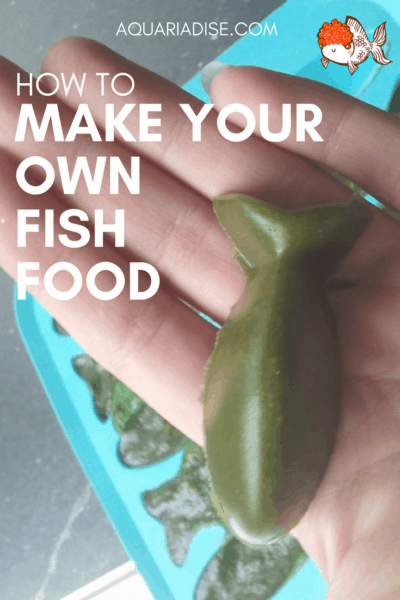
- Find or make a recipe that contains the food you want to give your fish and collect the ingredients you need.
For my goldfish, I made a small batch containing peas, lettuce, kale, broccoli, garlic and regular unflavored gelatin. The garlic gives off a pretty strong smell but fish love the taste of it and it can be beneficial to the health of your fish. Color-enhancing foods such as red bell pepper can also be added.
Gel food for goldfish
Gel food for cichlids
Gel food for discus fish
Gel food made with baby food
Gel food for tropical fish
Note: most fish shouldn’t be given warm-blooded animal meat, and if they are, it should be fed sparingly. Going for fish as a protein source in your gel food is a much better idea.
2. Toss it in the blender.
A lot of recipes tell you to cook all ingredients before doing this, but I wouldn’t recommend following this guideline.
Blanching is a much better option than cooking if you don’t want to lose too many precious vitamins: just heat the veggies for a very short time so they soften a little bit and leave it at that. Meat and fish, however, should always be cooked/baked for at least a few minutes, either when adding the gelatin or before that.
Cut up everything in chunks before putting it in the blender and blend until all the chunks are gone.
3. Add gelatin
After your ingredients have gone for a ride in the blender, it’s time to add gelatin so the food won’t fall apart when you put it in the aquarium. You can use regular unflavored gelatin, or, if you’re looking for a vegetarian substitute, Agar Agar. Follow the instructions on the package. I heated the mixture and added the gelatin while doing so, but this isn’t always necessary.
Now that you’ve added your gelatin, you can pour the resulting mixture in ziplock bags and flatten them so you can break off pieces easily. You can also opt to pour the food into into ice-cube trays. Gel food can be kept in the freezer for long periods of time. Just thaw before feeding and you’re ready to go.
4. Offer small amount to test panel
If you’re short on time, Repashy also sells many varieties of premade gel foods. If gel food just isn’t your thing or you’re looking for other ways to replace pellet foods, check out alternative fish foods!
If you want to share a recipe, have any more questions or want to share your experiences with gel food, be sure to leave a comment below. Happy fishkeeping!