
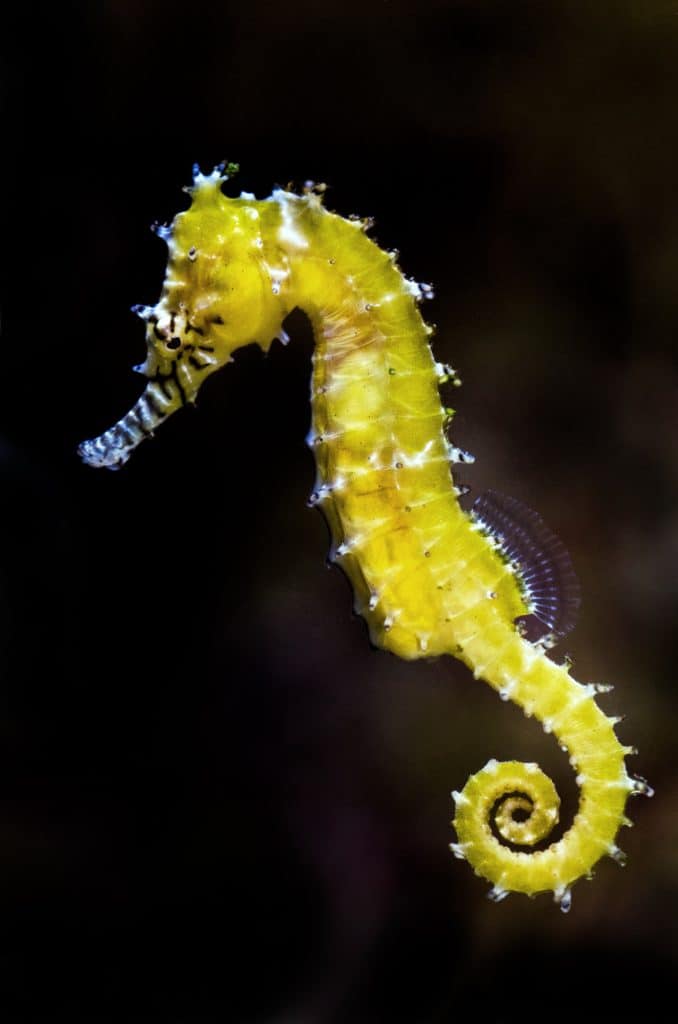
If you’ve been searching for a freshwater seahorse to add to your aquarium, here’s the truth: they don’t exist. True seahorses are marine fish — every single species requires saltwater. What pet stores sell as “freshwater seahorses” are actually pipefish, a related but distinctly different animal. And before you buy one, you should know they’re among the most challenging fish to keep alive in captivity.
Quick Answer
Freshwater seahorses do not exist. All seahorses require marine (saltwater) conditions. Fish marketed as “freshwater seahorses” are pipefish — related species that still need saltwater or brackish water and are very difficult to keep.
What Are “Freshwater Seahorses” Really?
The fish sold under this misleading name are pipefish, members of the same family as seahorses (Syngnathidae) but a completely different species. The confusion is often intentional — “freshwater seahorse” sounds more appealing to hobbyists than “marine pipefish that will probably die in your tank.”
You may also see these fish labeled as “hippocampus,” which is actually the scientific genus for true seahorses. This is another marketing trick. If a seller claims to have freshwater hippocampus, they’re either mistaken or misleading you.
[WARNING] Important
A few wild pipefish species can tolerate brackish water, but none thrive in freshwater aquariums. Any fish sold as a “freshwater seahorse” still requires marine or brackish conditions with specific gravity of 1.020-1.025.
Pipefish vs. Seahorses: Key Differences
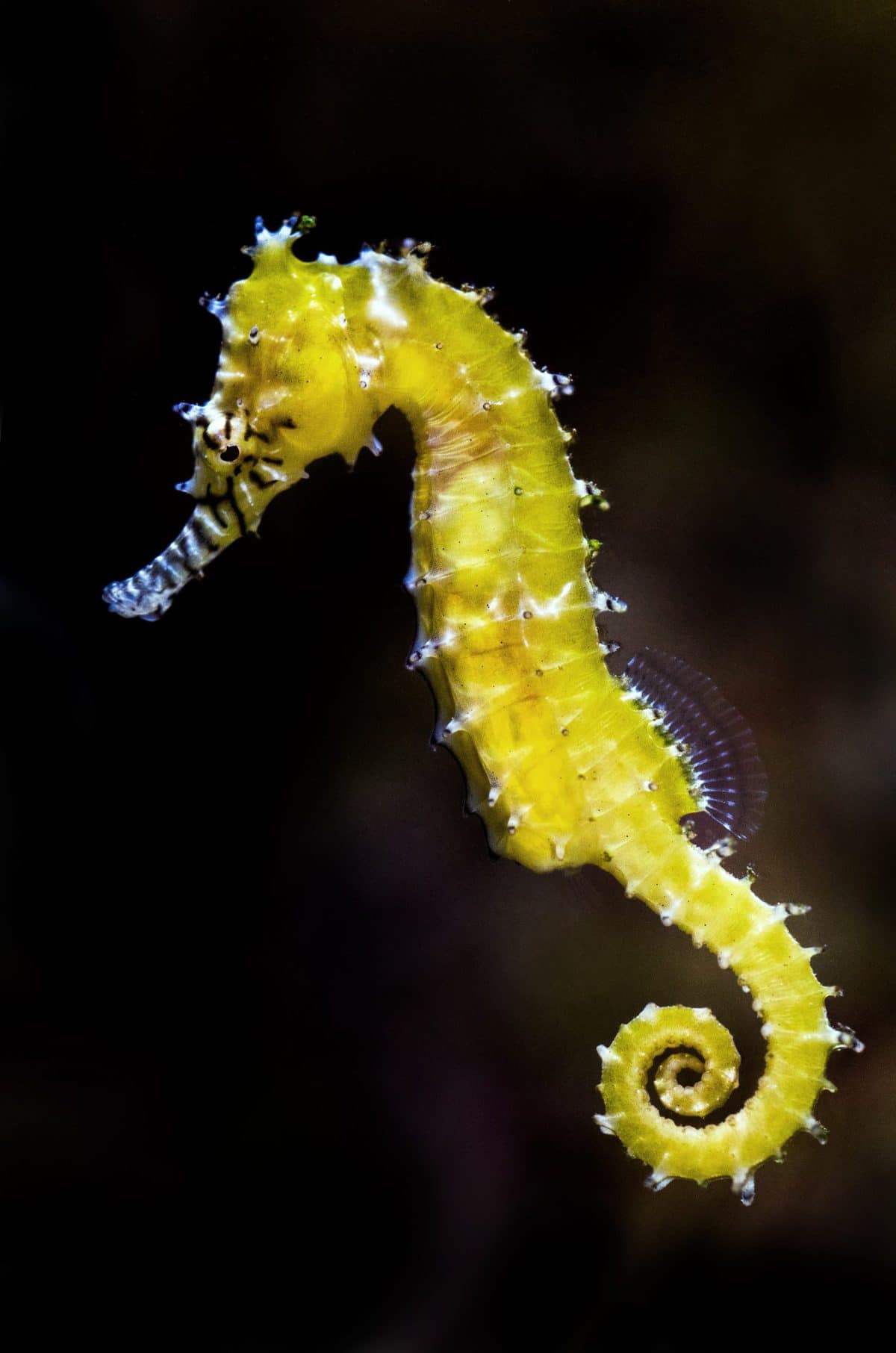
Pipefish share seahorses’ distinctive head shape, tubular snout, and vacuum-feeding method. But from the neck down, they’re entirely different creatures.
| Feature | True Seahorses | Pipefish |
|---|---|---|
| Body Shape | Curved, upright posture | Long, straight, snake-like |
| Size | 0.5-14 inches depending on species | Up to 8 inches |
| Swimming Style | Vertical, very slow | Horizontal, slightly faster but still slow |
| Water Requirements | Marine only | Marine (some tolerate brackish) |
| Prehensile Tail | Yes, all species | Some species only |
Pipefish come in over 200 species with colors ranging from green and brown to vivid red, orange, purple, and black. Some can even change color based on their surroundings.
Why Pipefish Are So Difficult to Keep
Pipefish are not beginner fish. They’re not even intermediate fish. Here’s what makes them challenging:
Feeding is extremely difficult. Pipefish eat only tiny live prey — copepods, amphipods, small shrimp, and plankton. They vacuum food through their tubular snouts and cannot eat flakes, pellets, or most frozen foods. Your tank needs an established population of live food organisms, which requires a mature setup with plenty of live rock and macroalgae.
They’re slow feeders in a fast world. Even in a species-only tank, pipefish move slowly and take time to locate food. Many starve simply because they can’t find their meals before the food disperses or sinks.
Transport stress kills them. Pipefish tolerate shipping poorly. Bacterial infections are common in newly purchased specimens, and wild-caught fish often arrive already compromised.
They need pristine water conditions. Temperature: 72-77°F. pH: 8.1-8.4. Specific gravity: 1.020-1.025. Carbonate hardness: 8-12 dKH. And minimal current — their tiny dorsal fins can’t fight strong flow.
Pipefish Behavior
If you do successfully keep pipefish, you’ll find them fascinating to watch. They slither across substrate like tiny sea snakes and position themselves vertically among plants with heads pointed down, watching for prey. When kept in groups, they sometimes link tails to form chains — a behavior that helps them avoid being swept away by currents in the wild.
Tank Requirements for Pipefish
Pipefish Care Requirements
The tank should include coral, seagrass, rocks, caves, and overhangs for shelter. Good lighting is essential since pipefish are visual feeders that hunt during daylight hours.
Tankmates: Keep pipefish only with their own kind or with seahorses in a marine setup. They’re slow feeders that will be outcompeted by faster fish, and some pipefish species are aggressive toward other fish.
Health Concerns
Bacterial infections are the primary health issue, especially in newly purchased or wild-caught specimens. When selecting pipefish, inspect carefully for:
- Cloudy eyes, skin, or fins
- Rapid or labored breathing
- Raw or ulcerated patches on the body
[FACT] Captive-bred pipefish are significantly hardier than wild-caught specimens and can live 8-10 years with proper care. Always ask your supplier whether their stock is captive-bred.

Pipefish Species for Aquariums
Of the 200+ pipefish species, only a handful can be kept in captivity. Generally, smaller species tend to be more aggressive.
Flagtail Pipefish
Bluestripe Pipefish (Doryrhamphus excisus) — The best choice for relative beginners. Hardy, active, and only 3 inches long. Keep as a male-female pair of similar size, as males can be aggressive toward each other.
Janss’ Pipefish (Doryrhamphus janssi) — Relatively peaceful and interesting to watch as they often swim upside down. Should not be kept with other Doryrhamphus species.
Banded Pipefish (Dunckerocampus dactyliophorus) — The most commonly kept species. Peaceful enough to live in pairs. Do not confuse with the multi-banded pipefish, which is aggressive and does poorly in captivity.
Dragonface Pipefish (Corythoichthys spp.)
Beautiful but challenging. They ship poorly, reject frozen food entirely, and require at least 30 gallons with abundant live food populations. Only three of the twelve recognized Dragonface species are kept in aquariums, and sellers often don’t differentiate between them.
Breeding Pipefish
Like seahorses, male pipefish carry the developing eggs in a pouch or spongy area on the tail. After elaborate courtship rituals, the female deposits eggs which the male fertilizes and incubates. Females often mate with multiple males to spread their reproductive investment.
Pipefish fry are independent immediately after birth, but survival rates are low — roughly 1% reach maturity even under good conditions.
Frequently Asked Questions
Can seahorses live in freshwater?
No. All true seahorse species require marine (saltwater) conditions. A few can tolerate brackish water temporarily, but none can survive long-term in freshwater. Any “freshwater seahorse” for sale is actually a pipefish, which also requires saltwater.
How much does a seahorse cost?
True marine seahorses typically cost $50-$100+ depending on species and whether they’re captive-bred. Pipefish (often mislabeled as freshwater seahorses) may cost less but require the same expensive marine setup.
Can seahorses live with goldfish or tropical freshwater fish?
No. Seahorses and pipefish require saltwater. They cannot be kept with freshwater species like goldfish, bettas, or tetras. Even in marine tanks, they should only be kept with their own kind or other slow, peaceful species.
Are pipefish good for beginners?
No. Pipefish are among the most difficult aquarium fish to keep. They require established marine tanks, live food, pristine water quality, and careful monitoring. They’re only recommended for experienced marine aquarists.
What do pipefish eat?
Pipefish eat tiny live prey including copepods, amphipods, brine shrimp, and plankton. Most cannot be trained to accept frozen food. Your tank needs thriving populations of live organisms, which requires mature live rock and macroalgae.
The Bottom Line
If you came here hoping to add a seahorse to your freshwater tank, the honest answer is: you can’t. True seahorses need saltwater, and the “freshwater seahorses” sold in stores are pipefish that also need saltwater — and are notoriously difficult to keep alive.
If you’re set on keeping these fascinating fish, you’ll need an established marine aquarium, a reliable source of live food, and significant experience with saltwater fishkeeping. For more information on pipefish specifically, see our [INTERNAL LINK: “complete pipefish care guide” -> pipefish care]. If you’re interested in unusual freshwater fish with elongated bodies, consider [INTERNAL LINK: “freshwater eels” -> freshwater eel species] instead.


