

Your Diamond Goby is going to starve. Not today, not next week — but within six months if you set up your tank the way most care guides suggest.
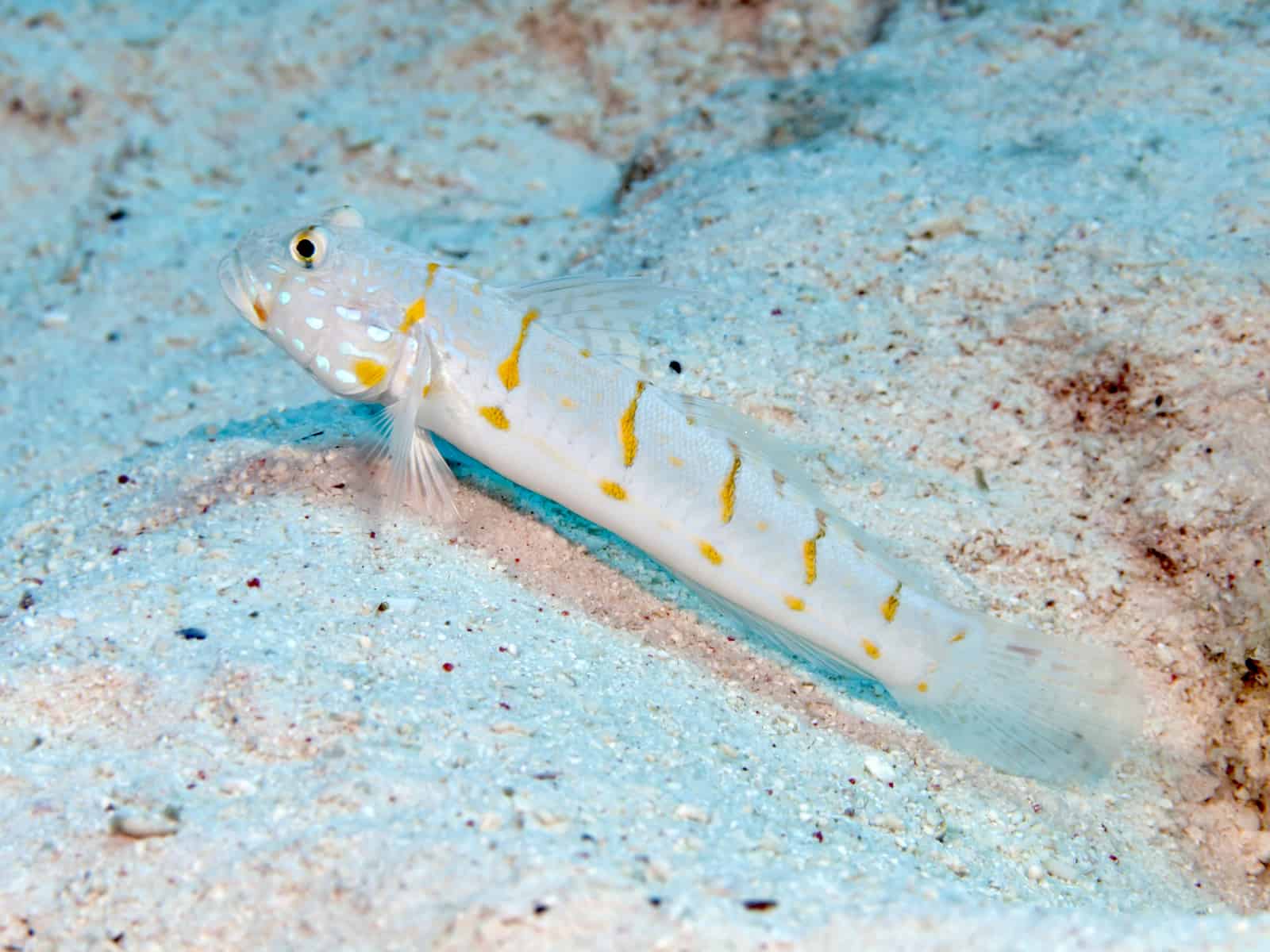
That’s the reality of keeping Valenciennea puellaris, and it’s the single most important thing to understand before adding one to your reef. These aren’t just pretty fish that happen to sift sand. They’re obligate sand sifters whose entire feeding strategy depends on a microfauna population that most tanks can’t sustain.
I’ve kept Diamond Gobies for over a decade. I’ve also watched plenty die slow deaths in tanks that looked perfect on paper. Here’s how to actually keep one thriving.
Quick Answer
Diamond Gobies need a minimum 55-gallon tank with 4+ inches of fine sand, a mature sandbed with established microfauna, and supplemental feeding 2-3x daily. Most captive specimens slowly starve because hobbyists underestimate their food requirements. Target feeding with a turkey baster is essential — not optional.
Diamond Goby Quick Care Overview
The Starvation Problem Nobody Talks About
Here’s what most Diamond Goby care guides won’t tell you: these fish are designed to process enormous volumes of sand to extract tiny amounts of food. In the wild, they work large territories with thriving populations of copepods, amphipods, and other microfauna living in the sand. A single Diamond Goby might sift through hundreds of pounds of substrate daily.
Your 55-gallon tank doesn’t have that.
[WARNING] The Hidden Killer
A Diamond Goby that’s constantly sifting but slowly losing body condition is starving. By the time the pinched belly becomes obvious, you’re months into a problem that’s hard to reverse. Watch the area just behind the head — that’s where weight loss shows first.
The fix isn’t complicated, but it does require commitment: you must target feed these fish directly, multiple times per day, for their entire lives. This isn’t a “feed until they get established” situation. This is the permanent reality of keeping a sand sifter in a closed system.
Tank Requirements
Size and Shape
The 30-gallon minimum you’ll see everywhere is technically survivable but practically inadequate. A Diamond Goby in a 30-gallon tank will deplete the sandbed fauna within weeks and spend the rest of its life dependent entirely on supplemental feeding.
Go with 55 gallons minimum, and prioritize footprint over height. A 75-gallon tank gives you more sand surface area, which means more territory for microfauna to establish. These fish don’t care about vertical swimming space — they care about horizontal territory.
Tight-fitting lid is mandatory. Diamond Gobies jump, especially when stressed or startled. Every gap around equipment, overflow boxes, and cords is an escape route they will eventually find.
The Sand Bed: This Is Where Most Setups Fail
Three to four inches of sand isn’t enough. You need four to six inches of fine-grain sand — sugar-sized or oolitic — for a Diamond Goby to properly burrow and for adequate microfauna populations to establish in the deeper anaerobic zones.
Here’s what goes wrong with shallow beds: the goby sifts through the entire volume too quickly, constantly disturbing fauna populations before they can reproduce. Deeper beds create refugia — areas the goby can’t reach — where pods can breed undisturbed.
[TIP] Pro Tip
Seed your sandbed with live sand from an established tank or purchase copepod/amphipod starter cultures before adding your goby. Give the populations at least 2-3 months to establish. Adding a Diamond Goby to a brand-new tank with sterile sand is setting it up to fail.
Rockwork Safety
Diamond Gobies excavate aggressively. Any rock sitting on the sand will eventually be undermined, and a rock collapse can crush or trap your fish.
Two options: either set your rockwork directly on the tank bottom before adding sand (so it can’t be undermined), or bond your aquascape together with reef-safe epoxy or superglue gel so it functions as a single stable structure. Half-measures don’t work — one loose rock is all it takes.
Water Parameters
Standard reef parameters work fine:
- Temperature: 74-78°F (stability matters more than hitting an exact number)
- pH: 8.1-8.4
- Salinity: 1.023-1.025 specific gravity
- dKH: 8-12
Diamond Gobies are reasonably hardy once established. The challenge isn’t keeping parameters perfect — it’s keeping them fed.
Feeding: The Make-or-Break Factor
Forget the “they’ll find food in the sand” advice. That’s true in the ocean. It’s not true in your tank.
Diamond Gobies are carnivores that need meaty foods delivered directly to them. The sifting behavior looks like successful feeding, but unless your sandbed is absolutely crawling with pods, it’s mostly exercise.
What to Feed
- Frozen mysis shrimp — the staple; thaw in tank water and target feed
- Frozen brine shrimp — less nutritious than mysis but readily accepted
- Live or frozen copepods — excellent supplementation
- Reef Roids or similar coral foods — sprinkle on the sand near their burrow
- High-quality sinking pellets — some individuals accept these, many don’t
How to Feed
Turkey baster. Every time. Broadcast feeding doesn’t work for sand sifters — the food gets intercepted by tankmates or swept into the overflow before it reaches the bottom.
Thaw frozen food in a small cup of tank water, then use a turkey baster to deliver it directly to the sand near your goby’s burrow. They’ll learn to associate the baster with food and will often come out when they see it.
Feed 2-3 times daily. Yes, daily. Yes, every day. This is the commitment you’re signing up for.
[FACT] A healthy Diamond Goby should have a slightly rounded belly after feeding. If the belly appears flat or concave, increase feeding frequency immediately — you’re behind on calories.
Compatible Tankmates
Diamond Gobies are peaceful toward fish that don’t compete for their territory or food source. Good tankmates include:
- Clownfish
- Dwarf angels
- Wrasses (fairy wrasses, flasher wrasses)
- Firefish
- Royal grammas
- Most tangs (in appropriately sized tanks)
- Cleaner shrimp, peppermint shrimp
- Snails and hermit crabs
Avoid: Other sand-sifting gobies, jawfish, or any burrowing species that will compete for sand territory. Diamond Gobies are surprisingly aggressive toward fish that encroach on their burrow area — peaceful doesn’t mean pushover.
Also avoid aggressive eaters that will outcompete your goby during feeding time. Damsels and dottybacks can be problematic for this reason.
Breeding Diamond Gobies
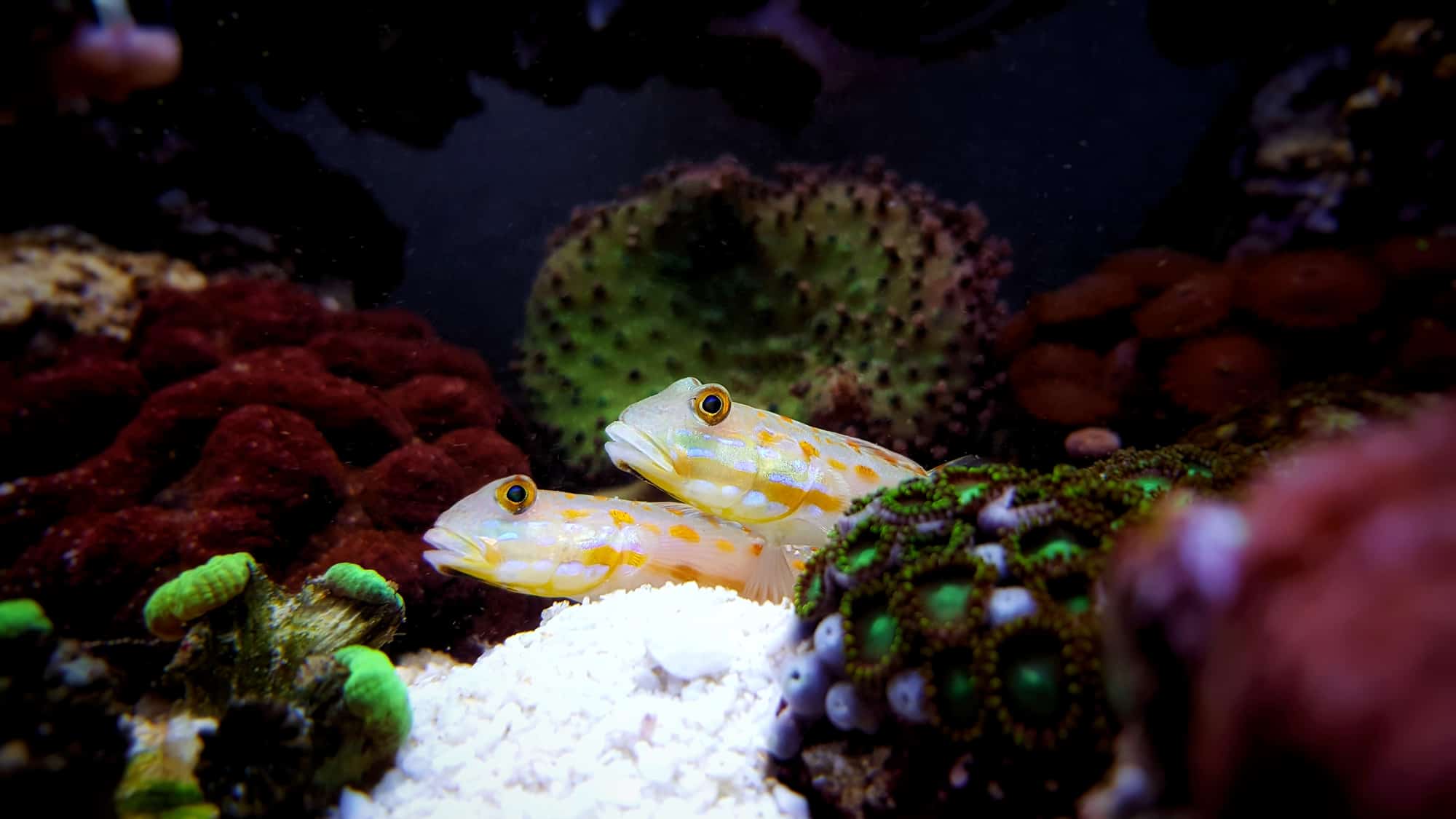
Breeding is possible but rarely successful in home aquariums. The fish are protogynous hermaphrodites — they’re born female and the dominant individual in a pair transitions to male. If you buy two juveniles and keep them together, they should sort themselves out.
Spawning behavior involves the pair guarding eggs placed near their burrow entrance. The male provides most of the guard duty. Eggs hatch in a few days, producing tiny pelagic larvae that require live phytoplankton and rotifers — and eventually copepod nauplii — to survive.
Realistically? Raising the fry requires a dedicated larval rearing setup with cultured live foods. It’s a serious undertaking beyond casual breeding. If you see eggs, enjoy the natural behavior, but don’t expect surviving offspring without significant preparation.
The Sand-Sifting Benefit (And Its Limits)
Diamond Gobies do provide a genuine service: they constantly turn over your sandbed, preventing dead spots, detritus buildup, and the development of hydrogen sulfide pockets in deep sand beds. A goby-maintained sandbed stays cleaner and healthier than an undisturbed one.
But here’s what they won’t do: eliminate nuisance algae, clean your tank for you, or reduce your maintenance schedule. They’re sifting for food, not performing janitorial duties. The sand turnover is a side effect, not a cleaning service.
They also won’t stop at the sandbed. Expect sand deposits on your rockwork, in coral crevices, and occasionally on frags. This is normal behavior and part of the deal.
Did You Know?
Diamond Gobies sometimes form symbiotic relationships with pistol shrimp in the wild. The shrimp maintains the burrow while the goby acts as a lookout. In captivity, this pairing is rare but not impossible — it requires a large enough territory and compatible species of pistol shrimp.
Is a Diamond Goby Right for Your Tank?
Get one if:
- You have 55+ gallons with a mature, deep sandbed
- You’re committed to target feeding 2-3 times daily, indefinitely
- You want to watch active, characterful behavior (the sand sifting is genuinely entertaining)
- You appreciate a fish that interacts with its environment rather than just swimming around
Skip it if:
- You’re looking for low-maintenance livestock
- You have a shallow sandbed or bare-bottom tank
- You already keep other burrowing species
- You won’t be able to feed consistently (travel, unpredictable schedule)
Diamond Gobies are wonderful fish with genuine personality — those protruding eyes peeking out from a burrow never stop being charming. But they’re not the “easy” fish that care guides make them out to be. Go in with realistic expectations about the feeding commitment, and you’ll have a fascinating tank inhabitant for years.
Frequently Asked Questions
Why is my Diamond Goby hiding and not eating?
New Diamond Gobies often hide for days to weeks while establishing a burrow. This is normal. Once settled, provide target feeding near the burrow entrance with a turkey baster. If hiding persists beyond 2-3 weeks, check for aggression from tankmates or inadequate sand depth for comfortable burrowing.
Will a Diamond Goby bury my corals?
They will deposit sand on low-mounted corals and frags. Place coral frags on elevated frag racks or higher rockwork to avoid burial. Some sand spray on lower corals is unavoidable — you’ll need to occasionally blow it off with a powerhead or turkey baster.
Can I keep two Diamond Gobies together?
Only as a mated pair in a large tank (75+ gallons). Two unmated Diamond Gobies will fight over territory. If you want a pair, buy two juveniles simultaneously and let them establish their hierarchy naturally. Adding a second goby to a tank with an established individual rarely ends well.
How do I know if my Diamond Goby is getting enough food?
A well-fed goby has a slightly rounded belly, maintains body condition behind the head, and remains active. Signs of underfeeding include a concave belly, visible spine definition, reduced activity, and the area behind the head appearing pinched or sunken. These changes happen gradually — weekly body condition checks are essential.
Are Diamond Gobies safe with shrimp and invertebrates?
Yes, Diamond Gobies are reef safe and won’t harm ornamental shrimp, snails, or other invertebrates. They may eat very small copepods and amphipods from the sandbed (that’s their natural diet), but they won’t bother cleaner shrimp, peppermint shrimp, or any macro-invertebrates you intentionally add.
[INTERNAL LINK: “sand sifting fish” -> saltwater aquarium fish guide]
[INTERNAL LINK: “reef tank setup” -> saltwater aquarium setup guide]
[INTERNAL LINK: “copepod culture” -> live foods for marine fish]


