

Your coontail will outgrow your tank. That’s not a warning—it’s a promise. This rootless, free-floating plant grows so aggressively that it’s banned as an invasive species in New Zealand, yet it remains one of the most recommended beginner plants in the hobby. The contradiction makes sense once you understand what coontail actually does well: it absorbs nutrients faster than algae can use them, oxygenates water without demanding anything in return, and provides fry cover that actually works.
Quick Answer
Coontail (Ceratophyllum demersum) is a rootless aquatic plant that thrives in nearly any freshwater setup from 59-86F. Float it or anchor it in substrate—either works. Expect to prune weekly once established. Its aggressive nutrient uptake helps control algae and keeps water cleaner between changes.

What Makes Coontail Different From Other Beginner Plants
Coontail—also called hornwort or rigid hornwort—belongs to the genus Ceratophyllum. The species you’ll find at most fish stores is Ceratophyllum demersum, and it grows on every continent except Antarctica.
Here’s what separates it from other “easy” plants like anacharis or java moss: coontail has no true roots. It absorbs all nutrients directly through its leaves. This means it doesn’t care about your substrate, doesn’t need root tabs, and will grow whether you plant it or let it float. Most beginners anchor it anyway because floating coontail will eventually carpet your entire water surface.
[FACT] Coontail produces allelopathic chemicals that actively suppress blue-green algae (cyanobacteria) growth. It’s not just competing for nutrients—it’s waging chemical warfare.
The plant’s structure resembles a raccoon’s tail: stiff whorls of six to twelve needle-like leaves arranged along a central stem. In cooler water, leaves grow dark green. In tropical tanks, they’re typically lighter. Wild specimens reach ten feet; aquarium plants will hit your water surface within weeks if conditions are good.
Care Requirements
Quick Care Overview
Coontail tolerates almost everything except low light. This is where most “my hornwort is dying” posts originate. The plant needs enough light to photosynthesize throughout the water column—not just at the surface. If your tank gets less than eight hours of moderate light daily, coontail will shed needles, turn brown at the base, and eventually disintegrate.
Standard aquarium filtration works fine. The plant actually reduces your filter’s workload by absorbing ammonia and nitrates directly. In heavily planted tanks, add liquid fertilizer weekly—coontail will monopolize available nutrients and starve your other plants otherwise.
Floating vs. Planted: Which Actually Works Better
Most care guides say “either works” and move on. Here’s the actual trade-off:
Floating coontail grows faster because it’s closer to the light source. It provides excellent shade for fish that dislike bright conditions and creates surface cover for fry. The downside: it blocks light from reaching bottom-dwelling plants and makes feeding surface fish like bettas or hatchetfish genuinely difficult. I’ve watched bettas struggle to find pellets trapped in floating hornwort masses.
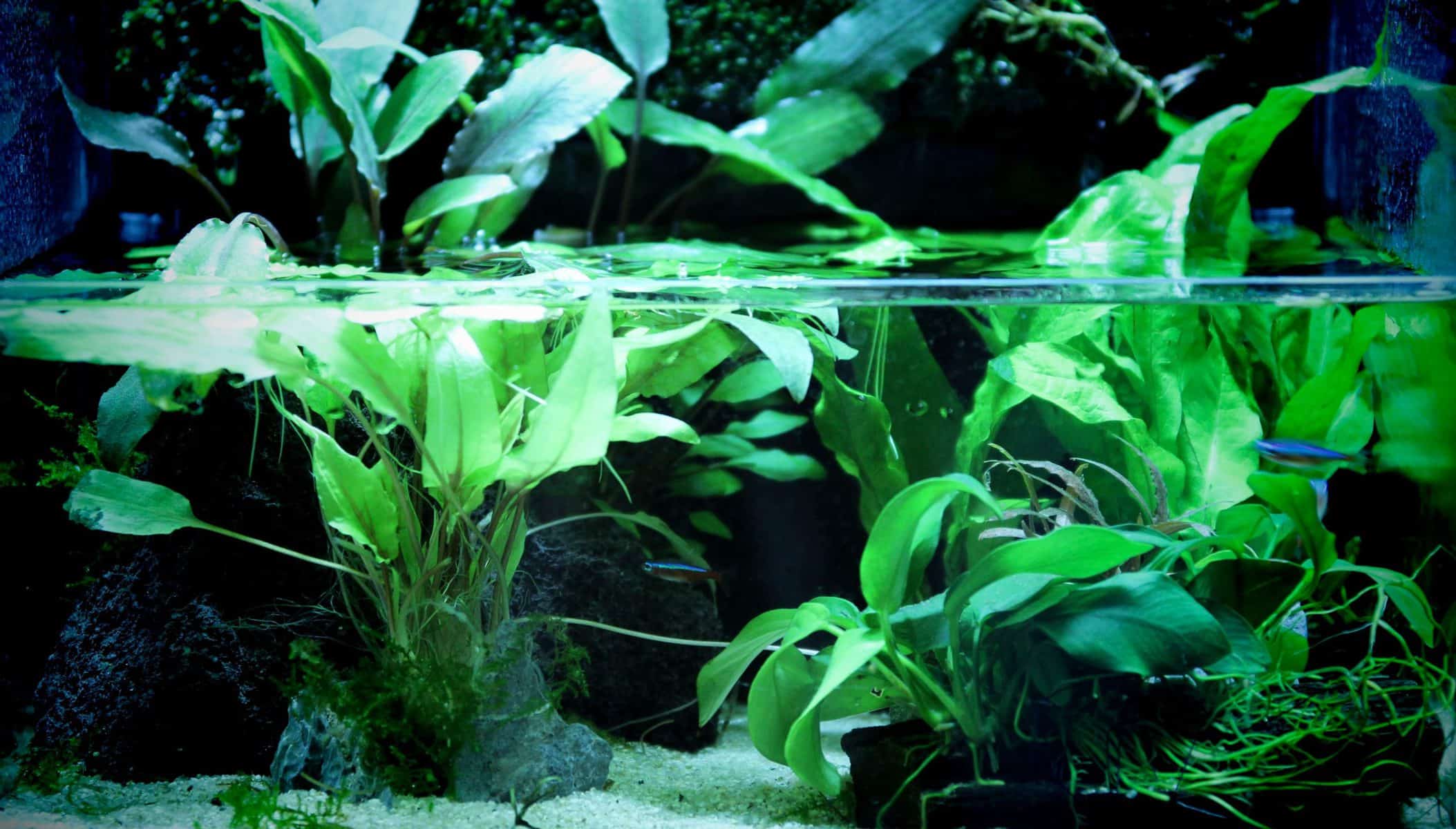
Planted coontail stays where you put it and creates the “forest” look most aquascapers want. Anchor the base in fine sand or gravel—the plant will develop hair-like rhizoids to grip the substrate, but it’s never truly rooted. Expect some bottom leaves to yellow and shed; that’s normal. The top growth will stay healthy as long as it gets light.
[TIP] Pro Tip
Don’t bury coontail stems deep in substrate. Wedge them just enough to stay upright—about an inch. Buried stems rot. Let the natural rhizoid development handle anchoring over time.
The Shedding Problem Nobody Warns You About
Coontail sheds needles. Constantly. This is normal growth behavior, not a sign of dying plants—but every beginner panics the first time they see green debris coating their substrate.
Excessive shedding usually means one of three things:
- Temperature too high: Above 80°F, shedding accelerates. If your fish tolerate it, drop to 76-78°F.
- Insufficient light: Lower portions shed first when light can’t penetrate.
- Recent transplant stress: New coontail often sheds for the first week. Give it time.
Shed needles clog filter intakes and look messy. Net them out during water changes. Snails and shrimp will eat some, but not enough to keep up with heavy shedding.
Pruning and Control
Coontail grows several inches per week under good conditions. Without regular pruning, it will choke your tank, block filter intakes, and smother other plants.
Trim from the top with sharp scissors. The cut stems will branch, creating bushier growth. Don’t throw the cuttings away—they’re already viable new plants. Either replant them, give them to other hobbyists, or compost them. Never release coontail into local waterways; it’s invasive in most regions.
[WARNING] Important
In outdoor ponds, coontail can completely take over within a single growing season. If you’re using it in a pond, commit to aggressive monthly harvesting or consider grass carp for biological control (check local regulations first—they’re restricted in many states).
Propagation
Coontail propagates through vegetative fragmentation. Break off any piece—even a tiny section—and it becomes a new plant within days. Side shoots detach naturally. In fall, buds form at stem tips, drop to the bottom, and sprout in spring.
To propagate intentionally: snap off a 4-6 inch section from the top of a healthy stem. Float it or anchor it. New thread-like rhizoids appear within a week. That’s it. No rooting hormone, no special substrate, no waiting.
Compatible Tankmates
Coontail works with virtually any freshwater community. Livebearers—guppies, mollies, platies, endlers—benefit most. The dense growth provides real fry cover, not the token hiding spots you get from sparse plants. I’ve seen guppy fry survival rates double in tanks with established coontail compared to bare tanks with only artificial decor.
Some fish eat coontail: angelfish and gouramis will graze on leaves. This isn’t a problem unless you’re trying to grow a pristine display. The plant grows faster than they can eat it.
Shrimp and snails thrive in coontail. The needle clusters trap biofilm and detritus—exactly what they’re looking for. [INTERNAL LINK: “cherry shrimp care” -> Cherry Shrimp]
Where to Buy and What to Pay
Coontail is one of the cheapest aquarium plants available. Most local fish stores stock it for $3-5 per bunch. Online vendors sell larger portions for $8-12 shipped. Because it propagates so easily, you can also find it free from local hobbyists clearing overgrown tanks—check aquarium Facebook groups or r/AquaSwap.
Inspect new coontail for pest snails and algae before adding it to your tank. A quick alum dip (1 tablespoon per gallon, 2-3 minutes) kills hitchhikers without harming the plant. [INTERNAL LINK: “quarantine plants” -> How to Quarantine Aquarium Plants]
Frequently Asked Questions
Why is my coontail turning brown and falling apart?
Insufficient light is the most common cause. Coontail needs moderate to high lighting throughout the water column. If only the bottom portions are browning while the top stays green, your light isn’t penetrating deep enough. Raise the intensity or reduce floating plants blocking light from above. Temperature above 82°F also accelerates decay.
Is coontail the same as hornwort?
Yes. Coontail, hornwort, and rigid hornwort are all common names for Ceratophyllum demersum. The name “coontail” refers to the plant’s resemblance to a raccoon’s tail. Fish stores use the terms interchangeably.
Does coontail need CO2 injection?
No. Coontail grows aggressively without supplemental CO2. Adding CO2 will accelerate growth even further, which usually creates more pruning work rather than better results. Save your CO2 system for plants that actually need it.
Will coontail kill my other plants?
It can outcompete them. Coontail absorbs nutrients faster than most aquarium plants and produces allelopathic chemicals that suppress some algae and plant species. In a mixed planted tank, dose liquid fertilizer regularly so coontail doesn’t monopolize all available nutrients. Slower-growing plants like anubias and crypts are particularly vulnerable.
Can I put coontail in a betta tank?
Yes, but manage it carefully. Bettas appreciate the cover and resting spots coontail provides. However, if you let it float and cover the surface, your betta will struggle to reach the surface to breathe and may have trouble finding food. Keep floating portions trimmed or plant it instead.
Coontail earns its reputation as the unkillable beginner plant. The only real challenge is keeping up with its growth. If you want a low-maintenance plant that actually improves water quality while providing functional cover for fish and fry, a $5 bunch of coontail will outperform most expensive planted tank setups. Just own a good pair of scissors.


