
If you’ve kept aquarium snails before, you know the drill: you buy two, and three months later you’re scraping hundreds of babies off the glass. It’s enough to make any hobbyist snail-shy.
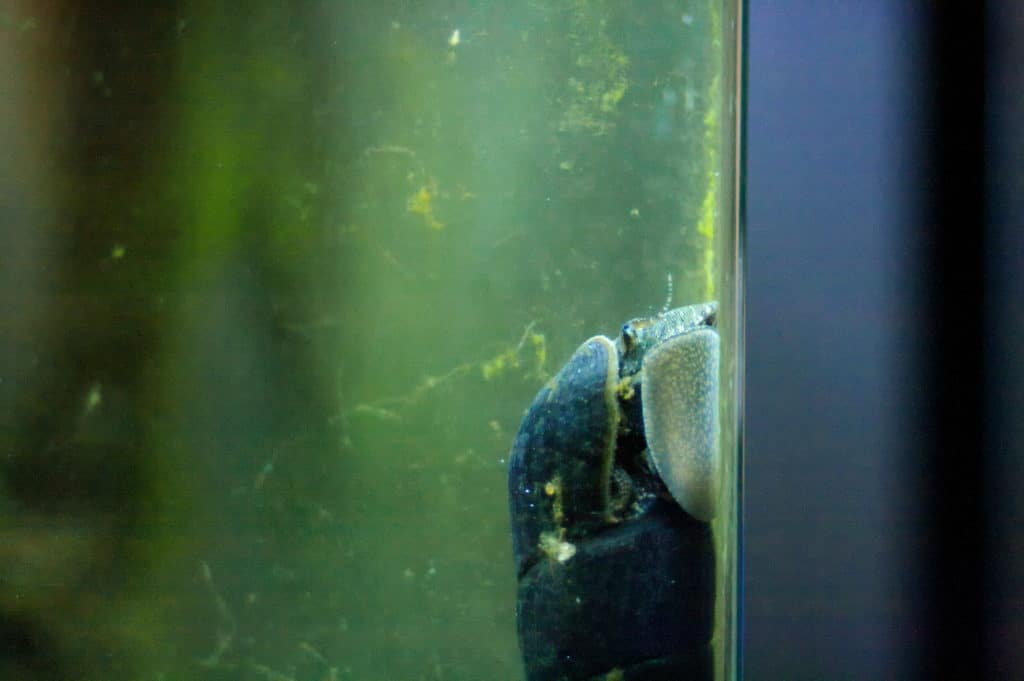
The black devil snail (Faunus ater) breaks that pattern entirely. This striking, jet-black snail doesn’t reproduce in freshwater aquariums, making it the perfect choice for hobbyists who want the algae-cleaning benefits of snails without the population explosion. Better still, they’re one of the most visually dramatic invertebrates you can add to a tank—and surprisingly easy to care for.
Quick Answer
Black devil snails are peaceful, easy-to-keep aquarium snails that grow up to 3.5 inches and don’t breed in freshwater. They thrive in tanks 10+ gallons with temperatures of 71-77°F and a pH of 7-8.5. Perfect for community tanks, shrimp setups, or even brackish aquariums.
? Black Devil Snail at a Glance
Natural Habitat
Understanding where Faunus ater comes from helps explain why they’re so adaptable in the home aquarium. These snails are native to the Western Indo-Pacific region, where they inhabit a remarkably diverse range of environments across numerous islands in Southeast Asia, including Indonesia, the Philippines, and Malaysia.
What makes their natural habitat particularly interesting is the variety of water conditions they encounter. Black devil snails are found in rivers, streams, estuaries, and coastal areas—environments that range from pure freshwater to moderately brackish conditions. This explains their exceptional hardiness and tolerance for varying water parameters in captivity. In the wild, they often inhabit areas with sandy or muddy substrates where they can burrow and scavenge for organic matter.
? Did You Know?
Despite their similar elongated shell shape, black devil snails are more closely related to Malaysian trumpet snails than to Sulawesi snails. Both Faunus and Melanoides (trumpet snails) belong to the same superfamily, Cerithioidea.
Appearance
Faunus ater is undeniably one of the most visually striking freshwater aquarium snails available to hobbyists. The name “black devil snail” perfectly describes its appearance: a sleek, dark body paired with an elegantly tapered shell that commands attention in any tank.
The most common variety features an entirely black shell and body, giving it an almost obsidian appearance that contrasts beautifully against green plants or light-colored substrates. However, color variations do exist in the hobby. Some specimens sport brown shells, while others display a stunning gradient pattern transitioning from black at the tip through orange and cream tones toward the shell opening. These gradient specimens are sometimes marketed as “cappuccino” snails, though there’s ongoing debate about whether these represent true Faunus ater or a closely related species within the Faunus genus.
The shell itself is distinctively elongated and conical—much more so than the rounded shells of mystery snails or nerites. This shape resembles Sulawesi rabbit snails, though black devil snails tend to have tighter, more uniform whorls. Adult specimens reach an impressive maximum size of around 3.5 inches (9 cm), making them one of the larger snail options for freshwater tanks. Their long, delicate antennae are constantly in motion as they explore, adding to their dramatic appearance.



Tank Setup & Requirements
One of the best things about Faunus ater is how undemanding they are. If you can maintain a stable, cycled aquarium, you can keep these snails thriving.
? What You’ll Need
- Aquarium of at least 10 gallons (38 L)
- Reliable filtration system
- Heater to maintain stable temperature
- Sand substrate (preferred) or fine gravel
- Hiding spots (driftwood, rocks, or plants)
- Calcium supplement or calcium-rich foods
Tank Size
Because black devil snails grow fairly large and are quite active, a minimum of 10 gallons is recommended for a small group. Larger tanks of 20+ gallons are even better, especially if you’re keeping them in a community setup. More space means more grazing area and less competition for food with tankmates.
Filtration & Water Quality
As with all aquatic life, a fully cycled aquarium is essential. These snails are sensitive to ammonia and nitrite spikes, so ensure your biological filtration is well-established before adding them. Regular water changes (20-30% weekly) help maintain the stable conditions these snails prefer. While they tolerate a range of water hardness, moderate to hard water with good mineral content supports healthy shell growth.
Temperature
Black devil snails prefer cooler tropical temperatures between 71-77°F (21.5-25°C). Unlike some tropical snails that thrive in warmer water, Faunus ater can become stressed in tanks kept above 80°F. A heater is still recommended—not necessarily to warm the water, but to prevent temperature fluctuations that can stress invertebrates.
Substrate
Like their Malaysian trumpet snail cousins, black devil snails enjoy burrowing into the substrate. A fine sand bottom allows them to exhibit this natural behavior, and watching them emerge from the sand is genuinely entertaining. Gravel can work, but sharp-edged substrates should be avoided as they may damage the snail’s soft body. If using gravel, choose smooth, rounded varieties.
Brackish Compatibility
? These snails aren’t strictly freshwater! Faunus ater can thrive in brackish conditions, making them excellent choices for low-end brackish setups with species like bumblebee gobies. Some experienced keepers have even maintained them successfully at near-marine salinity levels.
Décor & Plants
Black devil snails appreciate having hiding spots and surfaces to explore. Driftwood, rocks, and caves all work well. When it comes to live plants, proceed with some caution—while many aquarists report no plant damage, others have observed their Faunus snails nibbling on softer leaves. Hardy plants like Anubias, Java fern, and Vallisneria are generally safe choices. If you’re running a high-tech planted tank with expensive or delicate species, you may want to observe carefully at first or consider keeping these snails in a different setup.
Compatible Tankmates
Black devil snails are peaceful creatures that get along with virtually any non-aggressive tankmate. Their adaptability makes them suitable for a wide variety of community setups.
Ideal tankmates include:
- Dwarf shrimp (cherry shrimp, amano shrimp, crystal shrimp)
- Other peaceful snails (nerites, mystery snails, rabbit snails)
- Small, peaceful community fish (tetras, rasboras, Corydoras catfish)
- Livebearers (guppies, endlers, platies)
- Peaceful bottom-dwellers (otocinclus, kuhli loaches)
- Brackish species like bumblebee gobies (in brackish setups)
?? Tankmates to Avoid
Avoid keeping black devil snails with aggressive or predatory fish that might damage their delicate antennae. Pufferfish, large cichlids, and crayfish are particularly risky. Also avoid fish that require very soft, acidic water (pH below 6.5), as these conditions can erode snail shells over time.
One behavior worth noting: black devil snails are social creatures that genuinely seem to enjoy the company of their own kind. Keeping at least two or three together is recommended, and since they won’t breed in your tank, there’s no risk of overpopulation from keeping a group.
Diet & Feeding
Like most aquarium snails, Faunus ater are opportunistic omnivores with hearty appetites. They’ll consume a wide variety of foods, making them easy to feed and excellent tank cleaners.
What black devil snails eat:
- Algae (their favorite—they’ll graze constantly on surfaces)
- Biofilm and detritus
- Leftover fish food
- Decaying plant matter
- Sinking pellets and wafers
- Blanched vegetables (zucchini, cucumber, spinach)
- Algae wafers
- High-quality shrimp foods
- Frozen foods (bloodworms, brine shrimp)
While black devil snails will scavenge constantly, most aquariums are too “clean” to sustain them on naturally occurring food alone. Plan to supplement their diet with prepared foods 2-3 times per week.
? Pro Tip
Calcium is critical for healthy shell growth. Feed calcium-rich foods regularly, and consider adding a cuttlebone or crushed coral to your tank. Signs of calcium deficiency include thin, pitted, or eroding shells. Quality shrimp foods like Shrimp King or similar brands are formulated with the calcium and minerals that invertebrates need.
Behavior & Activity Level
If you think snails are boring, Faunus ater might change your mind. These snails are remarkably active compared to many other species—they’re genuinely fun to watch.
Black devil snails spend much of their time cruising around the tank, systematically grazing on algae and biofilm. They’re surprisingly quick movers for snails, covering impressive distances as they explore every surface. Many keepers report that they’re noticeably more active than Sulawesi rabbit snails, despite their similar appearance.
Their burrowing behavior adds another dimension to their activity. You might find your snails partially buried in the substrate during the day, then emerging to explore more actively in the evening. This behavior also helps aerate the substrate and prevent anaerobic pockets from forming—a nice bonus for planted tanks.
Black devil snails are also accomplished escape artists. They’ll often explore above the waterline and can climb out of open-top tanks. A secure lid or lowered water level is recommended [INTERNAL LINK: “escape-proof aquarium lids” -> aquarium covers guide].
Breeding Faunus ater
Here’s the trait that makes black devil snails so appealing to many hobbyists: they don’t breed in freshwater aquariums.
Unlike prolific species such as pond snails, bladder snails, or Malaysian trumpet snails, Faunus ater requires specific conditions—likely brackish or marine water—to successfully reproduce. The exact requirements for breeding remain poorly documented in the hobby, which means you can enjoy these snails without worrying about population explosions.
This is a double-edged sword, of course. You can’t breed your own stock, which means replacements must be purchased. However, for most hobbyists, the peace of mind of knowing their tank won’t be overrun is well worth this trade-off. Black devil snails are sold as wild-caught specimens, so supporting sustainable collection practices by purchasing from reputable sellers is encouraged [INTERNAL LINK: “buying aquarium livestock responsibly” -> fish store guide].
Where to Buy Black Devil Snails
While Faunus ater isn’t as commonly available as mystery snails or nerites, they’re not particularly difficult to find. Local fish stores with good invertebrate selections sometimes stock them, especially stores that specialize in unusual species.
Online retailers are often the most reliable source. Black devil snails ship well and are available from various specialty invertebrate sellers. When buying online, look for sellers with good reviews who pack and ship live animals carefully. Expect to pay $5-10 per snail depending on size and variety (the cappuccino color morphs often command higher prices).
You can find Faunus ater available on Amazon here.
Frequently Asked Questions
Do black devil snails reproduce in freshwater?
No. Faunus ater does not breed in freshwater aquariums. They likely require brackish or marine conditions to reproduce, making them an ideal choice for hobbyists who want snails without the risk of population explosions.
How big do black devil snails get?
Black devil snails can reach up to 3.5 inches (9 cm) in length, making them one of the larger freshwater snail species available. Most specimens sold are juveniles around 1-2 inches.
Are black devil snails safe for planted tanks?
Generally yes, but with caution. While many hobbyists keep them in planted tanks without issues, some report occasional nibbling on soft-leaved plants. Hardy species like Anubias and Java fern are typically safe.
Can black devil snails live in brackish water?
Yes. Faunus ater naturally inhabits brackish estuaries and can thrive across a wide salinity range—from pure freshwater to moderately brackish conditions. Some keepers have even maintained them at near-marine salinity.
How long do black devil snails live?
With proper care, black devil snails can live 3-6 years in captivity. Providing stable water parameters, adequate calcium for shell health, and a varied diet will help maximize their lifespan.
Have more questions about keeping black devil snails, or want to share your experience with Faunus ater? Leave a comment below!


