

Dwarf crayfish are small cousins of big crayfish species like the blue Procambarus alleni. Unlike most other crayfish they are peaceful and suitable for some types of community tanks. They belong to the genus Cambarellus, which contains quite a few different species, all with similar requirements. The most commonly known and kept orange CPO (orange dwarf crayfish) is one of them.
Keep reading for everything you need to know about dwarf crayfish and keeping them in your own aquarium!
| Minimum tank size | 8 gal (30 L) |
| Temperament | Fairly peaceful |
| Diet | Omnivore |
| Temperature | Room temperature |
| pH | 6.5-8 |
| Length | 2″/5 cm |
Name:
Cambarellus genus of dwarf crayfish, containing:
Cambarellus patzcuarensis Orange (CPO/orange dwarf crayfish/Mexican dwarf crayfish), Cambarellus shufeldtii (Cajun dwarf crayfish), Cambarellus montezumae, Cambarellus ninae, etc.
Dwarf crayfish natural habitat:
Dwarf crayfish are mainly found in Mexico and southern parts of the USA. Their primary habitat consists of lakes, small streams and slow-flowing rivers.
Dwarf cray fish appearance:
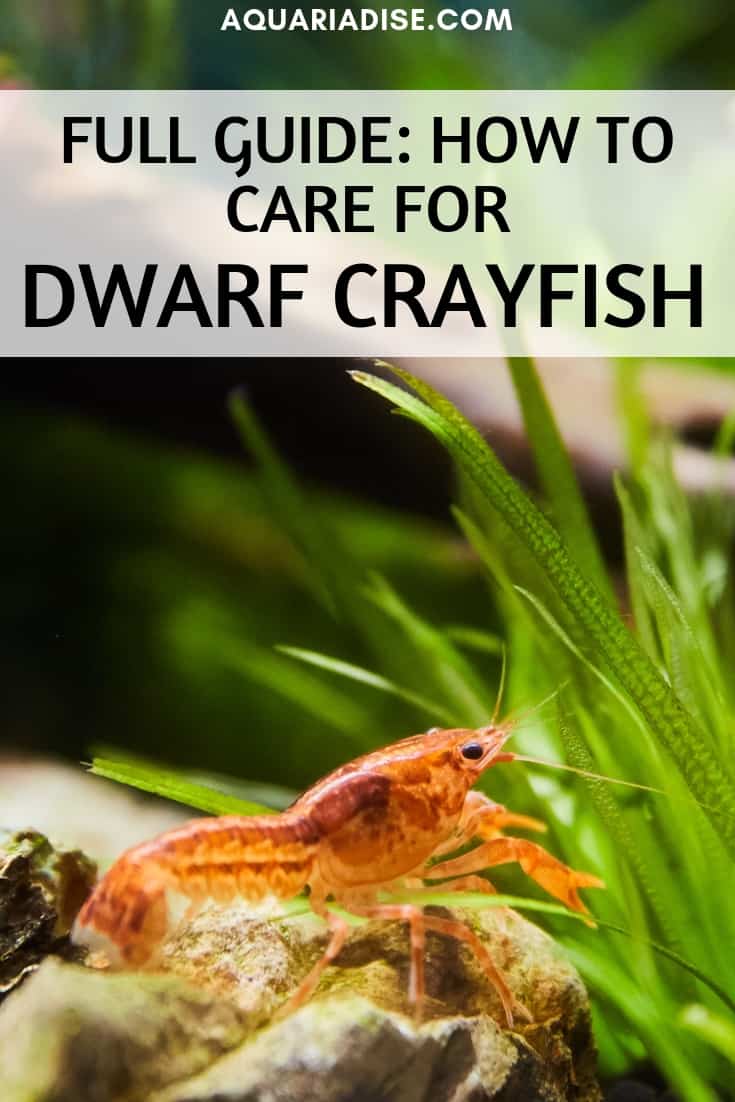
Dwarf crayfish are freshwater crustaceans that look somewhat like a tiny version of lobsters. Most wild varieties have a brown-greyish color with darker stripes that allows them to blend in with the environment. A slight hint of blue or orange is also sometimes seen, but is usually limited to the pincers. Females will sometimes carry eggs between their back legs.
Several varieties of Cambarellus have been selectively bred for color. Cambarellus patzcuarensis ‘Orange’ (orange dwarf crayfish), for example, features bright orange coloration. Cambarellus texanus ‘Blue’, on the other hand, is appreciated for its splotchy but bright blue carapace.
If you find a strange, empty crayfish-shaped shell in your aquarium there is no need to worry. Your dwarf crayfish hasn’t died, it has molted!
Dwarf crayfish requirements:
Dwarf crayfish are relatively undemanding when it comes to tank size and water values. Couples/trios of almost all of them do fine in a tank of at least around 15.5″/40cm. Trios of the smallest types, like Cambarellus shufeldtii (Cajun dwarf crayfish), can even be kept in 12″/30cm aquariums as long as there are multiple hiding places for every one of them.
Heavy filtration isn’t necessary, but at least a small filter is required to allow the tank to cycle and remove particles. Never introduce dwarf crayfish into an uncycled aquarium! They don’t react well to nitrites and ammonia. For more information on how to cycle an aquarium, check out this article.
Dwarf crayfish love to hide, so lots of hiding spots are definitely necessary to prevent stress and territorial battles. Plants, wood and piles of rocks are all great options and they will especially love a shrimp flat. Hides are extra important when a crayfish has just molted, as it will be very vulnerable for the first few hours.
Dwarf crayfish tankmates:
When it comes tank mates, dwarf crayfish don’t limit your options like their bigger cousins do. They are quite peaceful and not really known to kill fish at all. This makes them safe to keep with pretty much any community species that aren’t large enough to have an appetite for small crustaceans.
Small snails, baby shrimp and bamboo shrimp may be damaged by dwarf crayfish, but apart from that they’re usually harmless and will fit into most community tanks that don’t contain larger, hungry fish.
Due to their size, dwarf crayfish make a great option for nano aquariums. Tanks between 5-10 gallons don’t give you many options when it comes to stocking, as most fish simply grow too large. If you still want plenty of activity in your small aquarium, the genus Cambarellus makes the perfect choice.
Dwarf crayfish diet:
These crayfish are omnivores and will eat pretty much anything. I feed mine Hikari Crab Cuisine as a staple (I wrote a review of it a while ago for everyone who is considering buying it), along with all kinds of other foods.
Frozen blood worms/black mosquito larvae, pieces of algae pellet, peas, and even homemade gel foods will all be appreciated. Their varied diet makes dwarf crays a great addition to your aquarium cleaning crew.
In order to provide your dwarf crayfish with a constant source of snacking you can consider adding any kind of leaf litter. Not only are these dried leaves beneficial to your water quality: crayfish will also eat them when they start breaking down. You can read more about Indian almond leaves here. All kinds of leaf litter will work, though.
Dwarf crayfish behavior:
If you’re interested in keeping shrimp but think they’re a bit too boring for you, you might want to consider one of the many dwarf crayfish species. They show much more personality towards each other and even towards you. They can often be observed carefully approaching each other and suddenly making a huge jump backwards when one of them gets too close.
When you approach the aquarium, you’ll often see them running towards you, pincers raised, ready to defend their territory – seemingly forgetting how small they are. Quite adorable!
No products found.
Breeding dwarf crayfish:
Breeding dwarf crayfish is not too difficult and actually quite similar to breeding dwarf shrimp. After the mating process, eggs will develop under the female’s back legs (swimmerettes). You’ll see her carefully tending to these throughout the ‘pregnancy’, waving water over them and occasionally even cleaning them.
If the eggs are dark colored, they are fertilized and will hatch into tiny copies of the parents in around 3-4 weeks. The fry will stay with the mother for a short while (up to a few days), still hiding between the swimmerettes. After this they slowly venture out into the world.
The fry will eat leftover food, rotting plant bits and, occasionally, each other. Be sure to provide extra hiding places for a high survival rate. Don’t worry if you don’t see any of them for the first few weeks. I often suspected all my baby crays had died until suddenly a few surviving juveniles emerged from their hides!
Buying dwarf crayfish:
When buying dwarf crayfish, look for healthy specimens with bright colors that appear active. Missing legs can regrow with the next molt and are not a huge problem. You can buy orange dwarf crayfish (CPO) online here!
I’d definitely recommend dwarf crayfish to anyone who’s looking for a new, fun aquarium challenge. They don’t require large tanks or very specific care and won’t destroy plants, which makes them a great choice for beginners and more experienced aquarists alike.
If you think I forgot to mention something in this caresheet or if you have more questions about keeping dwarf crayfish, be sure to leave a comment below. Happy invert-keeping!


