
Quick Answer
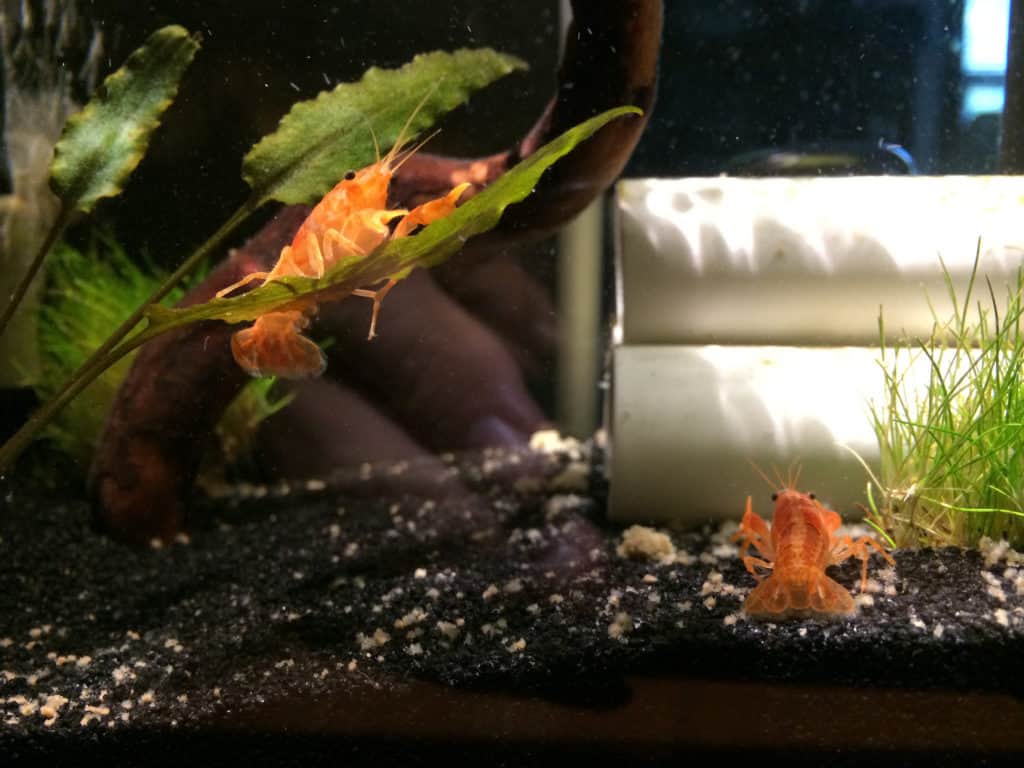
CPO crayfish (Cambarellus patzcuarensis var. “Orange”) are one of the few crayfish species safe for planted community tanks. At just 2 inches max, they won’t uproot plants, massacre tankmates, or need a 40-gallon tank. Minimum 8 gallons, lots of hiding spots, and they’ll breed without any intervention.
Most crayfish are tank terrorists. They shred plants, ambush sleeping fish, and require their own dedicated setup. CPO crayfish break that pattern completely — and that’s exactly why they’ve become one of the most popular invertebrates in the nano hobby.
These dwarf Mexican crayfish max out around 2 inches, stay relatively peaceful, and actually work in community setups. But “dwarf” doesn’t mean “easy” — they have specific needs that generic crayfish care guides often miss.
Quick Care Overview
Origin and Wild Population
CPO crayfish take their scientific name from Lake Pátzcuaro in Michoacán, Mexico — one of only a handful of locations where wild populations exist. In nature, they’re actually a drab brown-grey. The vivid orange coloration you see in aquarium specimens is the result of selective breeding over many generations.
Wild populations face habitat pressure, which makes captive-bred specimens essentially the entire hobby supply. This is actually good news: tank-raised CPOs tend to be hardier and better adapted to aquarium conditions than wild-caught inverts.
What Makes CPOs Different From Other Crayfish
Here’s where the typical “dwarf crayfish are just small crayfish” advice fails. CPOs aren’t miniaturized versions of the larger Procambarus species that destroy planted tanks. They’re genuinely different animals with different behavior patterns:
- They don’t uproot plants. Their claws are too small to do real damage, and they lack the digging instinct of larger species.
- They’re not obligate predators. While they’ll scavenge protein, they’re not actively hunting tankmates the way blue crayfish do.
- They tolerate conspecifics. You can keep multiple CPOs together without the constant aggression you’d see with Procambarus alleni.
That said — and this is the nuance most guides skip — “peaceful” is relative. CPOs are opportunistic. A molting shrimp is fair game. A slow-moving snail might get harassed. A fish fry that blunders into claw range won’t survive. They’re not aggressive, but they’re definitely not harmless either.
[TIP] Pro Tip
The “CPOs are safe with shrimp” advice you’ll see repeated everywhere needs a caveat: they’re safe with adult shrimp in a heavily planted tank with lots of cover. In a sparse nano cube, shrimplets become expensive crayfish snacks. If you’re breeding high-grade Caridina, keep them separate.
Tank Setup
Eight gallons is the working minimum for a pair. You can technically keep a single CPO in a 5-gallon, but you’ll have better behavior, more stable parameters, and actual room to watch them in an 8–10 gallon setup. Bigger is always better with crustaceans — they’re more active than most people expect.
The Non-Negotiable: Hiding Spots
CPO crayfish molt every few weeks while growing, less frequently as adults. During and immediately after molting, they’re soft, defenseless, and will be cannibalized by tankmates — including other CPOs — if they can’t hide completely.
“Plenty of hiding spots” isn’t decorating advice. It’s survival infrastructure. You need:
- PVC tubes, ceramic caves, or coconut hides — at least one per crayfish plus extras
- Dense plant cover (Java moss, Subwassertang, floating plants)
- Leaf litter layer — Indian almond leaves or oak leaves work well
- Driftwood with crevices
The tank should look “overstuffed” with cover to human eyes. To a molting crayfish, it looks like adequate shelter.
[WARNING] Important
CPO crayfish are escape artists. Any gap in your lid larger than 1 cm is a potential exit point. I’ve found them on the floor after climbing filter intakes, airline tubing, even heater cords. Seal your tank or accept eventual losses.
Filtration and Water Parameters
Standard filtration for the tank size works fine — sponge filters are ideal because they double as grazing surfaces and can’t trap small crayfish. HOBs work too; just cover the intake with a sponge prefilter.
Temperature range is wide (65–78°F), which means room temperature often works without a heater. If your house swings more than 5°F daily, add a heater set to 72°F for stability.
pH tolerance is similarly forgiving (6.5–8.0), but one thing matters more than most guides mention: GH and mineral content. Crayfish build their exoskeletons from dissolved calcium and magnesium. Soft water (GH under 6) leads to incomplete molts, thin shells, and death. Target GH 8–12 for best results. If your tap water is soft, supplement with a remineralizer or crushed coral in the filter.
Sexing CPO Crayfish
At 2 inches, sexing isn’t as obvious as with larger crayfish, but it’s doable. Flip the crayfish gently (a clear container against the glass works if you can’t net them) and look at the underside:
- Males: Have modified pleopods (gonopods) — two small, pointed appendages between the last pair of walking legs, angled forward toward the head.
- Females: Lack gonopods. The space between the last walking legs is smoother, and the swimmerettes extend further for carrying eggs.
Females also tend to be slightly larger-bodied with broader tails when mature, but the gonopod check is definitive.
Compatible Tankmates
CPOs work with most community fish that share their water parameters. Good choices:
- Small rasboras (Chili, Exclamation Point, Phoenix)
- Endlers and other small livebearers
- Otocinclus
- Small Corydoras (pygmaeus, habrosus)
- Other CPO crayfish (with sufficient hides)
- Mystery snails, nerites (too large to harass effectively)
Avoid:
- Dwarf cichlids — Apistos, rams, and kribs see CPOs as food, especially post-molt
- Larger cichlids — obvious predation risk
- Loaches — most will harass or eat small crustaceans
- Breeding shrimp colonies — adult shrimp are usually safe; shrimplets are not
Feeding
CPOs are true omnivores and enthusiastic scavengers. They’ll handle leftover fish food, biofilm, decaying plant matter, and dead tankmates without any prompting. But relying entirely on scavenging is a common mistake — they need intentional feeding to thrive.
Base diet: High-quality invertebrate pellets (Shrimp King, Hikari Crab Cuisine, or similar). Feed 2–3 times weekly.
Variety:
- Blanched vegetables — zucchini, spinach, cucumber
- Frozen bloodworms, daphnia, or brine shrimp (occasional protein boost)
- Leaf litter — they graze constantly on decomposing leaves
Calcium: This is where feeding directly affects survival. Provide calcium-rich foods before and after molting — cuttlebone fragments, calcium-enriched foods, or simply leaving the shed exoskeleton in the tank (they’ll eat it to recycle minerals).
[FACT] Never remove a molted exoskeleton from a crayfish tank. The old shell is the crayfish’s primary calcium recovery source — eating it helps harden the new shell faster and reduces vulnerability time.
Breeding CPO Crayfish
If you have a male and female CPO in a healthy tank with adequate cover, breeding will happen without any special effort. That’s not an exaggeration — these crayfish breed readily and consistently in captivity.
After mating, the female carries eggs (anywhere from 20–60) tucked under her tail, fanning them constantly with her swimmerettes. She’ll stay hidden more than usual during this period. Eggs take 3–5 weeks to hatch depending on temperature.
The newly hatched crayfish are fully formed miniatures — no larval stage to worry about. They’ll cling to mom briefly, then disperse into the tank to forage on biofilm and microscopic foods. You won’t see much of them for the first few weeks; they’re tiny and stay hidden.
Survival tip: In a community tank, fry survival depends entirely on cover density. More moss, more leaf litter, more hiding spots = more surviving juveniles. In a bare tank, adults and fish will eat most of them.
Common Problems and What Actually Causes Them
Failed Molts
The most common cause of CPO death. Symptoms: crayfish stuck partially in old shell, white ring around the body, lethargy before molt. Almost always a mineral deficiency — check your GH and increase calcium supplementation.
Sudden Aggression
CPOs that were peaceful suddenly attacking tankmates usually indicates insufficient territory or hiding spots. Add more cover before assuming you have an unusually aggressive individual.
Disappearing Crayfish
Check behind and under the tank first — escapes are more common than deaths. If the tank is sealed, look inside hardscape caves and dense plant masses. Molting CPOs hide for days and don’t move when discovered. A crayfish that’s actually dead will typically be found and scavenged by tankmates within 24 hours.
Where to Buy CPO Crayfish
The orange morph is widely available. Many local fish stores stock them, and they ship well from online invertebrate specialists. Wild-type brown specimens are harder to find but occasionally appear from specialty breeders.
When buying, look for active individuals with all limbs intact. Missing claws or legs regenerate over successive molts, but it indicates either recent aggression or poor holding conditions. Avoid lethargic specimens or any from tanks with visible dead crayfish.
[INTERNAL LINK: “dwarf shrimp” -> Cherry Shrimp Care Guide]
[INTERNAL LINK: “nano tank” -> Best Nano Fish for Small Aquariums]
[INTERNAL LINK: “nitrogen cycle” -> How to Cycle Your Aquarium]
Frequently Asked Questions
Can CPO crayfish live with betta fish?
It depends on the betta’s temperament and the tank size. In a heavily planted 10+ gallon tank with plenty of hiding spots, many hobbyists keep them together successfully. In smaller setups or with aggressive bettas, the crayfish becomes a target — especially post-molt when it’s soft and vulnerable. The crayfish can also pinch a slow-moving betta, though injuries are rarely serious.
How many CPO crayfish can I keep together?
One crayfish per 4–5 gallons of tank space is a reasonable guideline, assuming abundant hiding spots. In an 8-gallon with good cover, a pair works well. A 20-gallon long could support 4–5. Overcrowding leads to aggression, especially toward freshly molted individuals.
Do CPO crayfish need a heater?
Not necessarily. Their comfortable range (65–78°F) covers most room temperatures. You only need a heater if your home temperature fluctuates significantly or drops below 65°F. Stability matters more than hitting a specific number — avoid swings greater than 4–5°F within a day.
Why is my CPO crayfish not moving?
If it’s hiding and motionless for a day or two, it’s likely preparing to molt or has just molted — this is normal. Check for a shed exoskeleton nearby. If the crayfish is in the open, on its side, or unresponsive to gentle stimulation for more than 24 hours, something is wrong. Test water parameters, especially ammonia and GH.
Will CPO crayfish eat my aquarium plants?
Rarely in any damaging way. They’ll nibble on dying leaves and may sample soft plants like duckweed, but they lack the size and inclination to destroy healthy plants the way larger crayfish do. Java fern, Anubias, mosses, and most stem plants are safe.


