

Quick Answer
Black beard algae thrives when CO2 levels fluctuate. The fastest removal method is spot-treating with 3% hydrogen peroxide or Seachem Flourish Excel directly on affected areas, but you won’t win long-term without stabilizing your carbon dioxide.
You’ve tried scrubbing. You’ve tried reducing light. You’ve tried adding snails. The black beard algae keeps coming back. That’s because most advice treats the symptoms while ignoring what’s actually feeding this stuff.
Black beard algae (Audouinella sp.) is genuinely one of the most stubborn algae problems in the hobby. It’s slippery, firmly attached, and laughs at the cleanup crew that handles other algae just fine. But it’s also predictable once you understand what it’s actually responding to.
What Black Beard Algae Actually Is
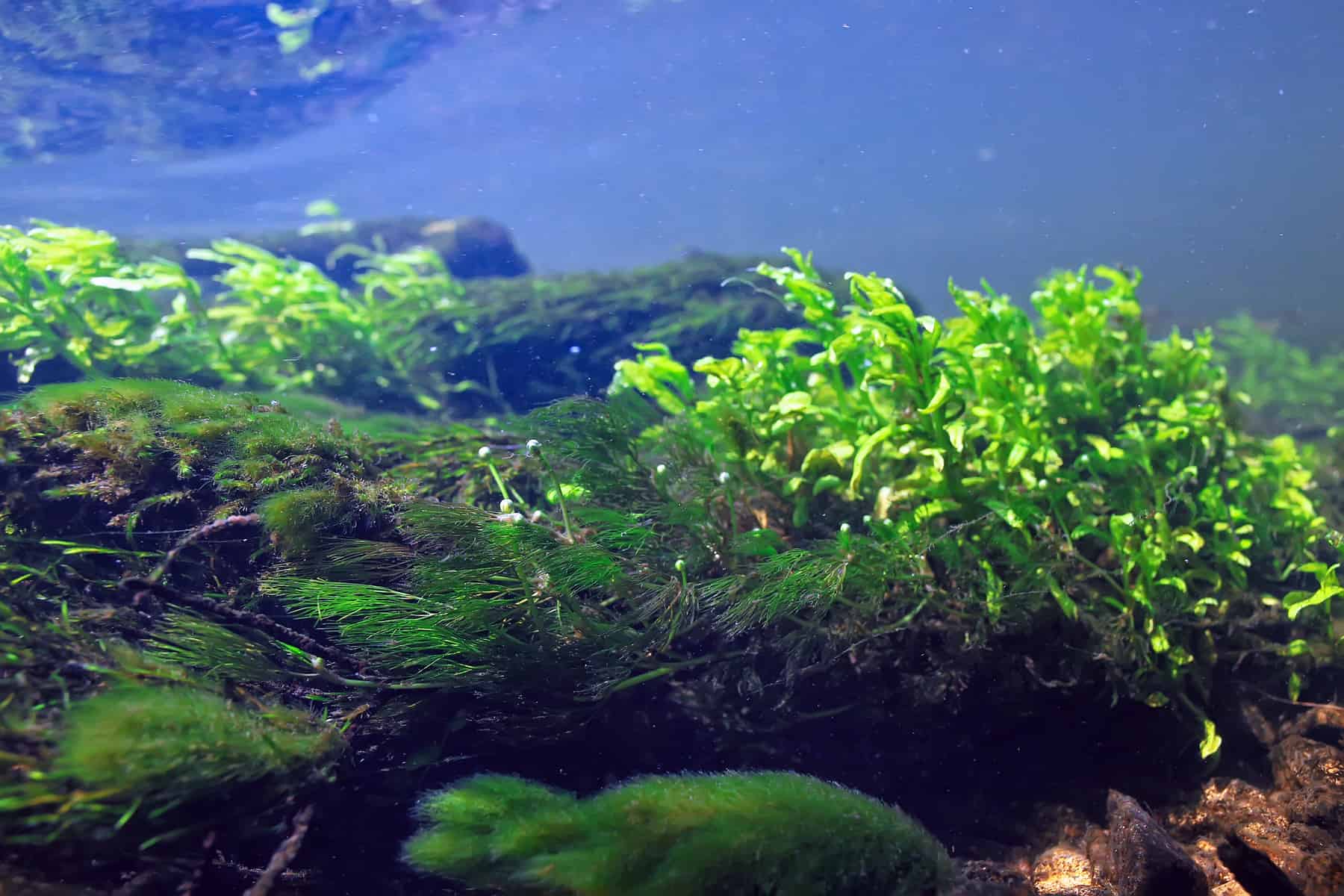
Despite the name, BBA is technically a red algae. It grows in dense tufts that start as small patches and spread into thick mats covering plants, hardscape, and filter intakes. The color ranges from deep black to dark green, sometimes with reddish tints when dying.
The texture is the giveaway: soft, fuzzy, and impossible to grip. Unlike hair algae that you can wind around a toothbrush, BBA just slips through your fingers. It also anchors with a stubborn holdfast that survives most scrubbing attempts.
[FACT] Black beard algae isn’t harmful to fish or invertebrates. The real damage is to plants, which get smothered and outcompeted for light and nutrients. Slow-growing plants like Anubias are particularly vulnerable.
BBA vs. Staghorn Algae: Both are red algae, but staghorn is wirier, finer, and branches like antlers. BBA forms denser, bushier tufts. The distinction matters because staghorn responds better to increased CO2, while BBA specifically responds to CO2 stability.
The Real Cause Most Guides Miss
Here’s where the standard advice fails you. Most guides list three causes: overfeeding, excess light, and CO2 imbalance. That’s technically accurate but misses the point.
BBA is a CO2 fluctuation indicator. Not too much CO2. Not too little. Fluctuation.
Your tank might have adequate CO2 levels on average, but if those levels swing throughout the day, BBA finds its opening. This happens constantly in tanks that seem perfectly maintained:
- CO2 injection that starts when lights come on (creating a daily spike and crash)
- Inconsistent surface agitation changing gas exchange rates
- Large water changes that reset dissolved CO2
- Filter maintenance that disrupts water circulation patterns
[TIP] Pro Tip
If you inject CO2, start it 1-2 hours before your lights come on. Plants begin photosynthesis immediately when light hits, and if CO2 isn’t already dissolved and distributed, you create the exact instability BBA exploits.
Secondary Contributing Factors
Poor circulation: Dead spots in your tank create micro-environments where CO2 doesn’t distribute evenly. BBA often appears first in low-flow areas near the substrate or behind hardscape.
Overfeeding: Excess nutrients (phosphate, nitrate) don’t directly cause BBA, but they give it more resources once CO2 conditions allow it to establish. The nitrogen cycle can only do so much.
Lighting: Long photoperiods (10+ hours) or overly intense lighting stress plants and give algae more opportunity to photosynthesize. But light alone doesn’t explain BBA. Tanks with identical lighting but stable CO2 stay clean.
How to Remove Black Beard Algae
Let’s be direct: if you don’t address CO2 stability, any removal method is temporary. That said, you need to knock back existing growth while you fix the underlying problem.
Hydrogen Peroxide Treatment
This is the most effective direct attack. Use standard 3% hydrogen peroxide from the pharmacy.
Spot treatment (in-tank): Turn off filters and circulation. Use a syringe or pipette to apply H2O2 directly onto BBA patches. The algae will turn pink or red within 24-48 hours, indicating it’s dying. Resume filtration after 15-20 minutes.
Dip treatment (removed objects): Soak affected hardscape, decorations, or hardy plants in a solution of 1 part 3% H2O2 to 3 parts tank water for 3-5 minutes. Rinse thoroughly before returning to tank.
Full tank dosing: 10ml of 3% H2O2 per 10 gallons, added daily. This is more stressful on livestock and plants than spot treatment. Watch for signs of distress.
[WARNING] Important
Hydrogen peroxide can damage sensitive plants like mosses, Riccia, and some stem plants. Test on a small area first. It will also stress shrimp at higher doses, so spot treatment is safer for invert-heavy tanks.
Seachem Flourish Excel
Excel is marketed as liquid carbon, but hobbyists discovered its algaecidal properties years ago. The active ingredient (glutaraldehyde) kills algae cells on contact at sufficient concentration.
Spot treatment: Apply undiluted Excel directly to BBA using a syringe with filter off. More aggressive than H2O2 but also harder on plants.
Overdosing: Some hobbyists dose 2-3x the recommended amount tank-wide. This works but kills sensitive plants and can stress fish. I don’t recommend it as a first approach.
Excel breaks down within 24 hours, so daily application is necessary for tank-wide treatment.
Manual Removal
Scrubbing works better outside the tank. Remove rocks and driftwood, scrub with a stiff brush in a bucket of tank water, then treat with H2O2 before returning. In-tank scrubbing mostly just releases spores.
For affected plant leaves, trimming is often more practical than treatment. Cut affected leaves at the base and dispose of them outside the tank.
Algae Eaters That Actually Work
Most “algae eaters” won’t touch BBA. Its texture and chemical composition make it unpalatable to the usual cleanup crew. But there are exceptions.
| Species | Effectiveness | Min. Tank Size | Notes |
|---|---|---|---|
| Siamese Algae Eater (Crossocheilus oblongus) | High | 30 gal | The only fish that reliably eats BBA. Gets lazy if overfed. |
| Amano Shrimp (Caridina multidentata) | Moderate | 10 gal | Will nibble young BBA. Not effective on established growth. |
| Ramshorn Snails | Low-Moderate | 10 gal | Some individuals eat BBA, others ignore it. Population can explode. |
| Florida Flagfish (Jordanella floridae) | Moderate | 20 gal | Underrated option. Can be nippy with tankmates. |
The honest truth about Siamese algae eaters: They work, but only if you keep them slightly hungry. Well-fed SAEs lose interest in BBA completely. If you’re dropping algae wafers and flake food daily, your SAE is eating that instead. This is the dirty secret behind “my SAE doesn’t eat algae” complaints.
Also verify you’re getting true Crossocheilus oblongus. The hobby is flooded with lookalikes (flying foxes, false Siamese algae eaters) that won’t touch BBA. True SAEs have a black stripe extending into the tail fin, not stopping at the body.
Prevention That Actually Works
Once you’ve cleared BBA, keeping it gone requires addressing root causes.
Stabilize CO2: If you inject, use a timer and start injection before lights-on. If you don’t inject, avoid practices that create fluctuation: inconsistent surface agitation, irregular water changes, or filter disruption.
Improve circulation: Add a powerhead or adjust your filter output to eliminate dead spots. BBA establishes in low-flow zones first.
Reduce photoperiod: 6-8 hours is sufficient for most planted tanks. More light hours means more opportunity for algae without proportional benefit to plants.
Quarantine new plants: BBA spreads by spores and often hitchhikes on new plants. A 2-week quarantine in a separate container lets you spot and treat problems before they reach your main tank. At minimum, inspect new plants closely and dip them in diluted H2O2 before adding.
Test regularly: Not just ammonia and nitrite. Track nitrate and phosphate trends. BBA can consume nutrients faster than you test, so test right after removal to get accurate readings.
Did You Know?
BBA can survive outside water for weeks. If you remove affected decor and let it dry out, the algae goes dormant rather than dying. It will reactivate when submerged again. Always treat removed items with H2O2 or heat (boiling water) before returning them.
Frequently Asked Questions
Will reducing light get rid of black beard algae?
Reducing light slows BBA growth but won’t eliminate established algae. BBA can survive extended blackouts that would kill other algae types. Light reduction works best as prevention combined with CO2 stabilization, not as a standalone treatment.
Is black beard algae harmful to fish?
No, BBA doesn’t directly harm fish or invertebrates. The danger is to plants, which can be smothered and outcompeted for light and nutrients. Heavy infestations also indicate water quality issues that may stress fish indirectly.
How long does it take to get rid of black beard algae?
With aggressive spot treatment (H2O2 or Excel), visible BBA starts dying within 24-48 hours and can be cleared in 1-2 weeks. However, without addressing CO2 stability, it will return. Full resolution including prevention typically takes 4-6 weeks of consistent effort.
Why does my black beard algae keep coming back?
Recurring BBA almost always indicates unstable CO2 levels. Even tanks without CO2 injection experience fluctuation from inconsistent surface agitation, water changes, or filter maintenance. Address circulation and consistency before assuming you need more CO2.
Can I use bleach to kill black beard algae?
Diluted bleach (1:20 ratio) kills BBA on removed hardscape and can be used for plant dips on hardy species. However, bleach is more dangerous than H2O2, requires thorough rinsing and dechlorination before items return to the tank, and damages sensitive plants. Hydrogen peroxide is safer and equally effective for most purposes.
Black beard algae has ended more planted tank ambitions than any other single problem. But it’s also predictable. Stabilize your CO2, improve your circulation, and hit existing growth with hydrogen peroxide or Excel. The battle takes patience, but it’s absolutely winnable.


