Aquarium snails are pretty underappreciated and underrepresented on most aquarium websites. They’re usually seen as pests instead of an actual addition to your aquarium, which is a shame as there are tons of beautiful species available. Not all of them reproduce quickly, and most can actually help you out with algae control. Looking through the Aquariadise archives, I seem to be guilty as well. Not a single snail post!
Time for snail representation – here’s a list of some beautiful and easy to keep snail species.
If you came here looking for a way to deal with pest snails like Malaysian trumpet snails, bladder snails or pond snails, have a look at this article.

Nerite Snail (Neritina sp.)
Freshwater Nerites (pictured above) are among the most popular aquarium snails because of their exceptional algae eating abilities. Although they won’t do all the work for you, they definitely help. Supplement their diet with algae wafers, though, especially when algae are running low.
To create an effective algae cleanup crew, get at least around 5 of these snails – they don’t reproduce in the aquarium, so don’t worry about them becoming pests. Be sure to close all holes in the lid, because some Nerites are true escape artists that will try to get out of the aquarium when water conditions are not ideal.
You can buy Nerite snails online here!
Sulawesi Snail (Tylomelania sp.)
I was always under the impression that anything from Sulawesi would be just as difficult to care for as Sulawesi shrimp – I was wrong. When kept at temperatures around 81-86 °F/27-30 °C with peaceful tankmates, Sulawesi snails are actually easy to keep, interesting to watch and beautiful. They are omnivorous, so feed plant-based foods like algae tablets and fresh veggies as well as foods meant for omnivores/carnivores.
Tylomelania snails will breed in the aquarium without much difficulty, but most sources report one juvenile at a time. This means they won’t become pests like pond snails or trumpet snails.
Septaria porcellana
This snail is not very well-known in the hobby – I’m not sure if they even have a common name. They’re sometimes referred to as freshwater limpets, but are actually a type of flat nerite snail that, unlike limpets, doesn’t breed in freshwater. I was lucky enough to stumble upon them myself. I wanted to include them in this list because of their algae eating abilities, which are pretty extraordinary. In fact, they eat so much algae that it’s recommended to not clean the back of the tank so they don’t starve.
Although there is not too much info out there on their requirements, they likely appreciate the same water conditions as their ‘normal’ nerite cousins.
Assassin snail (Clea helena)
If you’re considering getting a puffer fish or clown loach to get rid of pest snails like pond snails or trumpet snails – reconsider. Both these species are on the list of the worst beginner fish for a reason. Don’t worry, though, as the assassin snail can help you get rid of pest snails much more easily. And it looks very pretty while doing so!
Clea helena is a carnivorous snail that turns cannibalistic when it encounters other snails, and eats them alive if it gets the chance. Many fishkeepers report a drastic decline in the amount of pest snails in their aquarium after introducing a few assassin snails.
Although these assassins reproduce in freshwater, they tend not to become pests because the breeding stops once the food supplies run out. And if they do keep reproducing, there’s a good chance you’ll be able to find another aquarist with a snail problem who is willing to take a few. Please be very careful when keeping assassin snails. If these snails escape into the wild they can do a lot of damage.
You can find a full assassin snail caresheet here.
You can buy assassin snails online here!
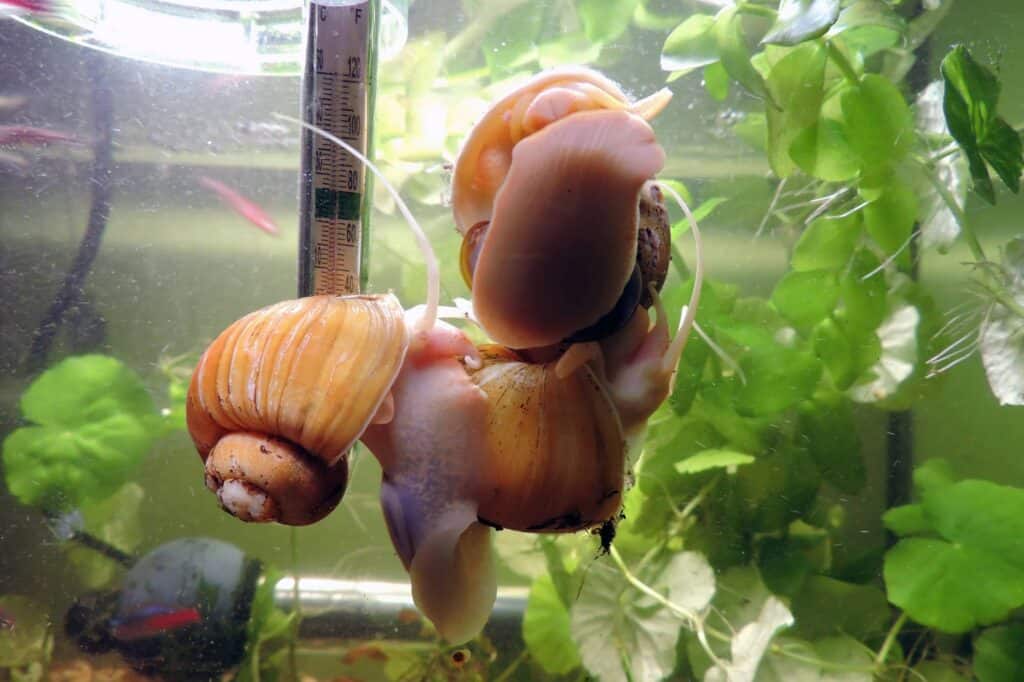
Mystery snail (Pomacea bridgesii)
Mystery snails aren’t much of a mystery anymore: they are closely related to apple snails. However, that doesn’t mean they’ve lost their charm. These snails are a favorite among aquarists because, unlike many of their cousins, they leave plants alone and are legal to keep in the United States. They come in multiple colors, help remove algae and make a fun breeding project for beginners.
Because mystery snails can reach a size of 2″ (5cm), you should avoid them in any aquariums under 15 gal (57L). They produce a lot of waste and their bioload is just too high for smaller setups. Leave a little room between the water line and the top of the tank, as mystery snails breathe air and will usually deposit their eggs out of the water. Be sure to close any holes that your snails might fit through to prevent them from going exploring and falling out of the aquarium!
You can buy mystery snails online here.
This page does not include snail species that can be considered pests, like ramshorn snails, Malaysian trumpet snails and pond snails. However, there is no reason to avoid these species; they are just as fun to keep and interesting to look at. They breed very rapidly, but only in circumstances where there is a surplus of food.
Snails have a very bad reputation among aquarists, and they can indeed be very annoying. However, they can also be a great addition to your aquarium, and there are plenty of species that are beautiful and interesting to keep. Hopefully this list has inspired you to give them a chance!
If you’d like to know more about these snails or if you know of another great species to keep, be sure to leave a comment. Happy snail-keeping!