That bag of fish flakes you bought six months ago? It’s probably lost most of its nutritional value by now — and even when it was fresh, it may have been packed with cheap fillers your fish don’t need. The good news: you have options that are healthier, often cheaper, and will have your fish acting like it’s feeding time at a five-star restaurant.
Quick Answer
The best alternatives to commercial flakes and pellets are homemade gel food (customizable to any species), frozen foods (parasite-free and preservative-free), fresh vegetables (for herbivores and omnivores), and home-cultured live foods (ideal for fry and picky eaters).
Whether you’re trying to save money, improve your fish’s health, or just add some variety to their diet, these four alternatives cover every type of freshwater and saltwater fish you might keep. Let’s break down each option so you can decide what works best for your tank.
Gel Food: The Ultimate Custom Fish Diet
 Gel food is probably the single best upgrade you can make to your fish’s diet. It’s a homemade food prepared with gelatin or agar agar as a binding agent, combined with whatever ingredients match your fish’s nutritional needs. Unlike commercial foods that take a one-size-fits-all approach, gel food lets you create species-specific recipes.
? Gel food stays intact in water for hours without dissolving and clouding your tank — unlike flakes that break apart within seconds and foul water quality.
The versatility is what makes gel food so powerful. You can create:
- High-protein blends for discus, bettas, and other carnivorous species using fish, shrimp, or bloodworms as the base
- Balanced omnivore recipes for goldfish, guppies, and community fish mixing protein and vegetable matter
- Vegetarian formulas for plecos, otocinclus, and shrimp using spirulina, spinach, and zucchini
You can also add beneficial extras: red bell pepper to enhance coloration, spirulina for immune support, or garlic to improve palatability and help combat internal parasites. Many experienced fishkeepers add vitamin supplements to their gel food recipes for complete nutrition.
? Pro Tip
Make gel food in large batches and freeze it in ice cube trays. One batch can last months and costs a fraction of premium commercial foods. Simply thaw a cube when needed — it keeps for up to a year in the freezer without losing nutritional value.
Gel food is surprisingly quick to make — most recipes take under 30 minutes from start to finish. Check out our complete guide to making gel fish food for step-by-step recipes, instructions, and tips. If you’re short on time or not ready to go fully DIY, Repashy sells excellent gel food premixes formulated for specific fish types — just add boiling water and let it set.
Frozen Foods: Convenience Meets Quality
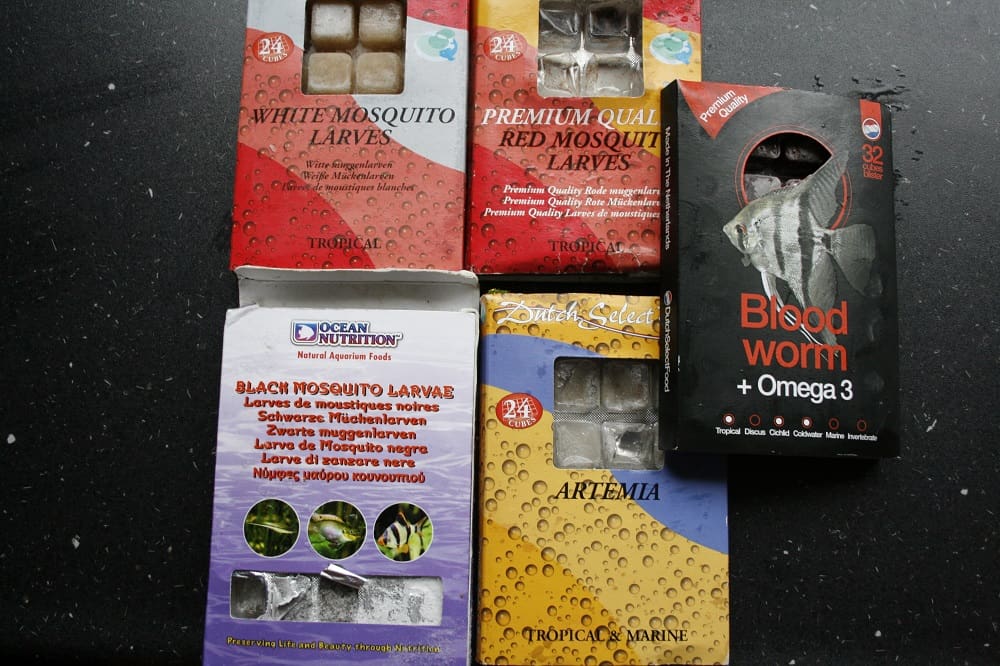
Frozen fish foods offer the closest thing to a natural diet without the risks that come with live food. They come in convenient blister packs with pre-portioned cubes, and most local fish stores stock a solid variety. The freezing process eliminates parasites while preserving nutrients far better than the high-heat processing used for flakes and pellets.
| Frozen Food Type | Best For | Protein Content |
|---|---|---|
| Bloodworms | Bettas, tetras, dwarf cichlids | High |
| Brine Shrimp | Most freshwater fish, great for conditioning | Medium-High |
| Mysis Shrimp | Picky eaters, marine fish, seahorses | High |
| Daphnia | Small fish, natural laxative properties | Medium |
| Krill | Larger fish, color enhancement | High |
| Spirulina/Veggie Mix | Herbivores, plecos, African cichlids | Low-Medium |
Why frozen foods work so well:
- No parasite risk — freezing kills any hitchhikers that might come with live foods
- No preservatives or fillers — just the actual food item, flash-frozen
- Long shelf life — keeps for 6-12 months in your freezer
- High acceptance rate — even finicky fish usually can’t resist frozen foods
- Easy portion control — blister packs let you pop out exactly what you need
To feed frozen food properly, thaw the required amount in a small cup of tank water for a few minutes before adding it to your aquarium. Never drop frozen cubes directly into the tank — the temperature shock isn’t great for your fish, and the rapid thawing can release excess juices that cloud your water.
?? Important
While frozen foods are excellent for variety and nutrition, most fish still benefit from having a quality pellet or gel food as their dietary staple. Think of frozen foods as a supplement that you offer 2-3 times per week rather than a complete replacement.
Fresh Vegetables: Cheap, Healthy, and Fish-Approved
Fresh veggies are a fantastic option for herbivorous and omnivorous fish, and they cost almost nothing compared to commercial foods. You probably already have suitable options in your refrigerator right now. The fiber content aids digestion, and the vitamins support immune function and coloration.
? Best Vegetables for Aquarium Fish
- Zucchini/Cucumber — universal favorite, blanch until slightly soft
- Peas — shell and squish; excellent for treating constipation
- Spinach/Lettuce — can feed raw, clips to glass easily
- Broccoli — blanch florets, high in vitamins
- Sweet potato — blanch small pieces, very nutritious
- Kale — nutrient-dense, blanch to soften
The all-time favorites among most fish are zucchini, peas, and spinach. Zucchini can be sliced into rounds, blanched in boiling water for 30-60 seconds to soften it, then weighted down in the tank with a fork or veggie clip. Peas should be shelled and the inner portion squished slightly — frozen peas work perfectly and are actually a well-known remedy for constipated fish. Spinach can be fed raw, though some fishkeepers prefer to blanch it briefly.
Fish and invertebrates that especially love vegetables:
- Plecos and other suckermouth catfish
- Goldfish (they’re omnivores who need significant plant matter)
- Otocinclus
- Nerite and mystery snails
- Cherry shrimp and Amano shrimp
- Many African cichlids, especially mbuna
- Mollies and other livebearers
If you’re unsure whether your fish will eat vegetables, start with a small piece of blanched zucchini — it has the highest acceptance rate across species. Be sure to remove any uneaten portions after 12 hours maximum. Decomposing vegetables will spike ammonia and foul your water quickly. [INTERNAL LINK: “aquarium water quality” -> water parameters guide]
Live Food: The Gold Standard for Health and Breeding
Nothing triggers feeding instincts like live prey. Fish that have been refusing everything else will often snap to attention when they see movement in the water. Live foods are also essential for conditioning breeding pairs and for raising fry that won’t accept prepared foods. The nutritional profile of living organisms simply can’t be replicated by processed alternatives.
? Did You Know?
Baby brine shrimp (Artemia nauplii) contain up to 60% protein and are packed with highly unsaturated fatty acids that are crucial for fry development. This is why they’ve been the go-to first food for fish breeders for over a century.
While store-bought live foods can carry parasites, you can avoid this risk entirely by culturing your own. Home cultures are easier to maintain than most people think, and once established, they provide a continuous supply of nutritious live food at virtually no cost.
Live foods that are easy to culture at home:
- Infusoria — microscopic organisms perfect for tiny fry; culture in a jar with lettuce and tank water
- Baby brine shrimp — hatch eggs in saltwater; ready in 24-48 hours; excellent for fry and small fish
- Daphnia — small freshwater crustaceans; culture in a bucket outdoors; great for conditioning adults
- Grindal worms — small worms cultured in soil; high-fat treat; easy to maintain indoors
- Vinegar eels — tiny nematodes; nearly impossible to crash; perfect for newborn fry
- Microworms — similar to vinegar eels but slightly larger; easy starter culture
If you’re interested in trying live foods, hatching your own brine shrimp eggs is the perfect starting experiment. All you need is a container, saltwater, an air pump, and eggs. Within 24 hours, you’ll have thousands of nutritious baby brine shrimp ready to feed. [INTERNAL LINK: “breeding fish” -> fish breeding guide]
Putting It All Together: A Balanced Approach
You don’t have to choose just one alternative — in fact, variety is one of the most important factors in fish nutrition. In the wild, fish eat dozens of different food items depending on what’s available. Replicating this variety in captivity leads to better coloration, stronger immune systems, and more natural behavior.
A practical weekly feeding schedule might look like this:
- Monday/Thursday: Quality pellets or homemade gel food
- Tuesday/Friday: Frozen bloodworms or brine shrimp
- Wednesday: Fresh vegetables (for species that eat them)
- Saturday: Live food or a special treat
- Sunday: Fasting day — gives digestive systems a break
This rotation ensures your fish get complete nutrition while keeping feeding time exciting for both you and your tank inhabitants. Adjust based on your specific species’ needs — carnivores get more protein days, herbivores get more veggie days.
Frequently Asked Questions
Can I completely replace flakes and pellets with alternative foods?
Yes, but it requires planning. Homemade gel food can serve as a complete staple diet if formulated correctly with proper protein, vitamins, and minerals. However, most fishkeepers find it easier to use a quality pellet as the base and supplement with frozen, fresh, and live foods for variety and enhanced nutrition.
How long can I store homemade gel food?
Gel food keeps for about one week in the refrigerator and up to one year in the freezer without significant nutrient loss. Cut it into portion-sized pieces before freezing so you can thaw only what you need for each feeding.
Are frozen bloodworms safe for all fish?
Frozen bloodworms are safe and loved by most fish, but they’re high in fat and relatively low in other nutrients. They work best as an occasional treat (1-2 times per week) rather than a dietary staple. Some fish may also have allergic reactions, though this is rare.
What vegetables should I avoid feeding my fish?
Avoid anything from the onion family (onions, garlic in large amounts, leeks), beans, and citrus fruits. Also avoid any vegetables that have been seasoned, salted, or cooked with oil. Stick to plain, blanched vegetables from the safe list above.
How do I know if my live food culture has crashed?
Signs of a crashed culture include foul odors, cloudy water with no visible organisms, or mold growth. Brine shrimp cultures smell slightly salty but shouldn’t be offensive. Worm cultures should smell earthy, not rotten. If a culture crashes, start fresh rather than trying to revive it.
The bottom line: While quality pellets remain a convenient option, incorporating gel food, frozen foods, fresh vegetables, and live cultures into your feeding routine will noticeably improve your fish’s health, coloration, and vitality. Your fish will thank you with brighter colors and more active behavior — and your wallet will thank you when you see how much money you save making your own fish food.
Have another alternative fish food that works great for you? Share it in the comments below!
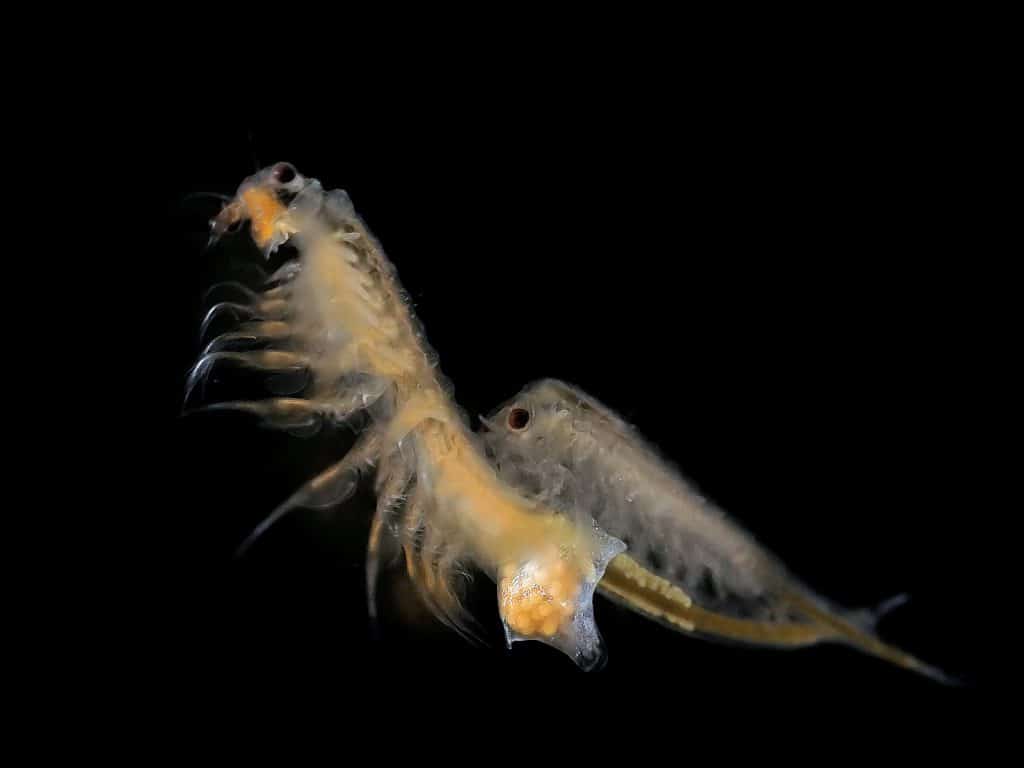
Cover photo: Artemia salina by bathyporeia