

**Key Takeaways:**
- The albino rainbow shark (Epalzeorhynchos frenatum) is a stunning freshwater fish known for its unique appearance and behavior.
- These fish require a minimum 50-gallon tank with plenty of hiding spots and swimming space.
- Albino rainbow sharks are territorial and should ideally be kept alone or with peaceful tank mates that occupy the upper water column.
- Maintain proper water parameters and a nutritious diet to ensure optimal health and longevity.
- Breeding in captivity is challenging due to their aggressive nature; most are bred commercially.
If you want an unusual, beautiful freshwater fish to add to your collection, consider the albino rainbow shark (Epalzeorhynchos frenatum). This captivating aquatic creature is a popular choice among aquarium enthusiasts, and in this care guide, we’ll cover everything you need to know about maintaining a healthy environment for your albino rainbow shark.

What’s in a name?
The rainbow shark is known by many names, including:
- Rainbow Sharkminnow
- Ruby Shark
- Red-fin Shark
- Whitetail Sharkminnow
- Green Fringelip Labeo
- Red-finned Shark
- Whitefin Shark
This fish belongs to the Cyprinidae family and has the scientific name Epalzeorhynchos frenatum. The albino rainbow shark is a selectively bred variant of the wild rainbow shark.
Origins
The rainbow shark originates from the Mekong, Chao Phraya, and Xe Bangfai basins in Indochina. Despite declining numbers in the wild due to habitat loss, the species is listed as “Least Concern” by the IUCN Red List.
Albino rainbow sharks are not typically found in the wild, as they are developed through selective breeding practices.
Natural Habitat
In their natural environment, rainbow sharks inhabit sandy-bottomed rivers and tributaries, feeding on algae and plankton. During the rainy season, they migrate to flooded areas, returning to their rivers as the water recedes.
Appearance
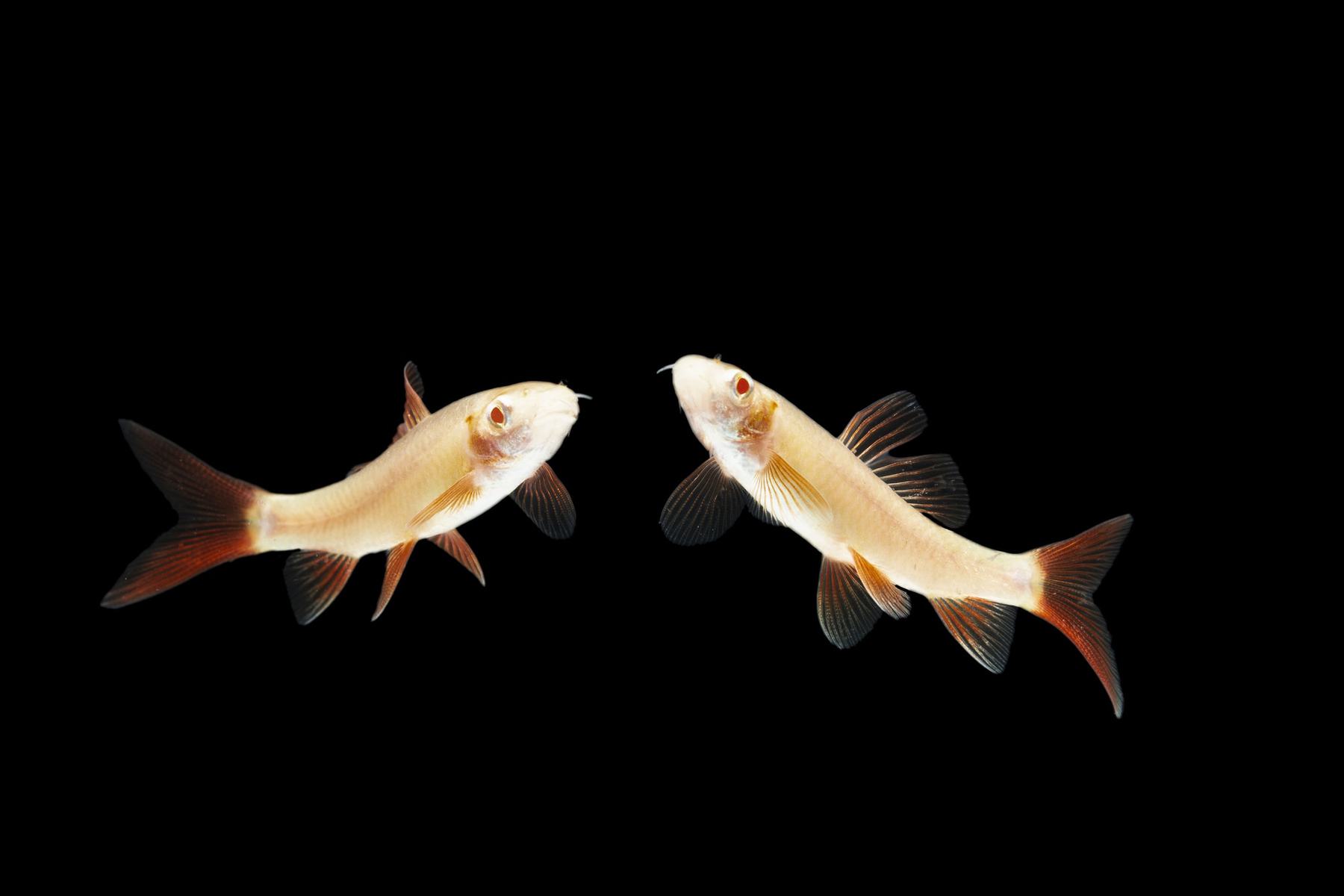
The albino rainbow shark is visually stunning, characterized by its white body and bright orange-red fins. These long, torpedo-shaped fish possess flat bellies, pointed snouts, and upright dorsal fins, contributing to their shark-like appearance.
When fully grown, albino rainbow sharks reach approximately 6 inches in length and typically live between 5 and 8 years in captivity, provided they receive proper care and nutrition.
Behavior
Albino rainbow sharks are active swimmers and primarily forage for algae on the tank bottom. They can be territorial and may chase away other fish that encroach on their space.
Tank Mates
Due to their territorial nature, albino rainbow sharks can often exhibit aggression in cramped conditions. While juvenile rainbow sharks are typically more tolerant, adult sharks should generally be housed alone or with species that occupy the upper water column.
To reduce potential conflicts, provide plenty of caves, hiding spots, and plants to create natural barriers in the aquarium. Avoid overstocking your tank, as this increases the chance of disputes over territory.
Compatible Fish Species
Peaceful fish species that can defend themselves make good companions for rainbow sharks. Suitable tank mates include danios, gouramis, barbs, and rainbowfish. Some hobbyists suggest introducing the albino rainbow shark last to a community tank to help minimize territorial claims.
Are Rainbow Sharks Aggressive When Kept in Groups?
Adult rainbow sharks typically do not coexist well in groups, as they are naturally solitary. Confined spaces can lead to aggressive encounters among them, so if you attempt to keep multiple albino rainbow sharks, ensure you have a very large aquarium that provides ample space.
Will Albino Rainbow Sharks Kill Other Fish?
While they may nip and bully other fish during confrontations, fatalities are unlikely if the other fish has enough space to escape. However, continued stress from aggression can compromise the immune systems of all fish involved.
Tank Mates to Avoid
Avoid housing albino rainbow sharks with other freshwater shark species, cichlids, and catfish, as these combinations can lead to increased aggression.
Albino Rainbow Shark Care Guide
Understanding the requirements for the albino rainbow shark is crucial for its well-being. Here’s what you need to know to provide proper care:
Tank Requirements
Tank Size
Albino rainbow sharks are active, bottom-dwelling fish that thrive in spacious tanks. A minimum 50-gallon aquarium is recommended, with larger setups (at least 125 gallons) preferred if you want to keep multiple sharks.
Although they are not known for jumping, it is advisable to have a tank lid to prevent any accidents, especially during the initial acclimatization period.
Filtration
Rainbow sharks thrive in flowing waters, so a strong filtration system that provides good water circulation is essential. External canister filters with a high turnover rate are ideal. Aim for a GPH (gallons per hour) of at least four times the tank volume for optimal filtration.
Water Parameters
The ideal water temperature for albino rainbow sharks ranges from 75°F to 81°F, with a pH level between 6.5 and 7.5 and water hardness of 5 to 11 dKH.
Aquarium Decoration
To replicate their natural habitat, use sand or fine gravel as substrate. Provide ample hiding places using caves, driftwood, and dense plant growth to help reduce stress and establish territories.
Lighting
No special lighting is required for rainbow sharks; standard LED or fluorescent lighting will suffice.
Diet and Feeding
Albino rainbow sharks are omnivores. Their diet should include high-quality pellets, live foods, and blanched vegetables to ensure they receive a balanced nutrition. They naturally consume algae, insect larvae, and zooplankton in the wild, so supplementing their diet with fresh vegetables and algae wafers is beneficial.
Feed them twice daily, offering enough food for them to consume within a few minutes. Be cautious not to overfeed, as excess food can pollute the tank.
Health and Disease
Generally hardy, albino rainbow sharks benefit from a clean tank, stable water parameters, and a nutritious diet. Signs of distress include lethargy and loss of appetite. Common health issues include:
Ich
Ich, or white spot disease, is caused by the protozoan parasite Ichthyophthirius multifiliis. Early signs include rubbing against tank surfaces and the appearance of white spots. Treatment involves raising the water temperature to 82°F and using a commercial treatment.
Flukes
Flukes attach to the fish’s body and gills, leading to irritation and excessive mucus production. Treat with over-the-counter antiparasitic medications.
Fungus
Fungal infections manifest as cotton-like growths. Treatment typically involves antifungal medication.
Bacterial Infections
Bacterial infections can arise from stress or injuries, presenting as red patches or ulcers. These can be treated with antibacterial medications.
Breeding

Albino rainbow sharks reach sexual maturity at around four inches. Breeding in captivity is challenging due to their aggressive nature, so most available specimens are commercially bred in Southeast Asia.
Availability
These freshwater fish are readily available at most aquarium stores and online, typically priced affordably.
Final Thoughts
If you have a spacious tank and seek a striking solitary addition to your aquarium, the albino rainbow shark could be the perfect choice. They thrive best when kept alone or with compatible tank mates that won’t invade their territory.
FAQs
**Q: How big do albino rainbow sharks get?**
A: Albino rainbow sharks typically grow to about 6 inches in length.
**Q: Can albino rainbow sharks live with other fish?**
A: Yes, they can live with peaceful fish that occupy the upper water column, but they are territorial and should not be housed with other bottom-dwellers.
**Q: What do albino rainbow sharks eat?**
A: They are omnivores and require a balanced diet of high-quality pellets, live foods, and blanched vegetables.
**Q: How long do albino rainbow sharks live?**
A: With proper care, they can live between 5 to 8 years in captivity.
**Q: Are albino rainbow sharks aggressive?**
A: Yes, they can be territorial and may show aggression towards other fish, especially those that invade their space.


