
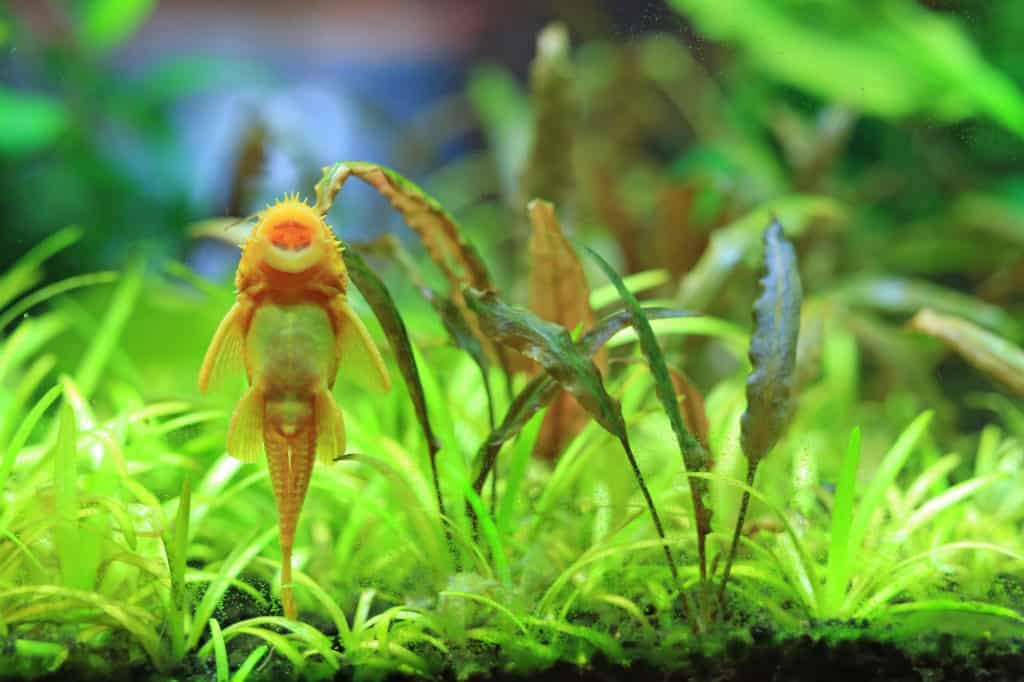
Key Takeaways
- Perfect for Beginners: Unlike the massive Common Pleco, the Albino Bristlenose stays under 5 inches and fits in 25+ gallon tanks.
- Essential Diet Needs: They are not just scavengers. They require a diet of 85% plant matter (algae wafers, blanched veggies) and must have driftwood to digest fiber.
- Red Eye Sensitivity: Their lack of pigmentation makes their eyes sensitive to bright lights; ample caves and hiding spots are mandatory.
- Breeding Ease: One of the easiest egg-layers to breed in captivity, often triggered simply by a cool water change.
Of all the catfish available in the hobby, the Albino Bristlenose Pleco (Ancistrus cf. cirrhosus) holds a special place in our hearts at Aquariadise. While many beginners accidentally buy “Common Plecos” that eventually grow into two-foot monsters, the Bristlenose is the perfect, manageable alternative.
In this guide, we are moving beyond basic care. We’ll cover the specific quirks of the albino variety, why driftwood is non-negotiable for their digestion, and how to deal with their high bioload. Whether you are setting up your first community tank or looking to breed these unique catfish, here is everything you need to know.
Albino Bristlenose Pleco Overview
Often sold under names like the Bushynose Catfish or Brushmouth Pleco, this fish belongs to the Loricariidae family. Native to the fast-flowing tributaries of the Amazon Basin in South America, they have evolved suckermouths to latch onto rocks and graze on biofilm and algae.
The “Albino” variant is simply a genetic morph of the standard Bristlenose. They lack dark pigmentation, resulting in a striking yellow/pink body and characteristic red eyes. Because of this lack of protective melanin, they are more sensitive to light than their dark counterparts, making tank layout crucial for their stress levels.
Quick Stats
| Scientific Name | Ancistrus cf. cirrhosus |
| Care Level | Easy / Beginner |
| Lifespan | 5–10+ Years |
| Adult Size | 3–5 inches (7–13 cm) |
| Minimum Tank | 25 Gallons |
| Diet | Herbivore (Wood-eater) |
Appearance and Sexing
The Albino Bristlenose is a flat, armored catfish. Instead of traditional scales, they possess bony plates that protect them from predators. Their most defining feature, however, is the “bristiles” (tentacles) that sprout from their face.
Male vs. Female
Sexing these fish is notoriously difficult as juveniles, but becomes obvious once they reach maturity (around 3–4 inches):
- Males: Grow an impressive “beard” of thick, fleshy tentacles up the center of their head and around the snout.
- Females: Usually have a smooth face, or occasionally very small, short bristles strictly around the rim of the mouth (a “mustache” rather than a beard). Females also tend to have a rounder, plumper body shape when viewed from above.
Albino Bristlenose Pleco Care Guide
While these fish are hardy, they are often treated poorly because aquarists view them as “janitors” rather than pets. To get your pleco to the 10-year mark, you need to provide specific conditions.
Tank Size and Setup
A common misconception is that because they are small, they can live in 10-gallon tanks. We strongly advise against this. Plecos are “poop machines.” They have a high bioload, meaning they produce a significant amount of waste that can quickly foul small volumes of water.
- Minimum Size: 25 gallons is the ideal starting point. A 20-gallon “Long” tank can work, but requires diligent maintenance.
- Substrate: Use sand or smooth, rounded gravel. Sharp substrates can injure their soft underbellies and barbels as they forage.
- Lighting: Because albinos have sensitive red eyes, avoid high-intensity lights unless you have heavy plant cover to create shade.
Pro Tip: The Driftwood Rule
You must include natural driftwood in a Bristlenose tank. These fish graze on the wood to ingest lignin and cellulose, which are essential for their digestion. Without wood, they can suffer from digestive blockages and starvation.
Water Parameters
These fish are adaptable, but they thrive in stability. In our experience, chasing “perfect” pH is less important than keeping the water clean and oxygenated.
- Temperature: 72°F – 81°F (22°C – 27°C)
- pH Level: 6.5 – 7.5
- Water Hardness: 6 – 10 dGH
- Flow: Moderate to High (they love oxygen-rich water)
Because they originate from river environments, they appreciate water movement. If you see your pleco frequently darting to the surface to gulp air, check your ammonia levels immediately, but also ensure your tank has enough surface agitation to provide oxygen.
Diet and Feeding
The biggest mistake beginners make is assuming the pleco will survive on tank algae and leftover flakes. This is a recipe for a starving fish. While they are excellent algae eaters, a tank rarely produces enough to sustain them full-time.
The Ideal Diet Ratio: 85% Plant Matter / 15% Protein.
Staple Foods:
- Sinking Algae Wafers: Feed these at night just before lights out.
- Blanched Vegetables: Zucchini (courgette), cucumber, shelled peas, and spinach. Blanche them (boil for a minute) to soften them and help them sink.
- Gel Foods: High-quality gel mixes (like Repashy Soilent Green) are fantastic for grazing.
Occasional Treats:
- Bloodworms or Brine Shrimp (once a week for protein, especially if conditioning to breed).
Warning: If you notice your plants developing holes, your pleco is likely hungry. A well-fed Bristlenose rarely destroys live plants, but a starving one will turn your Amazon Sword into a skeleton.
Tank Mates and Temperament
The Albino Bristlenose is generally peaceful, making it a top-tier community fish. However, males can be highly territorial with one another. If you put two males in a tank smaller than 50 gallons, they will likely fight over caves.
Great Tank Mates:
- Tetras (Neon, Cardinal, Rummy-nose)
- Rasboras
- Corydoras Catfish
- Gouramis
- Peaceful Cichlids (Rams, Apistogrammas)
Avoid:
- Large, aggressive Cichlids (Oscars may try to eat them, leading to the pleco’s spines getting stuck in the predator’s throat).
- Other bottom-dwelling territory claimers (like Red Tailed Sharks) in smaller tanks.
Breeding Albino Bristlenose Plecos
If you want to try your hand at fish breeding, this is the perfect species to start with. They are arguably the easiest egg-laying catfish to breed in captivity.
The Trigger
In the wild, Ancistrus species spawn during the rainy season. You can simulate this in your aquarium by doing a large water change (30-50%) with water that is slightly cooler than the tank temperature. This drop in temperature often triggers the spawning instinct.
The Process
- The Cave: The male will select a cave (coconut shells or terracotta pots work best) and clean it obsessively.
- The Dance: He will entice the female into the cave. If she accepts, she lays bright orange eggs inside.
- The Guard: Once fertilized, the male kicks the female out. He becomes the sole caregiver, fanning the eggs with his fins to keep them oxygenated and free of fungus.
- Hatching: Eggs hatch in 4–5 days. The fry will consume their yolk sacs for another few days before emerging.
Once the fry are free-swimming, you can feed them crushed algae wafers, baby brine shrimp, or green beans. They grow incredibly fast!
Diseases and Health Warnings
While hardy, Albino Bristlenose are prone to a few specific issues. Crucially, because they are “scaleless” fish (armored with plates rather than scales), they are highly sensitive to medications containing Copper or Malachite Green. Always check medication labels before dosing a tank containing plecos.
- Ich (White Spot): Looks like salt grains on the body. Treat with heat (raise temp to 86°F slowly) rather than harsh chemicals if possible.
- Bloat/Constipation: Caused by too much protein or lack of fiber. Ensure driftwood is present and feed shelled peas to clear the blockage.
- Bacterial Infections: Often caused by poor water quality or sharp substrate cuts. Maintain low nitrates (under 20-40ppm) to prevent this.
Frequently Asked Questions
How big do Albino Bristlenose Plecos get?
They typically reach between 3 to 5 inches (7–13 cm) in length. Males are generally slightly larger and broader than females. This compact size makes them significantly more suitable for home aquariums than the Common Pleco, which can reach 24 inches.
Do Albino Bristlenose Plecos eat poop?
No. This is a common myth. Plecos add to the bioload; they do not reduce it. While they may accidentally mouth waste while foraging, they do not eat it for nutrition. You still need to perform water changes and gravel vacuuming.
Why is my Albino Pleco changing color?
Bristlenose plecos can slightly shift their color tone based on stress or camouflage, even albinos. However, if you see red patches or streaks, this is not a color change—it is likely ammonia burn or a bacterial infection. Check your water parameters immediately.
Can I keep a Bristlenose Pleco alone?
Yes, absolutely. They are not schooling fish and are perfectly happy living solitary lives. In fact, keeping a single specimen prevents the territorial aggression that can occur between two males.


