Key Takeaways
- Surface Agitation is Key: Air stones primarily oxygenate water by breaking the surface tension, not just by the bubbles themselves.
- Size Matters: Research suggests an optimal bubble size of 1-2mm provides the most efficient gas exchange and water lift.
- Safety First: Always use a check valve in your airline tubing to prevent water from siphoning back into your electrical outlet during power outages.
- Maintenance is Mandatory: A clogged air stone burns out air pumps. We recommend a cleaning schedule every 2-3 months.
It is perhaps the most recognizable piece of aquarium equipment: the humble air stone. But while it looks like a simple porous rock, it is actually a critical life-support device for many setups.
Whether you are running a sponge filter, trying to cool down a tank during a summer heatwave, or simply want a “wall of bubbles” aesthetic, understanding how to optimize this tool is essential. In this guide, we move beyond the basics to cover the physics of gas exchange, proper installation, and the maintenance secrets we use to keep our air stones running for years.
What Does an Air Stone Actually Do?
There is a common misconception among beginners that the bubbles themselves are what fish breathe. In reality, the process is all about surface agitation.
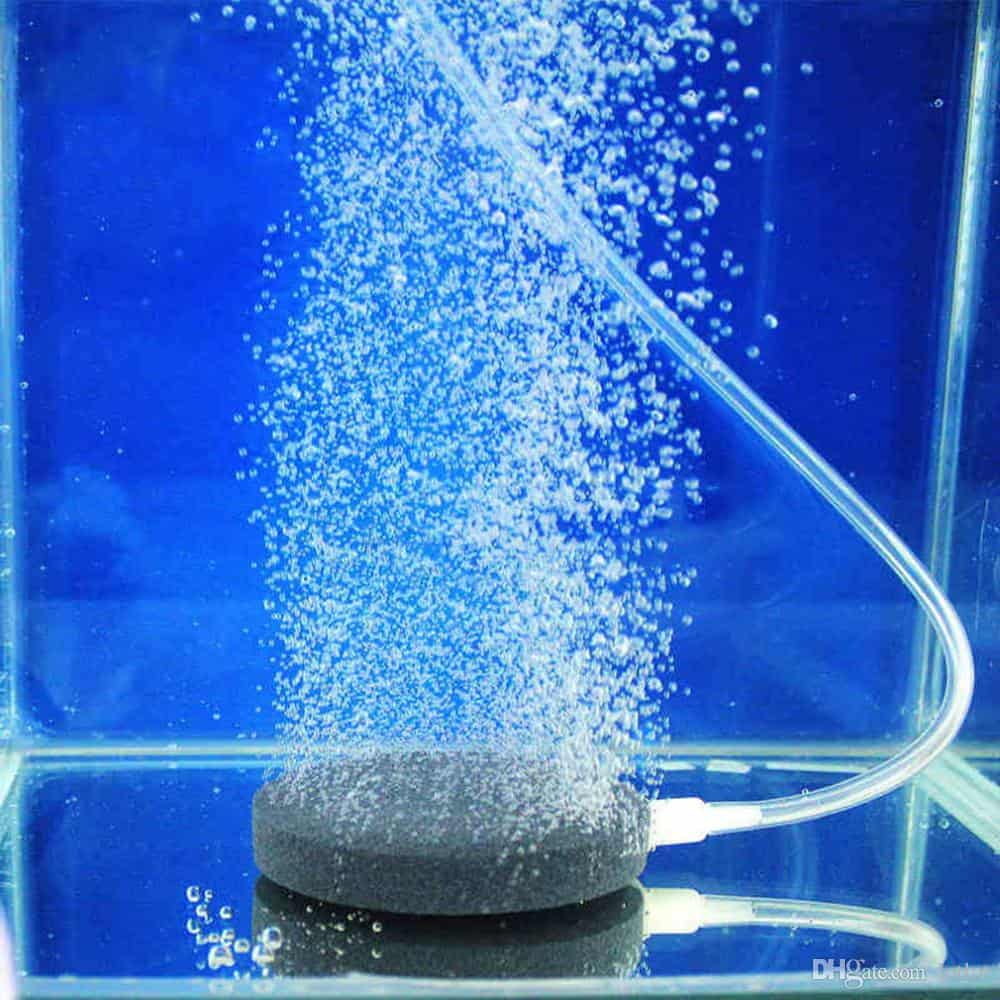
Aquarium air stones are typically made from fused ceramic, carborundum, or limewood. When air is forced through these porous materials, it creates thousands of tiny bubbles. As these bubbles rise, they lift water with them (a process called “entrainment”) and break the surface tension at the top of the tank.
This surface break is where the magic happens. It allows carbon dioxide (CO2) to off-gas and oxygen to enter the water.
The Science of Bubble Size
Does the size of the bubble matter? Absolutely. In our experience—and backed by studies like Navisa’s 2014 research on aeration processes—smaller bubbles are generally more efficient.
Pro Tip: The “Sweet Spot” for bubble size is typically between 1 and 2 millimeters. Bubbles smaller than this (micro-bubbles) often don’t create enough lift to circulate the water, while massive bubbles rise too fast to interact meaningfully with the water column.
Benefits of Adding an Air Stone
1. Boosting Dissolved Oxygen (DO) Levels
Fish need oxygen to survive, and warm water holds less oxygen than cold water. At a standard tropical temperature of 78°F, 100% oxygen saturation is roughly 8.25 ppm (parts per million). If your tank is overstocked or lacks water movement, levels can drop dangerously low.
Adding an air stone is the fastest way to combat hypoxia (low oxygen), especially at night when live plants stop producing oxygen and start consuming it.
2. Improving Circulation
Dead spots in an aquarium are breeding grounds for “Old Tank Syndrome.” By placing an air stone in a stagnant corner, you force water turnover. This ensures your heater distributes heat evenly and your filter picks up debris from all areas of the tank.
3. Driving Filtration
Air stones are the engine behind sponge filters, box filters, and Under Gravel Filters (UGFs). By placing an air stone inside the lift tube of a sponge filter, you not only silence the noise of large “glugging” bubbles, but you also increase the water flow through the sponge, making the filter more efficient.
Types of Air Stones: Which One Do You Need?
Not all stones are created equal. Here is a quick breakdown of what we use for different scenarios:
| Material/Type | Best For | Pros | Cons |
|---|---|---|---|
| Standard Blue/Grey Cylinder | General aeration, Sponge filters | Cheap, durable, easy to clean. | Bubbles can be large/noisy. |
| Limewood | Protein skimmers, CO2 diffusion | Creates ultra-fine mist bubbles. | Rots eventually; clogs easily. |
| Disc / “Puck” Stones | Deep tanks, Ponds | Stays at the bottom easily; huge column of air. | Requires a powerful air pump. |
| Flexible Bubble Wands | Aesthetic backwalls | Bendable around decorations. | Very prone to uneven clogging. |
Step-by-Step Setup Instructions
Setting up an air stone seems intuitive, but skipping a step can lead to wet floors or broken equipment. Here is how we install them safely.
1. Gather Your Equipment
- Air Pump: Check the rating. For tanks over 20 inches deep, you need a pump designed for “deep water” or high pressure.
- Airline Tubing: Standard 3/16 inch tubing.
- Check Valve: Non-negotiable safety gear.
- The Air Stone.
2. The “Pre-Soak” (Crucial Step)
Before connecting anything, submerge your new air stone in the aquarium water for at least 1 hour before turning on the pump. If you pump air into a dry stone, the air pressure can trap pockets inside the stone, causing it to float or produce bubbles from only one tiny spot.
3. Install the Check Valve
Cut your airline tubing a few inches from the pump. Install the check valve with the arrow pointing towards the aquarium.
Why is this vital? If the power goes out, water can siphon from the tank, travel up the tube, and ruin your air pump (or start an electrical fire). A $2 check valve prevents this.
4. Placement and Depth
Place the stone where you want it. If it floats, you may need to weigh down the tubing with suction cups or bury the tubing under the substrate. Note that the deeper you place the stone, the harder your pump has to work due to water pressure. If you have a weak pump, keep the stone higher in the tank.
Maintenance: How to Clean a Clogged Air Stone
If your bubbles have reduced to a trickle, your pump isn’t necessarily broken—your stone is likely clogged with algae, calcium deposits, or bacterial slime. Do not throw it away. You can revive it.
The Acid/Bleach Method:
- Scrub: Use a stiff brush (no soap!) to remove surface debris.
- Soak: Submerge the stone in a solution of 50% water and 50% white vinegar (to dissolve calcium) or a mild bleach solution (to dissolve organic algae) for 24 hours.
- Rinse & Air: Rinse thoroughly. Then, hook the stone up to an air pump and run it in a bucket of fresh water with a heavy dose of dechlorinator for 1 hour. This forces any remaining cleaning solution out of the pores.
- Dry: Let it dry completely before returning it to the tank.
Note: We recommend keeping a spare air stone on hand so you can swap them out while one is being cleaned.
Common Problems & Troubleshooting
“My air pump is loud, but no bubbles are coming out.”
This usually means back-pressure. Check for kinks in the tubing. If the tubing is clear, the stone is clogged. If the stone is new, your pump may be too weak to push air to the depth you’ve chosen. Try raising the stone higher; if bubbles appear, you need a stronger pump.
“The bubbles are too strong/creating a current.”
For fish like Betta fish or Axolotls that hate strong currents, use a Gang Valve or control valve. This creates a “bleed” line or restricts flow to calm the bubbles down. Never restrict the flow by kinking the hose, as this damages the pump diaphragm.
“White crust is forming on my tank lid.”
This is salt creep (if marine) or mineral deposits (freshwater) caused by popping bubbles splashing water. To fix this, move the air stone away from the filter intake or lower the water level slightly to keep the splash contained.
Frequently Asked Questions
Do air stones add oxygen directly to the water?
Only a tiny amount. The vast majority of oxygenation happens when the bubbles reach the surface and break the water tension, promoting gas exchange between the air and the water.
How often should I replace my air stone?
With proper cleaning (vinegar soaks), a high-quality ceramic air stone can last 1-2 years. Limewood stones degrade faster and usually need replacing every 6 months.
Does a planted tank need an air stone?
It is recommended, especially at night. While plants produce oxygen during the day, they consume oxygen and release CO2 at night. An air stone prevents oxygen levels from dropping dangerously low while the lights are off.
Can fish die if the air pump stops?
If you have a heavily stocked tank or high temperatures (above 82°F), oxygen depletion can occur rapidly, leading to fish death. In lightly stocked tanks with good filter flow, fish can usually survive a pump failure.