Key Takeaways
- The “Blind Hunter” Rule: African Dwarf Frogs have terrible eyesight. They hunt by smell and vibration, meaning they will accidentally nip at long-finned fish (like Bettas) thinking they are food.
- Feeding is the Real Challenge: In a community tank, fast fish often eat all the food before the slow-moving frogs can find it. You must target-feed your frogs using tweezers or a pipette.
- Know the Difference: Never mistake an African Clawed Frog for a Dwarf Frog. Clawed frogs grow large and will eat your entire community tank. (See our identification guide below).
- Minimum Tank Size: While frogs can live in smaller tanks, a community setup requires at least 20 gallons to manage bioload and give bottom-dwellers space.
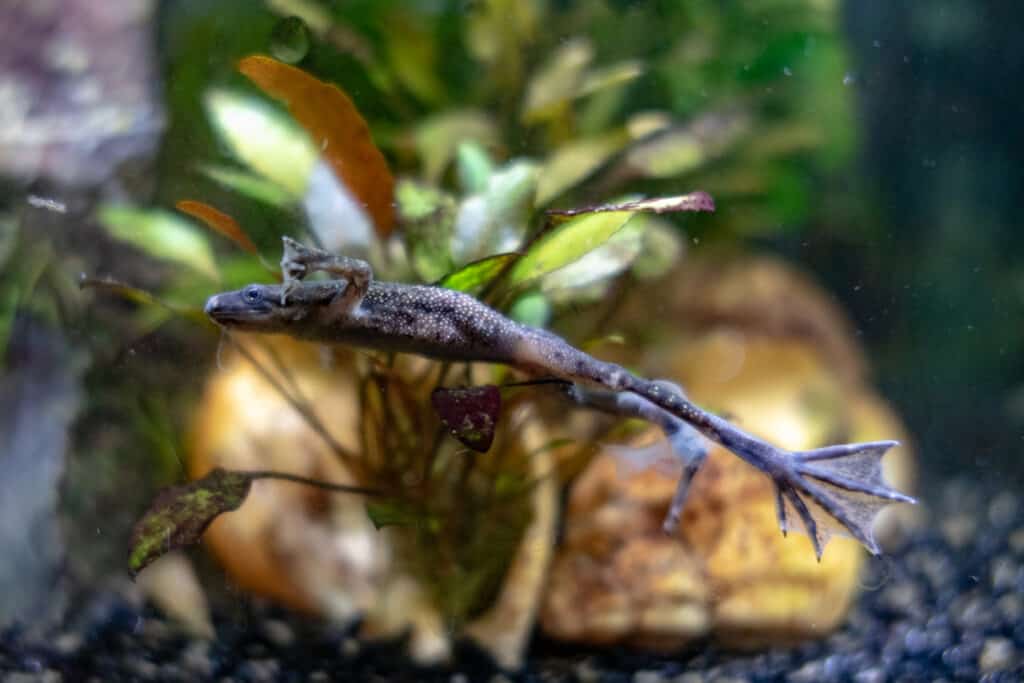
African Dwarf Frogs (ADFs) are the clumsy, charming clowns of the freshwater hobby. They are fully aquatic, peaceful, and generally easy to keep—but adding tank mates introduces a layer of complexity that many beginners overlook.
The problem isn’t usually aggression; it’s biology. These frogs are nearly blind and hunt by lunging at movement. This leads to two common issues in our tanks: either the frog accidentally nips a fish’s fins, or faster fish eat all the food, leaving the frog to starve.
In this guide, we will break down exactly which species can coexist with your amphibians, based on years of managing community tanks at Aquariadise.
The “Golden Rules” of Compatibility
Before you buy fish, you need to understand the specific limitations of the Hymenochirus genus. In our experience, a successful tank mate must meet three criteria:
- Temperature Match: They must thrive in tropical water (72°F–82°F).
- Speed Balance: They shouldn’t be so fast that they steal every pellet, nor so slow (with long fins) that they become targets for a confused frog.
- Zone Separation: Ideally, they should occupy the middle or top of the tank, leaving the substrate clear for the frogs.
Pro Tip: Always prioritize “Frog Friends” first. African Dwarf Frogs are social creatures. Before adding fish, ensure you have at least 2–3 frogs together. They are much more confident and active in groups.
Crucial Warning: Dwarf Frog vs. African Clawed Frog
We cannot stress this enough: You must know what you are buying. Pet stores frequently mislabel juvenile African Clawed Frogs (Xenopus laevis) as Dwarf Frogs.
If you accidentally buy a Clawed Frog, it will grow to the size of a softball and eat every fish in your tank. Here is the quick identification check we use:
| Feature | African Dwarf Frog (Safe) | African Clawed Frog (Predator) |
|---|---|---|
| Front Feet | Webbed | No Webbing (Look like tiny hands) |
| Eye Position | Located on the side of the head | Located on top of the head |
| Swimming | Active swimmer, crawls on bottom | Strong swimmer, rarely crawls |
Top Tier: The Best African Dwarf Frog Tank Mates
These species have the highest success rate in our community setups.
1. Rasboras (Harlequin, Chili, or Lambchop)
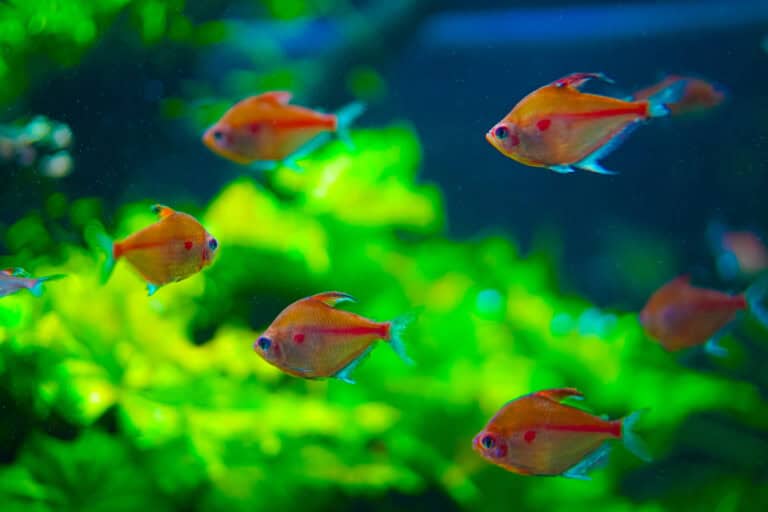
Rasboras are arguably the safest bet. They are peaceful schooling fish that stick strictly to the middle and upper water columns. Because they are relatively small and calm, they rarely intimidate the frogs coming up for air.
- Why it works: They stay out of the frog’s “chomp zone” (the substrate).
- Our advice: Keep a school of at least 6–8 to ensure they feel secure.
2. Fancy Guppies and Endlers
Guppies are top-dwellers, meaning they physically occupy the opposite end of the tank from your frogs. They are active, colorful, and generally peaceful. However, be mindful of fry (baby guppies). Your frogs will absolutely hunt and eat fry if they can catch them—though many keepers view this as natural population control.
- Warning: Avoid guppies with excessively long, flowing tails if you have a particularly “bitey” frog, though this is rare with top-dwelling fish.
3. Neon or Cardinal Tetras
These are classic community fish. Neon Tetras add a flash of color and are fast enough to avoid a lunging frog. They generally ignore the frogs entirely.
- The Feeding Issue: Tetras are voracious eaters. If you just dump food in the tank, the tetras will eat it all before it hits the bottom. You must use a turkey baster or tweezers to deliver food directly to your frogs if you keep them with Tetras.
4. Nerite Snails
If you need a cleanup crew, Nerite Snails are the best option. They have very short antennae (unlike Mystery Snails), which means they don’t look like “worms” to a hungry frog. Their trapdoors are rock-hard, protecting them from any curiosity.
- Bonus: They are excellent at clearing algae from the glass and decor, which frogs do not do.
5. Zebra Danios
Zebra Danios are extremely hardy and fast. They occupy the upper levels and are far too quick for a frog to catch. They tolerate a wide range of water parameters, making them good for newer hobbyists.
- Note: Because they are hyper-active, they can sometimes stress out shy frogs during feeding time. Ensure your frogs have caves to retreat to.
Proceed with Caution (The “Yellow Light” List)
These species can work, but they require a backup plan or an experienced keeper.
Betta Fish
This is the most debated pairing in the hobby. Can it work? Yes. Does it often fail? Also yes.
The Risk: A Betta with long, flowing fins dragging across the substrate looks exactly like a bloodworm to a near-blind frog. We have seen frogs latch onto Betta fins, causing tearing and stress. Conversely, an aggressive Betta may bully the frogs, preventing them from surfacing for air.
Our Verdict: Only attempt this with a short-finned Betta (like a Plakat) or a female Betta, and have a second tank ready in case separation is needed.
Corydoras Catfish
On paper, they seem perfect—peaceful bottom dwellers. In practice, they occupy the exact same “real estate” as the frogs. This can lead to collisions and stress. If you want Corydoras, ensure you have a larger tank (20+ gallons) with plenty of floor space so they aren’t constantly bumping into each other.
Freshwater Shrimp (Cherry/Amano)
Will frogs eat shrimp? Yes. If it fits in the mouth, it is food. Adult Amano shrimp are generally too large to be eaten, but expensive Cherry Shrimp often end up as expensive snacks. Keep shrimp only if you have heavy vegetation (Java Moss) and are okay with losing a few.
Tank Mates to AVOID Completely
To prevent disaster, never house your ADFs with the following:
- Goldfish: They produce too much waste (ammonia burn risk), grow too large, and prefer colder water than the tropical frogs.
- Cichlids: Even small Cichlids are often territorial and aggressive. They will nip at the frogs’ delicate limbs.
- Plecos: Large Plecos produce immense waste. More dangerously, we have seen Plecos suck on the slime coat of amphibians, causing severe injury.
- Turtles: Turtles view frogs as prey. Never mix them.
- African Clawed Frogs: As mentioned above, the larger cousin will eat the Dwarf Frog.
The Critical Success Factor: Feeding Strategy
The #1 reason African Dwarf Frogs die in community tanks is starvation. They are slow, nocturnal hunters competing with fast, diurnal fish.
You cannot simply drop pellets in and walk away.
How strictly we recommend feeding:
- Target Feeding: Use long aquascaping tweezers or a turkey baster to place frozen mysis shrimp, beef heart, or frog pellets directly in front of the frog’s nose.
- Feed the Fish First: Distract the fish with floating flakes on one side of the tank, then feed the frogs on the bottom at the other side.
- Food Dish: Some keepers train their frogs to eat from a small terracotta saucer placed in the tank. The frogs learn that “Dish = Food,” making it easier to monitor who is eating.
Frequently Asked Questions
Do African Dwarf Frogs get lonely?
Yes. They are social creatures and should be kept in groups of at least two or three. A lone frog is often more timid, hides more frequently, and may have a reduced immune response due to stress.
Can African Dwarf Frogs live with Angelfish?
No. Angelfish are semi-aggressive cichlids that grow large enough to bully frogs or nip at their limbs. Additionally, Angelfish are aggressive eaters that will likely outcompete the frogs for food.
Do African Dwarf Frogs bite fish?
They do not bite out of aggression, but they will “lunge” at movement due to poor eyesight. If a fish has long, flowing fins (like a Betta or Fancy Guppy), the frog may mistake the fin for a worm and nip it.
What is the best tank size for a frog community?
While a frog-only tank can be 5-10 gallons, a community tank should be at least 20 gallons. This provides enough water volume to dilute waste and enough physical space for frogs to retreat from active fish.
Final Thoughts
Keeping African Dwarf Frogs in a community tank is rewarding, but it requires more attention than a standard fish-only setup. If you choose peaceful, top-dwelling tank mates like Rasboras or Hatchetfish, and commit to target-feeding your frogs to ensure they get their share, you will have a lively, diverse ecosystem.
What tank mates have you successfully kept with your frogs? Let us know in the comments below!