

You may have heard about certain species of tropical fish such as betta fish and gouramis that have a special organ known as the labyrinth organ. But what exactly is the labyrinth organ, and what does it do?
The labyrinth organ is a specialized organ that allows labyrinth fish to breathe oxygen from the air as well as from water. This amazing evolutionary adaptation can be very useful in these fish’s natural habitats, here we’ll find out why.
Key Takeaways:
- The labyrinth organ is a specialized apparatus that allows fish like gouramis and bettas to absorb oxygen from air as well as from water.
- Air is inhaled from the water’s surface and stored in the labyrinth where oxygen is gradually diffused into the bloodstream.
- Labyrinth fish evolved the unique ability to breathe air to help them survive in low-oxygen aquatic environments, or in extreme cases, out of water, too!
What Is the Structure of the Labyrinth Organ?
The labyrinth organ is housed just above the gills of labyrinth fish in what scientists call the ‘suprabranchial chamber’.
A scientific paper from 2017 by The Fisheries Society of the British Isles describes the labyrinth organ as: ‘A complex bony structure lined with thin, highly vascularised respiratory epithelium’.
To those of us who aren’t trained biologists, the clue is in the name. The labyrinth organ is so-called because of the maze-like compartments of lamellae – thin, bony membranes that create a large surface for gas exchange to take place.
How Does a Labyrinth Organ Work?
When a labyrinth fish gulps a mouthful of air from the water’s surface, the air is pushed into the labyrinth organ. As the fish swims back down into the water, the oxygen from the air stored in the labyrinth is gradually absorbed into the bloodstream.
With its high surface area and high concentration of blood vessels, oxygen is efficiently diffused into the red blood cells which then supply the fish’s muscles, internal organs, and nervous system with oxygen – the essential ingredient for aerobic respiration.
The labyrinth organ is named as such because within it are many maze-like compartments of lamellae – thin, bony membranes that absorb oxygen from the air into the fish’s blood.
Why Do Certain Fish Need a Labyrinth Organ?
The fundamental reason that some fish have evolved a labyrinth organ is so that they can survive in low-oxygen environments.
All fish need oxygen to survive, but most species absorb it entirely from the water using their gills. This is an effective way to respire, providing there is plenty of dissolved oxygen in the water.
In environments such as stagnant swamps and dwindling pools, however, dissolved oxygen levels can get dangerously low. In some cases, fish living there may even die from suffocation.
This is where the labyrinth organ can mean the difference between life and death. In such situations, labyrinth fish can continue to thrive by breathing air from the water’s surface.
Which Types of Fish Have a Labyrinth Organ?
Fish that possess a labyrinth are collectively known as ‘labyrinth fish’. Known scientifically as the ‘Anabantiformes order’ these freshwater fish are native to Asia and Africa and a few species have naturalized in North America.
According to Wikipedia, there are at least 207 members of the Anabantiformes order, but only a small number of them are regularly seen in the aquarium trade.
By far the most popular member of the family in the aquarium trade is Betta splendens. Commonly known as the ‘Siamese Fighting Fish’ or simply ‘Betta Fish’, bettas are one of the most popular pet fish in the world.
Gouramis and paradise fish are the other members of this group that you’re most likely to see in your local pet store, but rarer species like the climbing perch are occasionally kept by specialists, too!
Are Fish Born With a Labyrinth Organ?
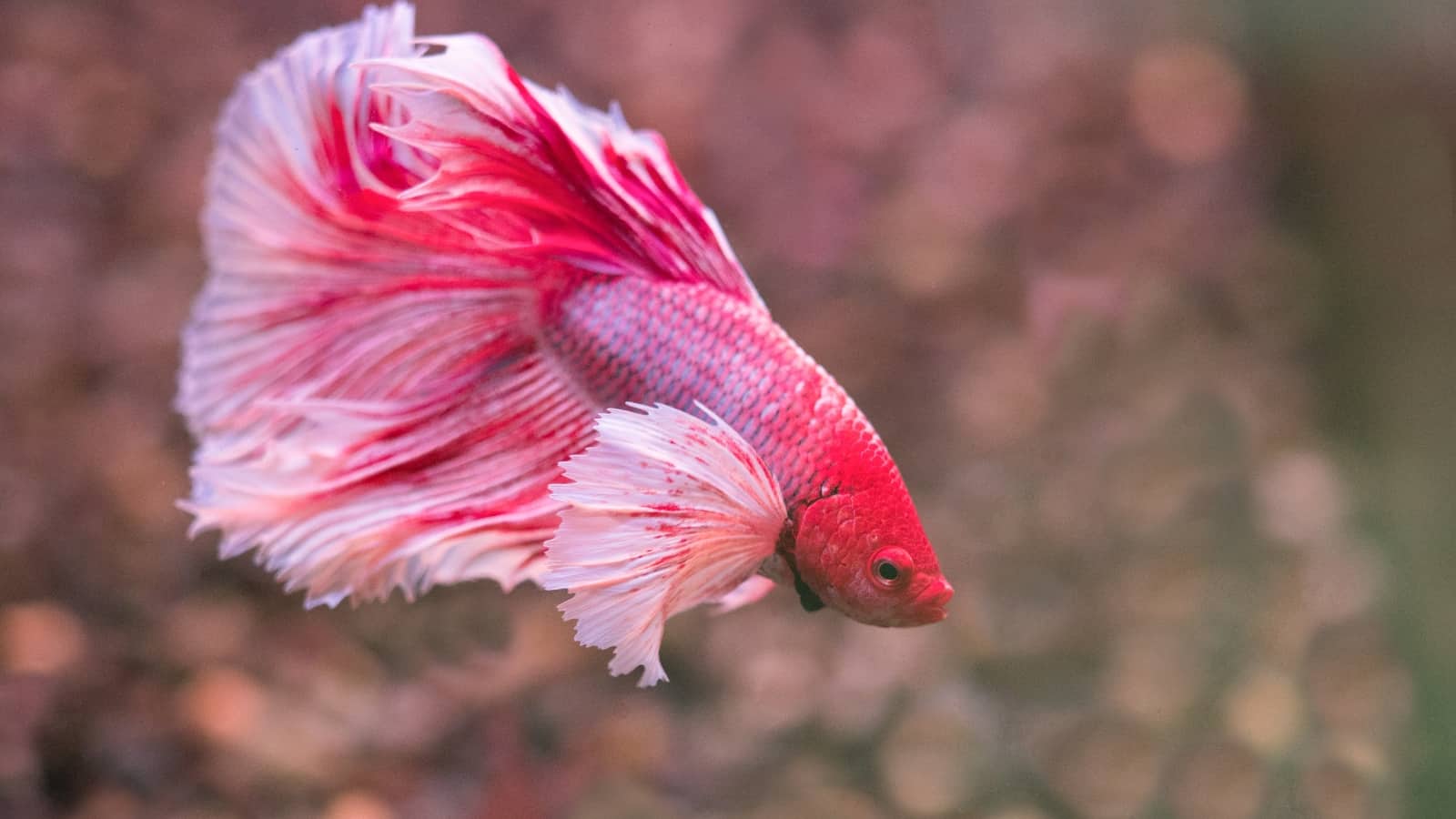
Interestingly, labyrinth fish are not born with a labyrinth organ but instead, develop one gradually as they mature.
For the labyrinth to develop properly in young fish, a warm, humid environment above the water’s surface is needed for them to begin breathing air. To raise the fry of labyrinth fish like betta fish and gouramis, therefore, a tight-fitting tank lid is essential.
Do Labyrinth Fish Need a Filter?
Although there’s much misleading information around that labyrinth fish such as betta fish don’t need a filter, this isn’t good advice for the vast majority of fish keepers!
For everyone except the most experienced fish keepers, we’d always recommend keeping any type of fish with at least a simple sponge filter. Just because labyrinth fish don’t require such high oxygen levels as other fish, that doesn’t mean they like living in a dirty tank!
Just like other fish, labyrinth fish will quickly die if ammonia or nitrites build up in the tank, and they’ll also do much better if the water is well-oxygenated – so a filter is almost always essential.
For the experts among you, there is another possibility, but it requires a great degree of knowledge and effort to get it right. You can read more about the Diana Walstad method of using live plants to create a self-sustaining, filterless aquarium, here.
Can Labyrinth Fish Live Out of Water?
Although most labyrinth fish like bettas and gouramis wouldn’t live long out of water, the family also includes some very unusual species that can indeed live without water for long periods!
The climbing perch from Southeast Asia has the remarkable ability to crawl across land to move from one body of water to another.
But while the climbing perch can survive out of water for 8-10 hours at a time, this is dwarfed by the African lungfish – an amphibious fish that can itself in the mud for up to 5 years, waiting for water to return!
Conclusion
The labyrinth organ is a physiological adaptation that allows certain types of fish to breathe air from the water’s surface. Among the most popular labyrinth fish in the aquarium trade are betta fish, gouramis, and paradise fish.
But just because the labyrinth organ allows fish to breathe from the air, that doesn’t mean they won’t appreciate richly oxygenated water, too. Just like other fish, they’ll be more healthy, live longer, and look better when kept in excellent water conditions.


