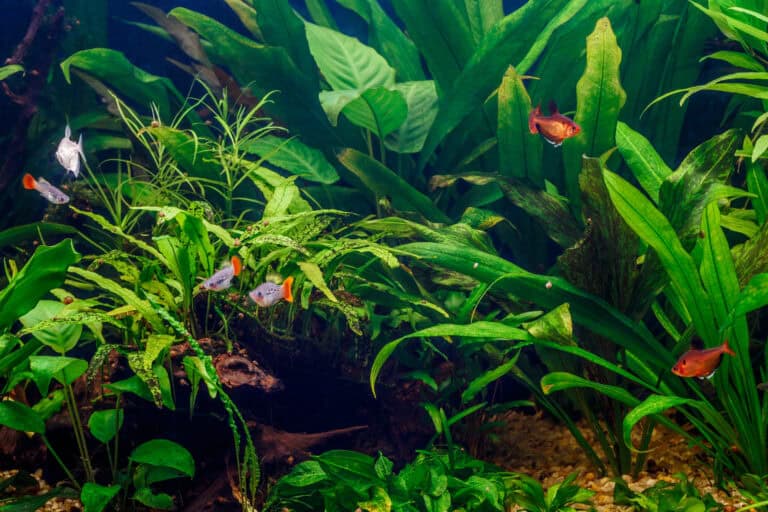
At Aquariadise, we’re constantly referring to fish that prefer soft, acidic water stained by tannins. These ‘blackwater environments’ are easy to achieve at home by adding tannin-rich ingredients, such as Indian almond leaves.
Not only do they alter the water chemistry in favor of your fish, Indian almond leaves can also be used as a natural medicine, and to help fish to breed and raise fry.
Not bad for a dried tree leaf! Let’s find out more.
Key Takeaways
- By releasing tannic acids, Indian almond leaves imbue the water with an amber hue – mimicking the natural environment of many fish species.
- Altering water chemistry, improving the breeding environment, and acting as a medicine for several types of fish are a few of the potential benefits of adding Indian almond leaves to your tank.
- Tannins are also available from several other natural ingredients and can be removed by installing a carbon filter.
What Are Indian Almond Leaves?
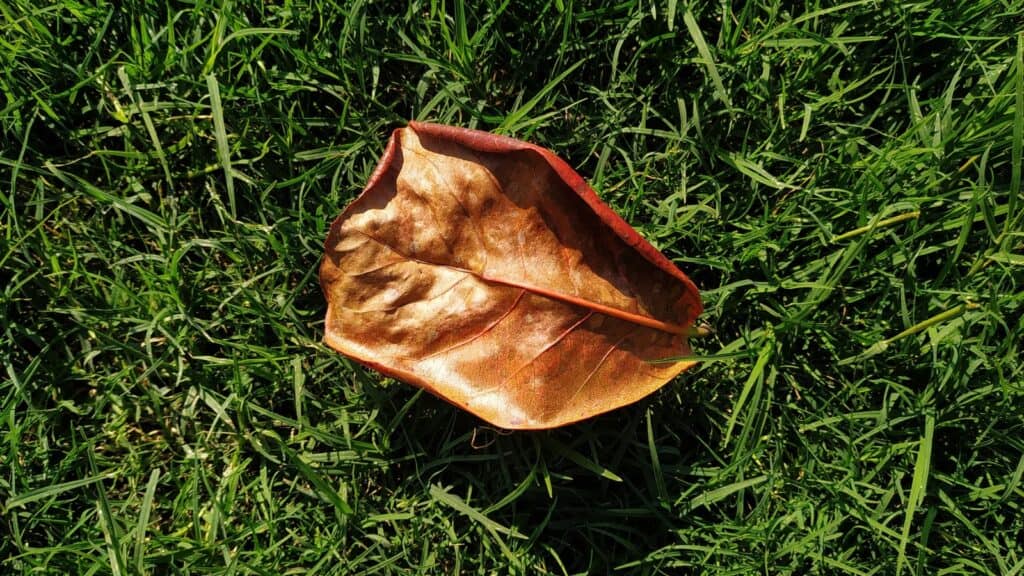
Indian almond leaves come from the Terminalia catappa tree. The leaf of this tree is especially known for its ability to act as a natural medicine and aquarium water conditioner for betta fish and shrimp tanks when the leaf is immersed in water for extended periods.
Indian almond leaves are said to help combat fungus and bacterial problems like fin rot and can further help prevent fish from getting stressed by mimicking the water they are naturally found in.
The Terminalia catappa tree grows throughout the tropical regions of Asia, Australia, and Africa. As we’ll discuss later, the leaves fall from the tree into the water. Tannins then leach out of the leaves into the water, adding hues of yellow and brown while lowering the pH.
You can import Indian almond leaves directly, but nowadays, they are also available in some pet/fish stores as well as online!

Premium Indian Almond Leaves for Aquariums
Check Price on AmazonHow Do Indian Almond Leaves Affect Your Aquarium Water?
When placed in water, Indian almond leaves slowly start to decompose. While this happens, the leaves turn the water a yellow or brown color by releasing tannins.
These tannic acids gradually lower the pH of the water and are said to have antifungal and antibacterial properties.
This ‘healing’ ability is a direct effect of what tannins are meant to do; in trees and plants, tannins are mainly stored in the bark and new leaves. The tannic acids inhibit bacteria and fungi, preventing the tree or plant from becoming infected.
What Do Indian Almond Leaves Do for Your Fish?
The theory goes that the antibacterial and antifungal properties of tannins are likely to bolster the ability of the fish to fight off infections. This comes in handy when you have a fish suffering from fin rot or when you’re raising a vulnerable fry.
The dark water tank appearance caused by these tannins is considered unsightly by some aquarists, but it actually mimics the natural habitat of many fish species!
It’s said that a lot of fish feel less exposed when in dark water, which may help shyer fish gain more confidence that will bring them to the front of the tank.
Some aquarium keepers like to flood their tank with tannins like this one, but luckily, the color is easy to regulate with regular maintenance and activated carbon if the water gets too dark for your liking!
When Should I Use Indian Almond Leaves?
Many people use Indian almond leaves in their betta fish or shrimp tank, but these leaves can be used in many situations for other fish as well:
To Help Sick Fish Recover
Adding an Indian almond leaf or two to a quarantine tank with a sick fish can help speed up the healing process. I’ve spoken with betta fish breeders who have stopped using regular fish medications altogether. They have started treating sick fish with nothing but Indian almond leaves, clean tank water, and activated carbon.
To Stimulate Breeding
When you’re dealing with fish or invertebrates that prefer water that is soft and acidic, Indian almond leaves can be great for stimulating breeding.
The tannins released by the leaves help create water conditions that are similar to those in the natural habitat of the fish, which can help to stimulate breeding conditions.
If you’re trying to get your betta fish or crystal red shrimp to breed, adding an Indian almond leaf or two to the breeding tank may help speed up the process!
As a Food Source
Indian almond leaves are also used as a beginning food source for certain fish fry and baby shrimp because they like to feed off the decomposing leaf matter.
Not only do the Indian almond leaves potentially provide a first meal for the fish or shrimp, but they can also be used as emergency food if other food sources are scarce.
Indian almond leaves also allow smaller fish to hide amongst the leaf litter where other larger fish can’t easily see and eat them.
As a Water Conditioner
Indian almond leaves are also used to condition aquarium water and maintain water quality. This method is sometimes known as the “poor man’s water conditioner”; however, the wrongly named “poor man” is most likely describing those (lucky!) aquarium keepers that have readily available access to Indian almond leaves.
For the rest of us, getting Indian almond leaves can be quite expensive, so it’s typically best to buy them in bulk when possible (and you should still always use commercial aquarium water conditioners just to be safe)!
Since Indian almond leaves also help slowly lower the water pH, it’s said to be better for keeping harmful ammonia levels under control since ammonia is converted to less toxic ammonium at low pH (anything less than 8.0).
To Create a Black Water Aesthetic
Lastly, it is very common for fish enthusiasts to use Indian almond leaves in their tanks just to stain the water with the tannins.
If you’re interested in setting up an Asian blackwater biotope, which imitates blackwater rivers and streams, natural foliage like Indian almond leaves or other leaf litter is a must-have.
These leaves appear in these regions naturally so they are biotope-correct and will be willingly accepted by your fish and other tank inhabitants. You can also add Indian almond leaves to other tank setups with fish that prefer soft and acidic water if you just like the look of it.
Just be sure to never add Indian almond leaves to a tank that has fish or other invertebrates that require higher water pH levels!
How Do I Use Indian Almond Leaves in My Fish Tank?
There are a few different ways to use Indian almond leaves in your tank; the easiest way is to just place a leaf or two in the tank at first and wait for them to do their job. The more leaves you add, the more tannins will be released and the darker the water will get. You can also tear the leaves up if you want the tannins to release more quickly.
Once the Indian almond leaves start decomposing, you can take them out or replace them, but it’s also fine to wait for them to completely decompose on their own.
Shrimp and fry will appreciate it if you don’t remove the leaves because, as mentioned earlier, they feed on the decomposing remains; no piece of leaf will go to waste no matter how small!
Indian Almond Leaf Extract
If you’re not a big fan of having leaf litter in your tank, another option is to soak the Indian almond leaves separately and then introduce the stained water into your tank between water changes.
You can also make your own blackwater Indian almond leaf extract, which is a very concentrated version of stained water that has lots of tannins. This is done by taking a very large amount of Indian almond leaves, boiling them in a pot of water, and letting them soak for multiple days afterward.
You only have to add a small amount of the Indian almond leaf extract to your tank to get that blackwater look, so don’t overdo it! (And by the way, if you’re not the kind of person who stands around boiling leaves for your fish tank, you can also just buy your Indian almond leaf extract online. We won’t judge.)

Ocean Nutrition Betta SPA Water Conditioner
Check Price on AmazonWhat if I Add Too Many Indian Almond Leaves Into My Fish Tank?
It isn’t likely that you’ll end up using too many Indian almond leaves in your tank; the only way this could happen is if you use an absurd amount of leaves and your pH gets so low that it starts to affect your overall water quality.
It is usually recommended to only use one Indian almond leaf per 10 gallons (38 L). However, you should be safe with adding another leaf if you didn’t get the desired effect with just one.
If you feel that your water has become too dark, you can easily remove some of the tannins by installing a carbon filter.
Other Sources of Tannins
Seed pods, twigs, alder cones, and other leaf litter. With the popularity of realistic blackwater biotope aquariums ever-growing, so does the number of different tannin sources sold by fish stores.
Generally speaking, all of these products provide the same beneficial effects to your water and your fish as Indian almond leaves. They release beneficial tannins and help create a natural look in your tank that blackwater fish love.
How about some banana, magnolia, oak, beech, mulberry, or guava leaves for your tank? Or maybe alder cones (much appreciated by dwarf shrimp), magnolia, or lotus? If that’s still not enough, you could even try whole pieces of twigs or bark like that from the Indian almond tree, palm fronds, or plain old oak twigs.
Some of these pieces you can collect yourself if a certain tree or plant grows near you. Do keep pollution in mind, though: thoroughly clean any leaf litter or other organic matter before adding it to your tank.
Conclusion
Adding Indian almond leaves to your aquarium is an excellent way to boost tannins in your tank water. Many types of fish will appreciate the soft, blackwater that results, and the effects can even be medicinal.
Tannins can easily be removed again by carbon filtration, and there are also plenty of other tannin sources out there to try if you’d prefer to choose something more local.